
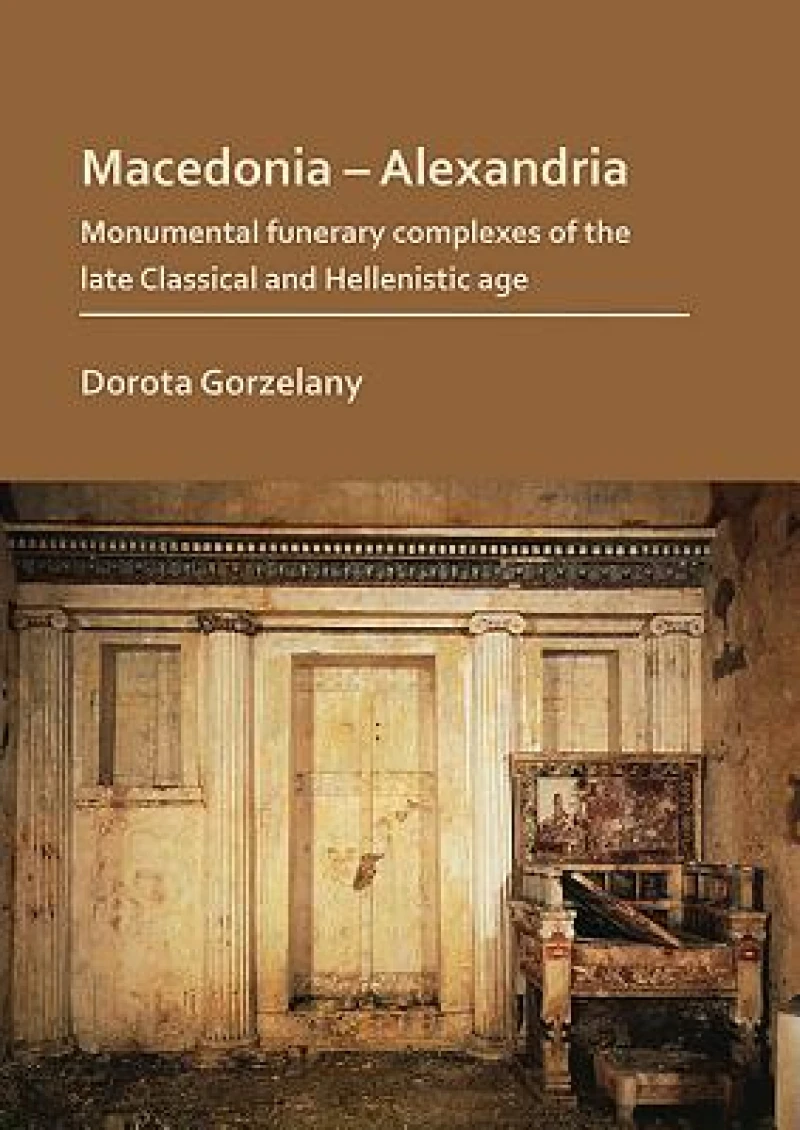
Macedonia – Alexandria: Monumental Funerary Complexes of the Late Classical and Hellenistic Age
Book Details
Format
Paperback / Softback
ISBN-10
1789691362
ISBN-13
9781789691368
Publisher
Archaeopress
Imprint
Archaeopress
Country of Manufacture
GB
Country of Publication
GB
Publication Date
Mar 31st, 2019
Print length
248 Pages
Weight
636 grams
Dimensions
17.70 x 24.50 x 2.20 cms
Product Classification:
Classical Greek & Roman archaeology
Ksh 6,250.00
Publisher Out of Stock
0 in stock
Delivery Location
Delivery fee: Select location
Secure
Quality
Fast
This book explores the influence of Macedonians and Greeks settling in Alexandria ad Aegyptum on the structural form of underground tombs, comparing in synthetic form the structural elements of the cist graves, chamber and rock-cut tombs of Macedonia with the Alexandrian hypogea, while taking into account geographical factors that conditioned them.
The type of monumental tomb that developed in Macedonia in the late Classical period was undoubtedly the most impressive of all the Greek funerary complexes. It was a burial chamber with a vestibule, built of stone blocks, vaulted and furnished with an architectural facade, concealed under a large tumulus rising above the ground. The concept of the Macedonian sepulcher, which the Macedonians and Greeks settling in Alexandria ad Aegyptum, the city founded by Alexander the Great on the Egyptian coast, brought with them, influenced the structural form of the underground tombs that were developed in the new city. ‘Macedonia–Alexandria’ explores the scope of this influence, comparing in synthetic form the structural elements of the cist graves, chamber and rock-cut tombs of Macedonia with the Alexandrian hypogea, while taking into account the different geographical factors that conditioned them. This is followed by a presentation of the facade and interior decoration, and a discussion of the themes of wall painting inside the tombs and a characteristic of the surviving tomb furnishings. The Macedonian tomb reflects in its form Greek eschatological beliefs ingrained in the mystery religions and the social ideology of the Macedonian kingdom. The assimilation of these beliefs is seen in the architectural arrangements, the vestibule and chamber plan, the facade (in Macedonia) or courtyard (in Alexandria), the structural and architectural interior decoration, and the furniture found in the chamber. These elements refer to palace architecture and determine the symbolic function of the tomb. The cult of the dead aspect is emphasized by wall painting iconography, the form of burial and the nature of the grave goods accompanying the deceased. In Alexandria, the role of rituals celebrated in the family tombs is attested by the declining size of burial chambers in favour of the vestibules and by the introduction of an open courtyard as well as the presence of altars. With regard to the ideology behind the Alexandrian complexes, the author explores the issue of the coexistence and the popularity of Egyptian beliefs adopted into Alexandrian sepulchral art, emphasizing the differences in the perception of the role of the tomb in the Macedonian and Egyptian consciousness.
Get Macedonia – Alexandria: Monumental Funerary Complexes of the Late Classical and Hellenistic Age by at the best price and quality guaranteed only at Werezi Africa's largest book ecommerce store. The book was published by Archaeopress and it has pages.

