
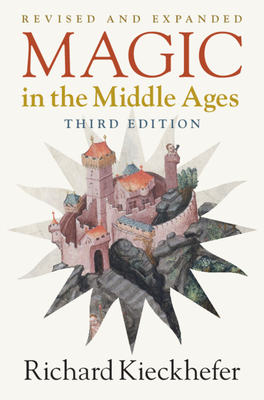
Book Details
Format
Paperback / softback
ISBN-10
1108796893
ISBN-13
9781108796897
Edition
3 Revised edition
Publisher
Cambridge University Press
Imprint
Cambridge University Press
Country of Manufacture
GB
Country of Publication
GB
Publication Date
Sep 9th, 2021
Print length
300 Pages
Weight
450 grams
Dimensions
15.20 x 22.70 x 1.80 cms
KSh 4,150.00
Currently unavailable
0 in stock
Delivery Location
Delivery fee: Select location
Secure
Quality
Fast
This revised and expanded edition surveys the growth and development of magic in medieval times. Examining its relationship with religion, science, philosophy, art, literature and politics, Richard Kieckhefer sheds light on the different types of magic that were used, the people who practiced it and the reasoning behind their beliefs.
"This book will approach magic as a kind of crossroads where different pathways in medieval culture converge. First of all it is a point of intersection between religion and science. Demonic magic invokes evil spirits and rests upon a network of religious beliefs and practices, while natural magic exploits "occult" powers within nature and is essentially a branch of medieval science. Yet demonic and natural magic are not always as distinct in fact as they seem in principle. Even when magic is clearly nondemonic it sometimes mingles elements of religion and science: a magical cure, for example, may embody both herbal lore from folk medicine and phrases of prayer from Christian ritual. Secondly, magic is an area where popular culture meets with learned culture. Popular notions of magic got taken up and interpreted by "intellectuals" - a term here used for those with philosophical or theological education - and their ideas about magic, demons, and kindred topics were in turn spread throughout the land by preachers. One of the most important tasks in cultural history is working out these lines of transmission. Thirdly, magic represents a particularly interesting crossroads between fiction and reality. The fictional literature of medieval Europe sometimes reflected the realities of medieval life, sometimes distorted them, sometimes provided escapist release from them, and sometimes held up ideals for reality to imitate. When this literature featured sorcerers, fairies, and other workers of magic, it may not have been meant or taken as totally realistic. Even so, the magic of medieval literature did resemble the magical practices of medieval life in ways that are difficult but interesting to disentangle"-- beliefs and practices, while natural magic exploits "occult" powers within nature and is essentially a branch of medieval science. Yet demonic and natural magic are not always as distinct in fact as they seem in principle. Even when magic is clearly nondemonic it sometimes mingles elements of religion and science: a magical cure, for example, may embody both herbal lore from folk medicine and phrases of prayer from Christian ritual. Secondly, magic is an area where popular culture meets with learned culture. Popular notions of magic got taken up and interpreted by "intellectuals" - a term here used for those with philosophical or theological education - and their ideas about magic, demons, and kindred topics were in turn spread throughout the land by preachers. One of the most important tasks in cultural history is working out these lines of transmission. Thirdly, magic represents a particularly interesting crossroads between fiction and reality. The fictional literature of medieval Europe sometimes reflected the realities of medieval life, sometimes distorted them, sometimes provided escapist release from them, and sometimes held up ideals for reality to imitate. When this literature featured sorcerers, fairies, and other workers of magic, it may not have been meant or taken as totally realistic. Even so, the magic of medieval literature did resemble the magical practices of medieval life in ways that are difficult but interesting to disentangle"--
Get Magic in the Middle Ages by Richard Kieckhefer at the best price and quality guaranteed only at Werezi Africa's largest book ecommerce store. The book was published by Cambridge University Press and it has 300 pages.
Customers Who Bought This Also Bought

Age of Revolutions
KSh 2,350.00

Eichmann in Jerusalem
KSh 2,350.00

Trouble With Being Born
KSh 2,000.00

Hiroshima
KSh 2,000.00

Freedom
KSh 6,300.00

Holocaust
KSh 2,700.00
The History of the Peloponnesian War
KSh 2,700.00
Annals
KSh 2,350.00
Greek Lives
KSh 2,150.00
Sleepwalkers
KSh 3,400.00

Napoleon The Great
KSh 3,600.00
Diary of a Young Girl
KSh 1,800.00
More by Richard Kieckhefer
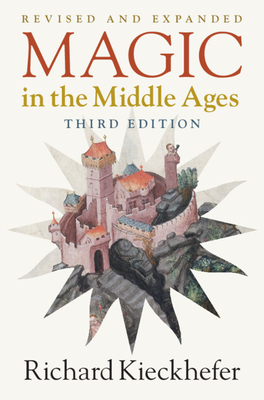
Magic in the Middle Ages
KSh 10,300.00
European Witch Trials
KSh 14,400.00
European Witch Trials – Their Foundations in Popular and Learned Culture, 1300–1500
KSh 6,100.00

The Mystical Presence of Christ
KSh 8,800.00
European Witch Trials (RLE Witchcraft)
KSh 35,650.00
Forbidden Rites
KSh 5,400.00

European Witch Trials (RLE Witchcraft)
KSh 9,700.00
