
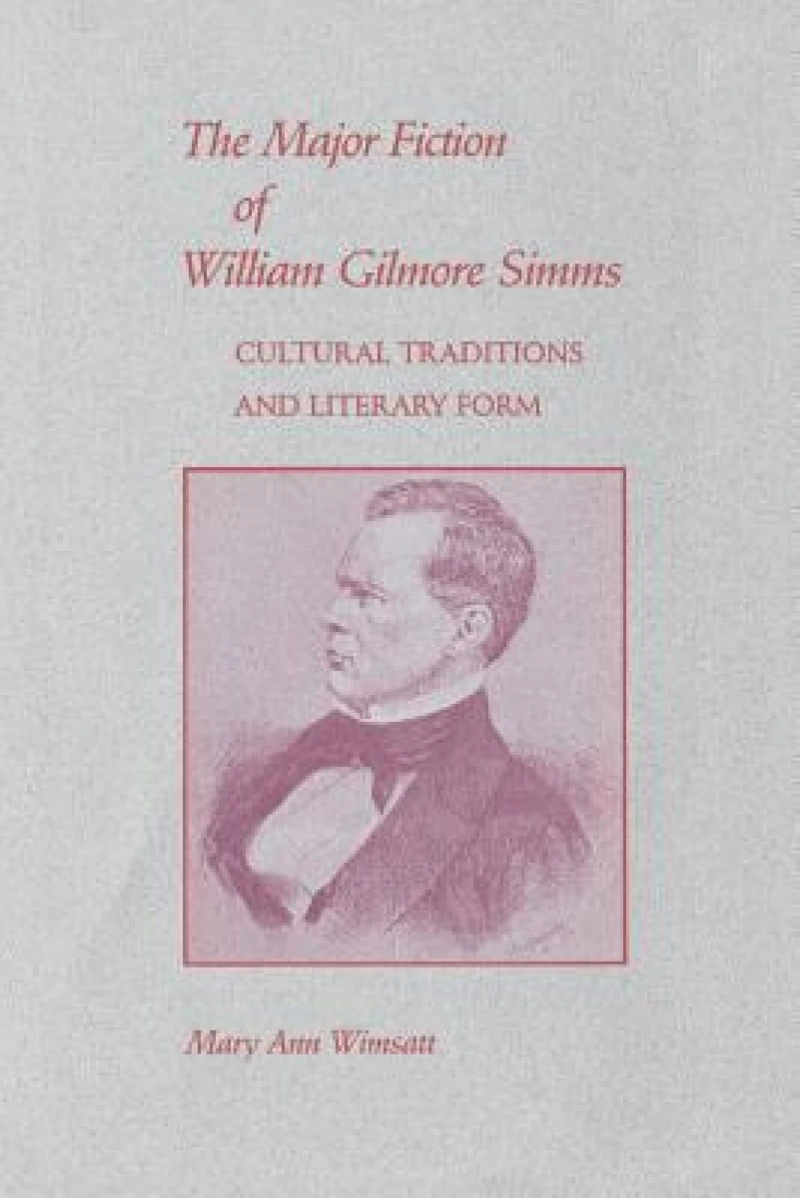
Major Fiction of William Gilmore Simms : Cultural Traditions and Literary Form
Book Details
Format
Paperback / Softback
Book Series
Southern Literary Studies
ISBN-10
0807125261
ISBN-13
9780807125267
Publisher
Louisiana State University Press
Imprint
Louisiana State University Press
Country of Manufacture
US
Country of Publication
GB
Publication Date
Mar 1st, 1999
Print length
277 Pages
Weight
333 grams
Dimensions
23.20 x 15.30 x 2.00 cms
Product Classification:
Literature: history & criticismLiterature: history and criticismLiterary studies: general
Ksh 4,650.00
Werezi Extended Catalogue
0 in stock
Delivery Location
Delivery fee: Select location
Secure
Quality
Fast
William Gilmore Simms was the preeminent southern man of letters in the antebellum period, a prolific, talented writer in many genres and an eloquent intellectual spokesman of his region. Many Ann Wimsatt provides the first significant full-length evaluation of Simms's achievement in his long fiction, selected poetry, essays, and short fiction.
William Gilmore Simms (1806-1870) was the preeminent southern man of letters in the antebellum period, a prolific, talented writer in many genres and an eloquent intellectual spokesman of r his region. During his long career, he wrote plays, poetry, literary criticism, biography and history; but he is best remembered for his numerous novels and tales. Many Ann Wimsatt provides the first significant full-length evaluation of Simms's achievement in his long fiction, selected poetry, essays, and short fiction.
Wimsatt's chief emphasis is on the thirty-odd novels that Simms published from the mid-1830s until after the Civil War. In bringing his impressive body of work to life, she makes use of biographical and historical information and also of twentieth-century literary theories of the romance, Simm's principal genre. Through analyses of such seminal works as Guy Rivers, The Yemassee, The Cassique of Kiawah, and Woodcraft, Wimsatt illuminates Simm's contributions to the romance tradition, contributions misunderstood by previous critics, and suggests how to view his novels within the light of recent literary criticism. She also demonstrates how Simms used the historical conditions of southern culture as well as events of his own life to flesh out literary patterns, and she analyses his use of low-country, frontier and mountain settings.
Although critics praised Simms early in his career as ""the first American novelist of the day,"" the panic of 1837 and the changes in the book market that it helped foster severely damaged his prospects for wealth and fame. The financial recession, Wimsatt finds, together with shifts in literary taste, contributed to the decline of Simms's reputation. Simms attempted to adjust to the changing climate for fiction by incorporating two modes of nineteenth-century realism, the satiric portrayal of southern manners and southern backwoods humor, into the framework of his long romances; but his accomplishments in these areas have been undervalued or misunderstood by critics since is time.
Wimsatt's book is the first to survey Simms's fiction and much of his other writing against the background of his life and literary career and the first to make extensive use of his immense correspondence. It is an important study of a neglected author who once served as the leafing symbol of literary activity in the South. It fills what has heretofore been a serious gap in southern literary studies.
Wimsatt's chief emphasis is on the thirty-odd novels that Simms published from the mid-1830s until after the Civil War. In bringing his impressive body of work to life, she makes use of biographical and historical information and also of twentieth-century literary theories of the romance, Simm's principal genre. Through analyses of such seminal works as Guy Rivers, The Yemassee, The Cassique of Kiawah, and Woodcraft, Wimsatt illuminates Simm's contributions to the romance tradition, contributions misunderstood by previous critics, and suggests how to view his novels within the light of recent literary criticism. She also demonstrates how Simms used the historical conditions of southern culture as well as events of his own life to flesh out literary patterns, and she analyses his use of low-country, frontier and mountain settings.
Although critics praised Simms early in his career as ""the first American novelist of the day,"" the panic of 1837 and the changes in the book market that it helped foster severely damaged his prospects for wealth and fame. The financial recession, Wimsatt finds, together with shifts in literary taste, contributed to the decline of Simms's reputation. Simms attempted to adjust to the changing climate for fiction by incorporating two modes of nineteenth-century realism, the satiric portrayal of southern manners and southern backwoods humor, into the framework of his long romances; but his accomplishments in these areas have been undervalued or misunderstood by critics since is time.
Wimsatt's book is the first to survey Simms's fiction and much of his other writing against the background of his life and literary career and the first to make extensive use of his immense correspondence. It is an important study of a neglected author who once served as the leafing symbol of literary activity in the South. It fills what has heretofore been a serious gap in southern literary studies.
Get Major Fiction of William Gilmore Simms by at the best price and quality guaranteed only at Werezi Africa's largest book ecommerce store. The book was published by Louisiana State University Press and it has pages.

