
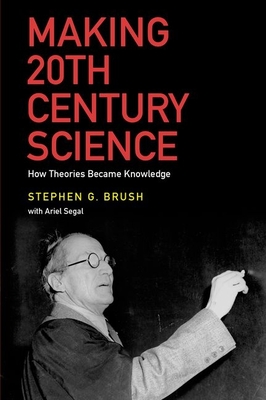
Making 20th Century Science : How Theories Became Knowledge
Book Details
Format
Hardback
ISBN-10
0199978158
ISBN-13
9780199978151
Publisher
Oxford University Press Inc
Imprint
Oxford University Press Inc
Country of Manufacture
US
Country of Publication
GB
Publication Date
May 7th, 2015
Print length
552 Pages
Weight
922 grams
Dimensions
17.00 x 24.30 x 4.40 cms
Product Classification:
Philosophy of scienceHistory of science
KSh 10,650.00
Currently unavailable
0 in stock
Delivery Location
Delivery fee: Select location
Secure
Quality
Fast
A large-scale historical look at the implementation of the scientific method, and how scientific theories come to be accepted.
Historically, the scientific method has been said to require proposing a theory, making a prediction of something not already known, testing the prediction, and giving up the theory (or substantially changing it) if it fails the test. A theory that leads to several successful predictions is more likely to be accepted than one that only explains what is already known but not understood. This process is widely treated as the conventional method of achieving scientific progress, and was used throughout the twentieth century as the standard route to discovery and experimentation.But does science really work this way? In Making 20th Century Science, Stephen G. Brush discusses this question, as it relates to the development of science throughout the last century. Answering this question requires both a philosophically and historically scientific approach, and Brush blends the two in order to take a close look at how scientific methodology has developed. Several cases from the history of modern physical and biological science are examined, including Mendeleev''s Periodic Law, Kekule''s structure for benzene, the light-quantum hypothesis, quantum mechanics, chromosome theory, and natural selection. In general it is found that theories are accepted for a combination of successful predictions and better explanations of old facts.Making 20th Century Science is a large-scale historical look at the implementation of the scientific method, and how scientific theories come to be accepted.
Get Making 20th Century Science by Stephen G. Brush at the best price and quality guaranteed only at Werezi Africa's largest book ecommerce store. The book was published by Oxford University Press Inc and it has 552 pages.
Customers Who Bought This Also Bought
The Poetics of Space
KSh 2,700.00

Origin of Species
KSh 1,850.00

Arrogant Ape
KSh 3,050.00

Classics Origin of Species
KSh 1,100.00
The Structure of Scientific Revolutions – 50th Anniversary Edition
KSh 2,850.00
Xrepublic
KSh 850.00
Xrepublic
KSh 1,450.00

Theory of Scientific Method
KSh 4,300.00

Vocation Lectures
KSh 2,900.00

Kinship: Vol. 5 Practice
KSh 3,250.00

Thinking Beyond Materialism
KSh 3,400.00

Thinking Beyond Materialism
KSh 15,550.00
More by Stephen G. Brush
A History of Modern Planetary Physics
KSh 17,100.00
A History of Modern Planetary Physics
KSh 7,550.00
Nebulous Earth
KSh 17,100.00
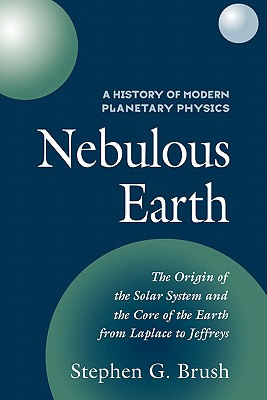
A History of Modern Planetary Physics
KSh 7,650.00
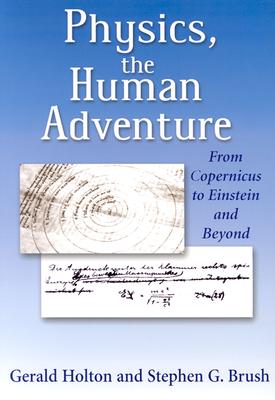
Physics, the Human Adventure
KSh 8,050.00
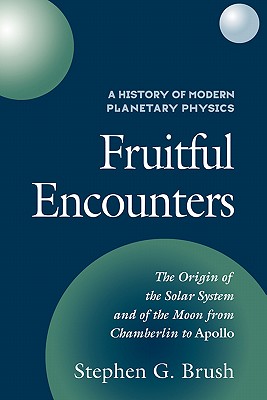
A History of Modern Planetary Physics
KSh 8,550.00
A History of Modern Planetary Physics
KSh 18,900.00
