
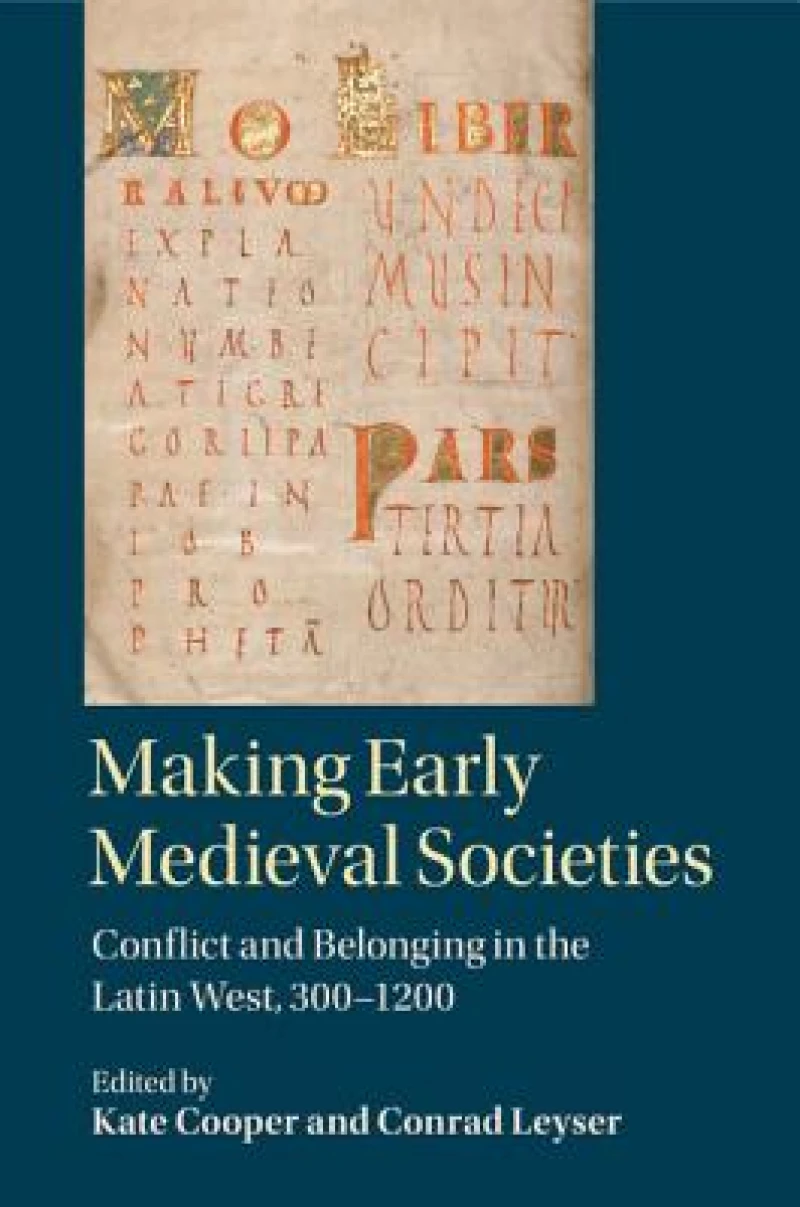
Making Early Medieval Societies : Conflict and Belonging in the Latin West, 300–1200
Book Details
Format
Paperback / Softback
ISBN-10
1316503607
ISBN-13
9781316503607
Publisher
Cambridge University Press
Imprint
Cambridge University Press
Country of Manufacture
GB
Country of Publication
GB
Publication Date
Feb 1st, 2018
Print length
294 Pages
Weight
440 grams
Dimensions
22.70 x 15.20 x 1.60 cms
Product Classification:
European historyEarly history: c 500 to c 1450/1500HistoryEuropean history
Ksh 6,300.00
Manufactured on Demand
0 in stock
Delivery Location
Delivery fee: Select location
Secure
Quality
Fast
While traditional histories look at the 'Dark Ages' in light of the decline of the Roman state and the rise of early medieval kingdoms, Making Early Medieval Societies considers the period from an anthropological perspective, asking how small- and large-scale processes of dispute settlement and conflict resolution endured and evolved.
Making Early Medieval Societies explores a fundamental question: what held the small- and large-scale communities of the late Roman and early medieval West together, at a time when the world seemed to be falling apart? Historians and anthropologists have traditionally asked parallel questions about the rise and fall of empires and how societies create a sense of belonging and social order in the absence of strong governmental institutions. This book draws on classic and more recent anthropologists' work to consider dispute settlement and conflict management during and after the end of the Roman Empire. Contributions range across the internecine rivalries of late Roman bishops, the marital disputes of warrior kings, and the tension between religious leaders and the unruly crowds in western Europe after the first millennium - all considering the mechanisms through which conflict could be harnessed as a force for social stability or an engine for social change.
Get Making Early Medieval Societies by at the best price and quality guaranteed only at Werezi Africa's largest book ecommerce store. The book was published by Cambridge University Press and it has pages.

