
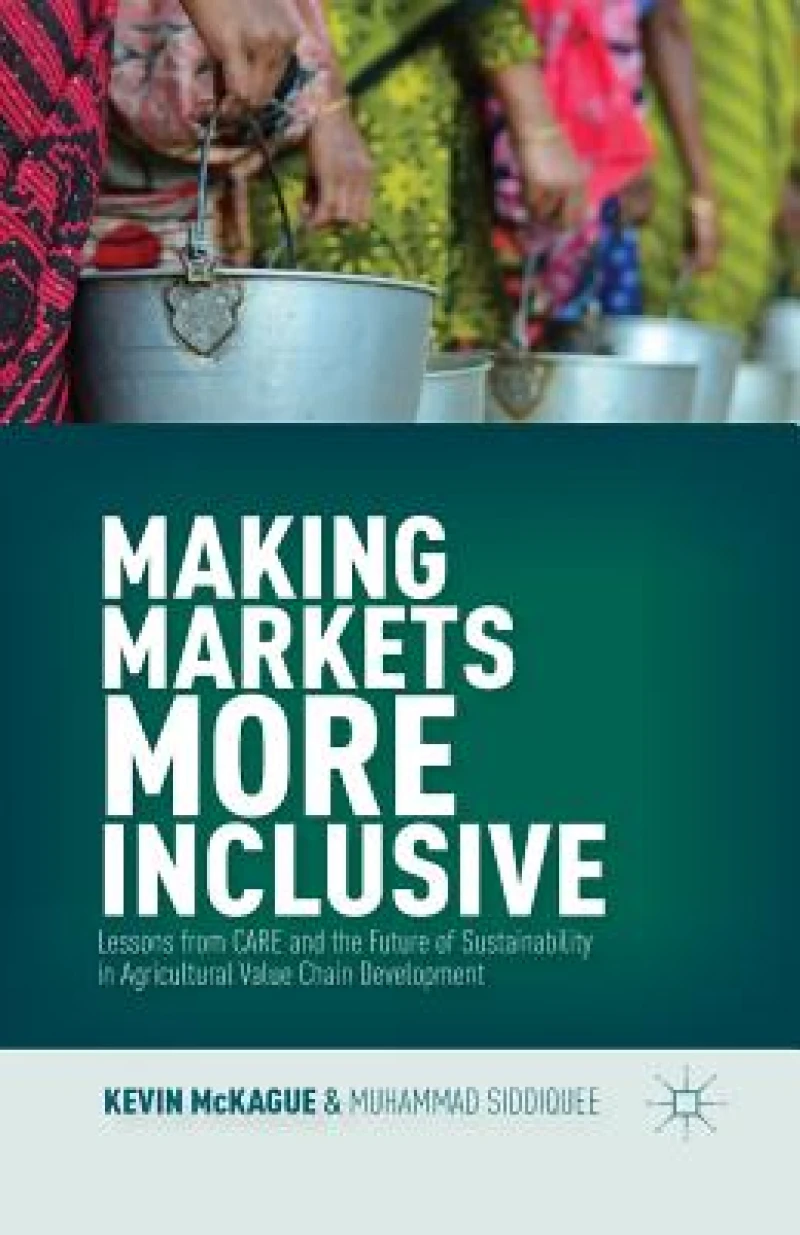
Making Markets More Inclusive : Lessons from CARE and the Future of Sustainability in Agricultural Value Chain Development
1st ed. 2014
Book Details
Format
Paperback / Softback
ISBN-10
1349480282
ISBN-13
9781349480289
Edition
1st ed. 2014
Publisher
Palgrave Macmillan
Imprint
Palgrave Macmillan
Country of Manufacture
US
Country of Publication
GB
Publication Date
Jul 24th, 2014
Print length
242 Pages
Weight
338 grams
Dimensions
14.30 x 21.70 x 2.00 cms
Product Classification:
Development economics & emerging economiesDevelopment economics and emerging economiesBusiness ethics & social responsibilityBusiness ethics and social responsibilityInternational businessSmall businesses & self-employedSmall businesses and self-employmentIndustry & industrial studiesIndustry and industrial studies
Ksh 8,100.00
Werezi Extended Catalogue
0 in stock
Delivery Location
Delivery fee: Select location
Secure
Quality
Fast
Introducing digital fat testing machines into the dairy value chain helped reward farmers for making investments in producing higher quality milk, as well as ensuring transparent and timely payments (Chapter 7).
Most studies of doing business at the "bottom of the economic pyramid" focus on viewing the poor as consumers, as micro-entrepreneurs, or as potential employees of local companies. Almost no analysis focuses on the poor as primary producers of agricultural commodities a striking omission given that primary producers are by far the largest segment of the working-age population in developing economies. Making Markets More Inclusive bridges the management literature with original research on agricultural value chains in developing and emerging economies. This exciting work is the first to delve into the skills, capabilities, strategies and approaches needed for inclusive value chain development. McKague shows how NGOs and companies can connect poor producers in developing economies with the right markets to better create social and economic impact. He also analyzes one of the leading agricultural value chain initiatives in the world, which is being replicated by the Bill and Melinda Gates Foundation in several different value chains in Malawi, Tanzania, Ghana, India, and Mali. Want more? Check out these compelling videos, which provide a glimpse into the stories and examples used throughout the book. Video Trailer for Making Markets More Inclusive. Farmer Training. Kallani Rani increased the productivity of her cows, become a cattle feed seller in her village (Chapter 6), and opened a fresh milk canteen in her local market (Chapter 7). She now trains other women farmersand works to improve opportunities for women in her community (Chapter 5). Animal Health Care Services. Asma Husna trained to be an animal health worker with CARE to provide important animal health services and education to local farmers on a fee-for-service basis (Chapter 6). Cattle Feed Shops. Fulera Akter started a business as a cattle feed seller after demand for nutritional animal feed grew due to farmers' improved knowledge of nutrition (Chapter 6). Savings Groups. Coauthor Muhammad Siddiquee, the Coordinator of Agriculture and Value Chain Programs at CARE Bangladesh, discusses the value of farmer savings groups (Chapter 6). Milk Collection. Sarothi Rani became a milk collector to earn an improved income for her family and provide an important service to other dairy farmers in her community (Chapter 7). Digital Fat Testing. Introducing digital fat testing machines into the dairy value chain helped reward farmers for making investments in producing higher quality milk, as well as ensuring transparent and timely payments (Chapter 7). Microfranchising. Supporting agricultural input shop owners with training, relationships to suppliers, common branding, and standardized customer services improves the productivity of smallholder farmers and the profitability of shops (Chapter 12). Bangladesh Dairy Value Chain Learning. Reflections from some of the 40 CARE staff from 17 countries who came to Bangladesh to learn from the experience of the dairy value chain project (Chapter 15).
Get Making Markets More Inclusive by at the best price and quality guaranteed only at Werezi Africa's largest book ecommerce store. The book was published by Palgrave Macmillan and it has pages.

