
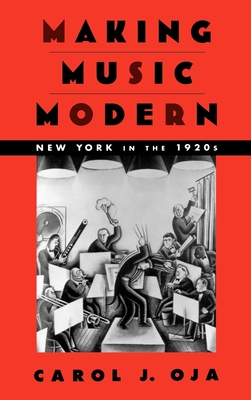
Making Music Modern : New York in the 1920s
by
Carol J. Oja
Book Details
Format
Hardback
ISBN-10
0195058496
ISBN-13
9780195058499
Publisher
Oxford University Press Inc
Imprint
Oxford University Press Inc
Country of Manufacture
GB
Country of Publication
GB
Publication Date
Dec 7th, 2000
Print length
512 Pages
Weight
912 grams
Dimensions
22.90 x 15.20 x 3.20 cms
KSh 35,000.00
Temporarily out of stock, due soon
0 in stock
Delivery Location
Delivery fee: Select location
Secure
Quality
Fast
This work sets the growth of American musical composition against parallel developments in American culture, provides a guide for understanding the music, and explores how the notion of the concert tradition, as inherited from Western Europe, was challenged and revitalized through contact with American popular song, jazz, and non-Western musics.
New York City witnessed a dazzling burst of creativity in the 1920s. In this pathbreaking study, Carol J. Oja explores this artistic renaissance from the perspective of composers of classical and modern music, who along with writers, painters, and jazz musicians, were at the heart of early modernism in America. She also illustrates how the aesthetic attitudes and institutional structures from the 1920s left a deep imprint on the arts over the 20th century. Aaron Copland, George Gershwin, Ruth Crawford Seeger, Virgil Thomson, William Grant Still, Edgard Varèse, Henry Cowell, Carl Ruggles, Marion Bauer, Dane Rudhyar--these were the leaders of a talented new generation of American composers whose efforts made New York City the center of new music in the country. They founded composer societies--such as the International Composers'' Guild, the League of Composers, the Pan American Association, and the Copland-Sessions Concerts--to promote the performance of their music, and they nimbly negotiated cultural boundaries, aiming for recognition in Western Europe as much as at home. They showed exceptional skill at marketing their work. Drawing on extensive archival material--including interviews, correspondence, popular periodicals, and little-known music manuscripts--Oja provides a new perspective on the period and a compelling collective portrait of the figures, puncturing many longstanding myths. American composers active in New York during the 1920s are explored in relation to the "Machine Age" and American Dada; the impact of spirituality on American dissonance; the crucial, behind-the-scenes role of women as patrons and promoters of modernist music; cross-currents between jazz and concert music; the critical reception of modernist music (especially in the writings of Carl Van Vechten and Paul Rosenfeld); and the international impulse behind neoclassicism. The book also examines the persistent biases of the time, particularly anti-Semitisim, gender stereotyping, and longstanding racial attitudes.
Get Making Music Modern by Carol J. Oja at the best price and quality guaranteed only at Werezi Africa's largest book ecommerce store. The book was published by Oxford University Press Inc and it has 512 pages.
Customers Who Bought This Also Bought

Rest Is Noise
KSh 3,550.00

Whole World of Music
KSh 11,950.00

American Experimental Music 1890-1940
KSh 10,000.00
The Charles Ives Tunebook, Second Edition
KSh 7,750.00
Gustav Mahler''s Symphonic Landscapes
KSh 17,800.00
The Symphonic Repertoire, Volume IV – The Second Golden Age of the Viennese Symphony: Brahms, Bruckner, Dvorák, Mahler, and Selected Contemporar
KSh 14,900.00
Avant Garde
KSh 19,500.00
The Cambridge Companion to Richard Strauss
KSh 16,550.00
Boulez, Music and Philosophy
KSh 17,100.00
New Musical Resources
KSh 17,100.00
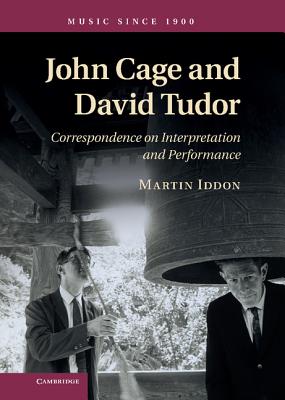
John Cage and David Tudor
KSh 17,800.00
Samuel Coleridge-taylor, a Musical Life
KSh 11,150.00
More by Carol J. Oja
More in This Genre
Rest Is Noise
KSh 3,550.00
Whole World of Music
KSh 11,950.00
American Experimental Music 1890-1940
KSh 10,000.00
The Charles Ives Tunebook, Second Edition
KSh 7,750.00
Gustav Mahler''s Symphonic Landscapes
KSh 17,800.00
The Symphonic Repertoire, Volume IV – The Second Golden Age of the Viennese Symphony: Brahms, Bruckner, Dvorák, Mahler, and Selected Contemporar
KSh 14,900.00
