
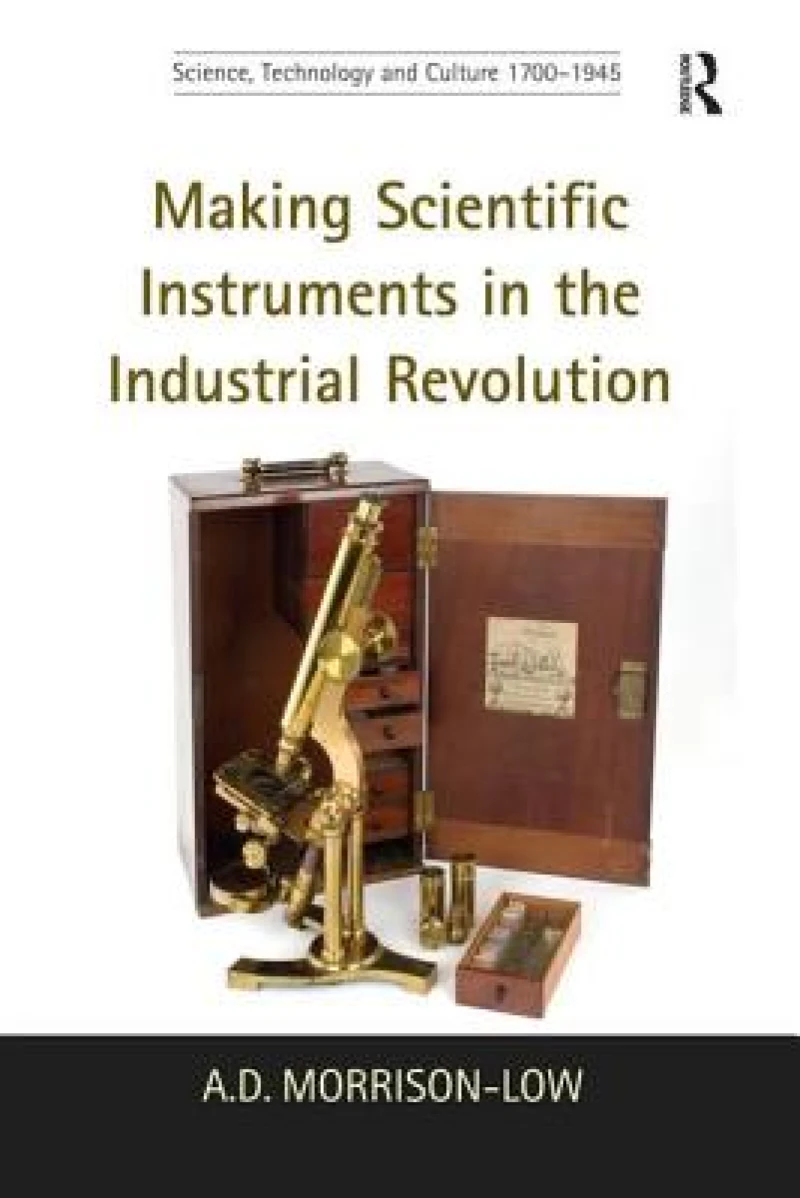
Making Scientific Instruments in the Industrial Revolution
Book Details
Format
Paperback / Softback
Book Series
Science, Technology and Culture, 1700-1945
ISBN-10
1138248541
ISBN-13
9781138248540
Publisher
Taylor & Francis Ltd
Imprint
Routledge
Country of Manufacture
GB
Country of Publication
GB
Publication Date
Sep 9th, 2016
Print length
424 Pages
Weight
780 grams
Ksh 11,600.00
Werezi Extended Catalogue
0 in stock
Delivery Location
Delivery fee: Select location
Secure
Quality
Fast
At the start of the Industrial Revolution, it appeared that most scientific instruments were made and sold in London, but by the time of the Great Exhibition in 1851, a number of provincial firms had the self-confidence to exhibit their products in London to an international audience. How had this change come about, and why? This book looks at the four main, and two lesser, English centres known for instrument production outside the capital: Birmingham, Liverpool, Manchester and Sheffield, along with the older population centres in Bristol and York. Making wide use of new sources, Dr Morrison-Low, curator of history of science at the National Museums of Scotland, charts the growth of these centres and provides a characterisation of their products. New information is provided on aspects of the trade, especially marketing techniques, sources of materials, tools and customer relationships. From contemporary evidence, she argues that the principal output of the provincial trade (with some notable exceptions) must have been into the London marketplace, anonymously, and at the cheaper end of the market. She also discusses the structure and organization of the provincial trade, and looks at the impact of new technology imported from other closely-allied trades. By virtue of its approach and subject matter the book considers aspects of economic and business history, gender and the family, the history of science and technology, material culture, and patterns of migration. It contains a myriad of stories of families and firms, of entrepreneurs and customers, and of organizations and arms of government. In bringing together this wide range of interests, Dr Morrison-Low enables us to appreciate how central the making, selling and distribution of scientific instruments was for the Industrial Revolution.
Get Making Scientific Instruments in the Industrial Revolution by at the best price and quality guaranteed only at Werezi Africa's largest book ecommerce store. The book was published by Taylor & Francis Ltd and it has pages.

