
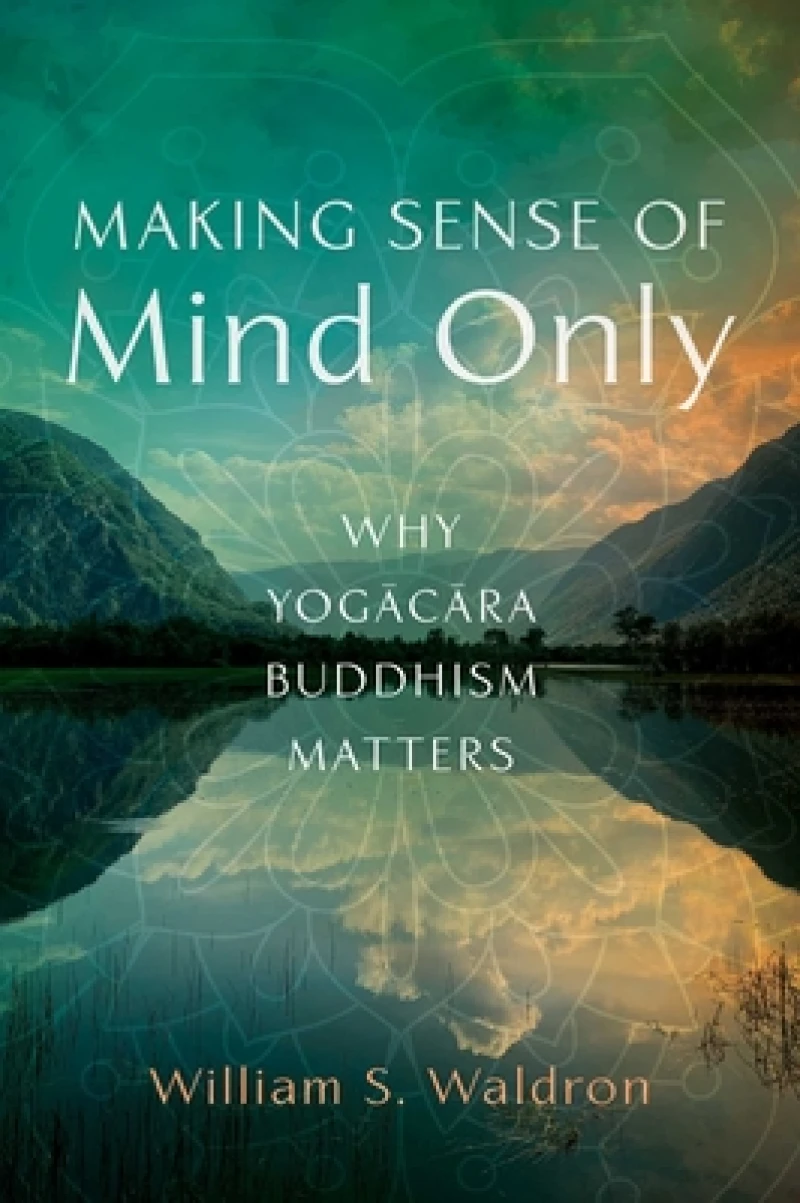
Making Sense of Mind Only : Why Yogacara Buddhism Matters
Book Details
Format
Paperback / Softback
ISBN-10
1614297266
ISBN-13
9781614297260
Publisher
Wisdom Publications,U.S.
Imprint
Wisdom Publications,U.S.
Country of Manufacture
CA
Country of Publication
GB
Publication Date
Nov 7th, 2023
Print length
384 Pages
Weight
522 grams
Dimensions
15.20 x 23.00 x 2.40 cms
Product Classification:
Oriental & Indian philosophyBuddhismBuddhist sacred texts
Ksh 4,500.00
Werezi Extended Catalogue
Delivery in 14 days
7 copies in stock
Delivery Location
Delivery fee: Select location
Delivery in 14 days
Secure
Quality
Fast
Through engaging, contemporary examples, Making Sense of Mind Only reveals the Yogacara school of Indian Buddhism as a coherent system of ideas and practices for the path to liberation, contextualizing its key texts and rendering them accessible and relevant.
The Yogacara, or Yoga Practice, school is one of the two schools of Mahayana Buddhism that developed in the early centuries of the common era. Though it arose in India, Mahayana Buddhism now flourishes in China, Tibet, Korea, Vietnam, and Japan. While the other major Mahayana tradition, the Madhyamaka (Middle Way), focuses on the concept of emptiness—that all phenomena lack an intrinsic essence—the Yogacara school focuses on the cognitive processes whereby we impute such essences. Through everyday examples and analogues in cognitive science, author William Waldron makes Yogacara’s core teachings—on the three turnings of the Dharma wheel, the three natures, the storehouse consciousness, and mere perception—accessible to a broad audience. In contrast to the common characterization of Yogacara as philosophical idealism, Waldron presents Yogacara Buddhism on its own terms, as a coherent system of ideas and practices, with dependent arising its guiding principle.
The first half of Making Sense of Mind Only explores the historical context for Yogacara’s development. Waldron examines early Buddhist texts that show how our affective and cognitive processes shape the way objects and worlds appear to us, and how we erroneously grasp onto them as essentially real—perpetuating the habits that bind us to samsara. He then analyzes the early Madhyamaka critique of essences.
This context sets the stage for the book’s second half, an examination of how Yogacara texts such as the Samdhinirmocana Sutra and Asanga’s Stages of Yogic Practice (Yogacarabhumi) build upon these earlier ideas by arguing that our constructive processes also occur unconsciously. Not only do we collectively, yet mostly unknowingly, construct shared realities or cultures, our shared worlds are also mediated through the storehouse consciousness (alayavijñana) functioning as a cultural unconscious. Vasubandhu’s Twenty Verses argues that we can learn to recognize such objects and worlds as “mere perceptions” (vijñaptimatra) and thereby abandon our enchantment with the products of our own cognitive processes. Finally, Maitreya’s Distinguishing Phenomena from Their Ultimate Nature (Dharmadharmatavibhaga) elegantly lays out the Mahayana path to this transformation.
In Waldron’s hands, Yogacara is no mere view but a practical system of transformation. His presentation of its key texts and ideas illuminates how religion can remain urgent and vital in our scientific and pluralistic age.
The Yogacara, or Yoga Practice, school is one of the two schools of Mahayana Buddhism that developed in the early centuries of the common era. Though it arose in India, Mahayana Buddhism now flourishes in China, Tibet, Korea, Vietnam, and Japan. While the other major Mahayana tradition, the Madhyamaka (Middle Way), focuses on the concept of emptiness—that all phenomena lack an intrinsic essence—the Yogacara school focuses on the cognitive processes whereby we impute such essences. Through everyday examples and analogues in cognitive science, author William Waldron makes Yogacara’s core teachings—on the three turnings of the Dharma wheel, the three natures, the storehouse consciousness, and mere perception—accessible to a broad audience. In contrast to the common characterization of Yogacara as philosophical idealism, Waldron presents Yogacara Buddhism on its own terms, as a coherent system of ideas and practices, with dependent arising its guiding principle.
The first half of Making Sense of Mind Only explores the historical context for Yogacara’s development. Waldron examines early Buddhist texts that show how our affective and cognitive processes shape the way objects and worlds appear to us, and how we erroneously grasp onto them as essentially real—perpetuating the habits that bind us to samsara. He then analyzes the early Madhyamaka critique of essences.
This context sets the stage for the book’s second half, an examination of how Yogacara texts such as the Samdhinirmocana Sutra and Asanga’s Stages of Yogic Practice (Yogacarabhumi) build upon these earlier ideas by arguing that our constructive processes also occur unconsciously. Not only do we collectively, yet mostly unknowingly, construct shared realities or cultures, our shared worlds are also mediated through the storehouse consciousness (alayavijñana) functioning as a cultural unconscious. Vasubandhu’s Twenty Verses argues that we can learn to recognize such objects and worlds as “mere perceptions” (vijñaptimatra) and thereby abandon our enchantment with the products of our own cognitive processes. Finally, Maitreya’s Distinguishing Phenomena from Their Ultimate Nature (Dharmadharmatavibhaga) elegantly lays out the Mahayana path to this transformation.
In Waldron’s hands, Yogacara is no mere view but a practical system of transformation. His presentation of its key texts and ideas illuminates how religion can remain urgent and vital in our scientific and pluralistic age.
Get Making Sense of Mind Only by at the best price and quality guaranteed only at Werezi Africa's largest book ecommerce store. The book was published by Wisdom Publications,U.S. and it has pages.

