
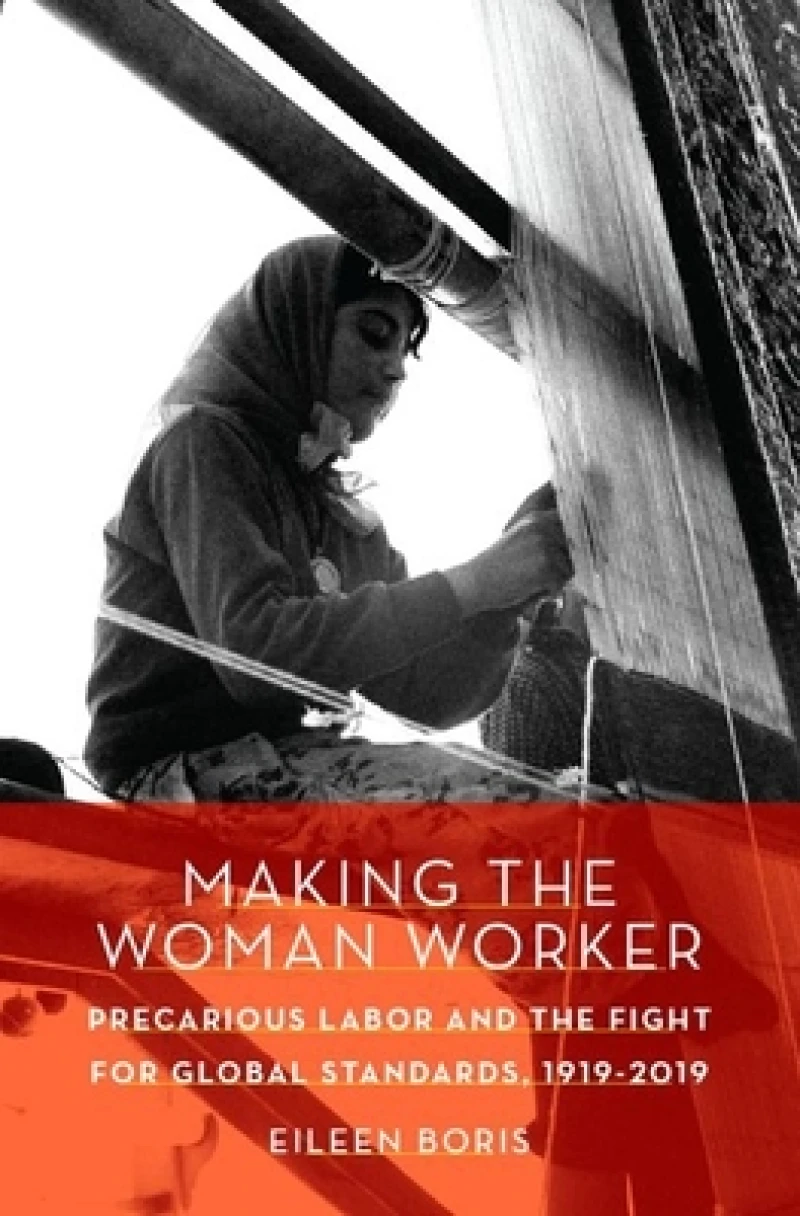
Making the Woman Worker : Precarious Labor and the Fight for Global Standards, 1919-2019
by
Eileen Boris
Book Details
Format
Hardback or Cased Book
ISBN-10
0190874627
ISBN-13
9780190874629
Publisher
Oxford University Press Inc
Imprint
Oxford University Press Inc
Country of Manufacture
US
Country of Publication
GB
Publication Date
Oct 10th, 2019
Print length
352 Pages
Weight
622 grams
Dimensions
24.30 x 16.40 x 3.40 cms
Product Classification:
HistoryArchaeologyGender studies: womenSociology: work & labour
Ksh 6,950.00
Werezi Extended Catalogue
0 in stock
Delivery Location
Delivery fee: Select location
Secure
Quality
Fast
This book explains how the 20th century labor standard regime, forged by the International Labor Organization, cast the woman worker as a special type of worker, but a century later, previously excluded home-based workers placed caring labor at the center of debates over the future of work amid new precarity.
Founded in 1919 along with the League of Nations, the International Labour Organization (ILO) establishes labor standards and produces knowledge about the world of work, serving as a forum for nations, unions, and employer associations. Before WWII, it focused on enhancing conditions for male industrial workers in Western, often imperial, economies, while restricting the circumstances of women''s labors. Over time, the ILO embraced non-discrimination and equal treatment. It now promotes fair globalization, standardized employment and decent work for women in the developing world. In Making the Woman Worker, Eileen Boris illuminates the ILO''s transformation in the context of the long fight for social justice.Boris analyzes three ways in which the ILO has classified the division of labor: between women and men from 1919 to 1958; between women in the global south and the west from 1955 to 1996; and between the earning and care needs of all workers from 1990s to today. Before 1945, the ILO focused on distinguishing feminized labor from male workers, whom the organization prioritized. But when the world needed more women workers, the ILO (a UN agency after WWII) highlighted the global differences in women''s work, began to combat sexism in the workplace, and declared care work essential to women''s labor participation. Today, the ILO enters its second century with a mission to protect the interests of all workers in the face of increasingly globalized supply chains, the digitization of homework, and cross-border labor trafficking.As Boris shows, the ILO''s treatment of women is a window into the modern history of labor. The historic relegation of feminized labor to the part-time, short-term, and low-waged prefigures the future organization of work. The labor force is increasingly self-employed and working as long as possible--a steep price for flexibility--with minimal governmental oversight. How we treat workers in the next century will inevitably build upon evolving ideas of the woman worker, shaped significantly through the ILO.
Get Making the Woman Worker by at the best price and quality guaranteed only at Werezi Africa's largest book ecommerce store. The book was published by Oxford University Press Inc and it has pages.

