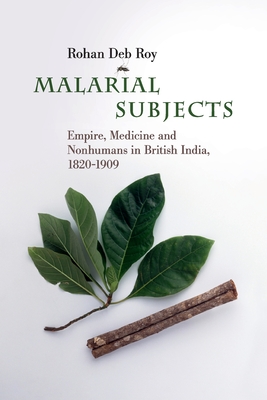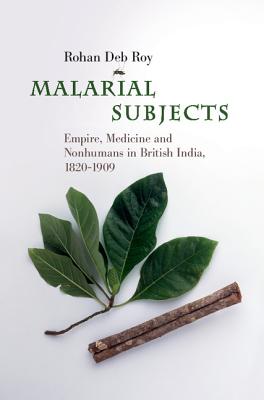
Malarial Subjects : Empire, Medicine and Nonhumans in British India, 1820–1909
Book Details
Format
Hardback
Book Series
Science in History
ISBN-10
1107172365
ISBN-13
9781107172364
Publisher
Cambridge University Press
Imprint
Cambridge University Press
Country of Manufacture
US
Country of Publication
GB
Publication Date
Sep 14th, 2017
Print length
346 Pages
Weight
694 grams
Dimensions
15.90 x 23.50 x 2.30 cms
KSh 18,350.00
Currently unavailable
0 in stock
Delivery Location
Delivery fee: Select location
Secure
Quality
Fast
Rohan Deb Roy argues that British imperial rule occasioned the attribution of medical properties to a range of nonhuman entities including plants, quinine, and mosquitoes in nineteenth-century India. Malarial Subjects is a major new contribution to science studies and the histories of the British Empire, colonial medicine and South Asia. This title is also available as Open Access.
Malaria was considered one of the most widespread disease-causing entities in the nineteenth century. It was associated with a variety of frailties far beyond fevers, ranging from idiocy to impotence. And yet, it was not a self-contained category. The reconsolidation of malaria as a diagnostic category during this period happened within a wider context in which cinchona plants and their most valuable extract, quinine, were reinforced as objects of natural knowledge and social control. In India, the exigencies and apparatuses of British imperial rule occasioned the close interactions between these histories. In the process, British imperial rule became entangled with a network of nonhumans that included, apart from cinchona plants and the drug quinine, a range of objects described as malarial, as well as mosquitoes. Malarial Subjects explores this history of the co-constitution of a cure and disease, of British colonial rule and nonhumans, and of science, medicine and empire. This title is also available as Open Access.
Get Malarial Subjects by Rohan Deb Roy at the best price and quality guaranteed only at Werezi Africa's largest book ecommerce store. The book was published by Cambridge University Press and it has 346 pages.
Customers Who Bought This Also Bought
Bill Bryson''s African Diary
KSh 2,350.00

January 6 and the Politics of History
KSh 4,650.00

World Beneath the Sands
KSh 3,050.00

Black Revolutionaries – A History of the Black Panther Party
KSh 6,850.00

Tutankhamun''s Trumpet
KSh 3,100.00

Tutankhamun''s Trumpet
KSh 2,350.00

Midnight Cry
KSh 5,900.00

The Proof Is in the Dough
KSh 5,750.00

The Zombie Memes of Dixie
KSh 5,050.00
Detailed Reports on the Salzburger Emigrants Who Settled in America...
KSh 26,700.00
Atlanta's Oakland Cemetery
KSh 7,350.00

Vanishing Georgia
KSh 8,000.00