
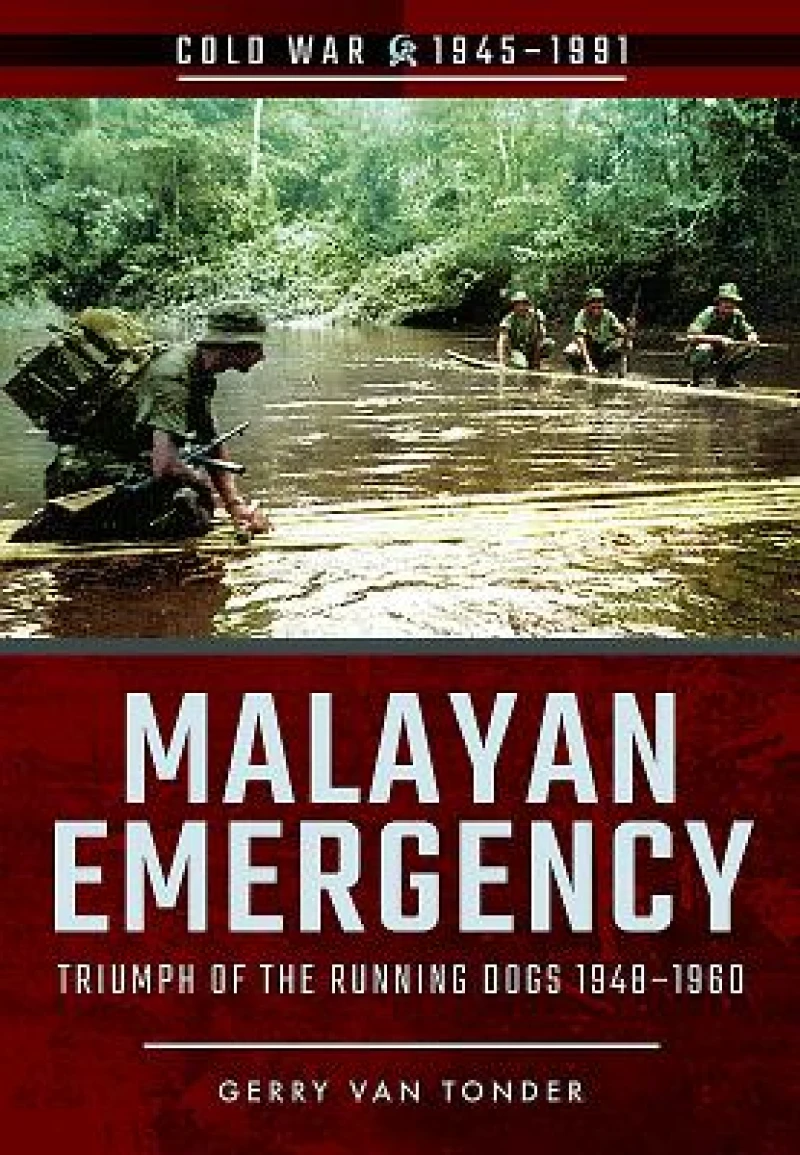
Malayan Emergency: Triumph of the Rubnning Dogs 1948-1960
Book Details
Format
Paperback / Softback
ISBN-10
1526707861
ISBN-13
9781526707864
Publisher
Pen & Sword Books Ltd
Imprint
Pen & Sword Books Ltd
Country of Manufacture
GB
Country of Publication
GB
Publication Date
Sep 1st, 2017
Print length
128 Pages
Weight
346 grams
Dimensions
23.40 x 15.80 x 0.90 cms
Product Classification:
Warfare & defenceWarfare and defence
Ksh 2,700.00
Temporarily out of stock, due soon
0 in stock
Delivery Location
Delivery fee: Select location
Secure
Quality
Fast
Exclusive first-hand accounts, views and analyses from personal author interviews with individuals who either served or lived in Malaya during the troubles
When the world held its breath It is 25 years since the end of the Cold War, now a generation old. It began over 75 years ago, in 1944 long before the last shots of the Second World War had echoed across the wastelands of Eastern Europe with the brutal Greek Civil War. The battle lines are no longer drawn, but they linger on, unwittingly or not, in conflict zones such as Iraq, Somalia and Ukraine. In an era of mass-produced AK-47s and ICBMs, one such flashpoint was Malaya By the time of the 1942 Japanese occupation of the Malay Peninsula and Singapore, the Malayan Communist Party (MCP) had already been fomenting merdeka independence from Britain. The Japanese conquerors, however, were also the loathsome enemies of the MCP s ideological brothers in China. An alliance of convenience with the British was the outcome. Britain armed and trained the MCP s military wing, the Malayan People s Anti-Japanese Army (MPAJA), to essentially wage jungle guerrilla warfare against Japanese occupying forces.With the cessation of hostilities, anti-Japanese became anti-British, and, using the same weapons and training fortuitously provided by the British army during the war, the MCP launched a guerrilla war of insurgency. Malaya was of significant strategic and economic importance to Britain. In the face of an emerging communist regime in China, a British presence in Southeast Asia was imperative. Equally, rubber and tin, largely produced in Malaya by British expatriates, were important inputs for British industry. Typically, the insurgents, dubbed Communist Terrorists, or simply CTs, went about attacking soft targets in remote areas: the rubber plantations and tin mines. In conjunction with this, was the implementation of Mao s dictate of subverting the rural, largely peasant, population to the cause. Twelve years of counter-insurgency operations ensued, as a wide range of British forces were joined in the conflict by ground, air and sea units from Australia, New Zealand, Southern and Northern Rhodesia, Fiji and Nyasaland.
Get Malayan Emergency: Triumph of the Rubnning Dogs 1948-1960 by at the best price and quality guaranteed only at Werezi Africa's largest book ecommerce store. The book was published by Pen & Sword Books Ltd and it has pages.

