
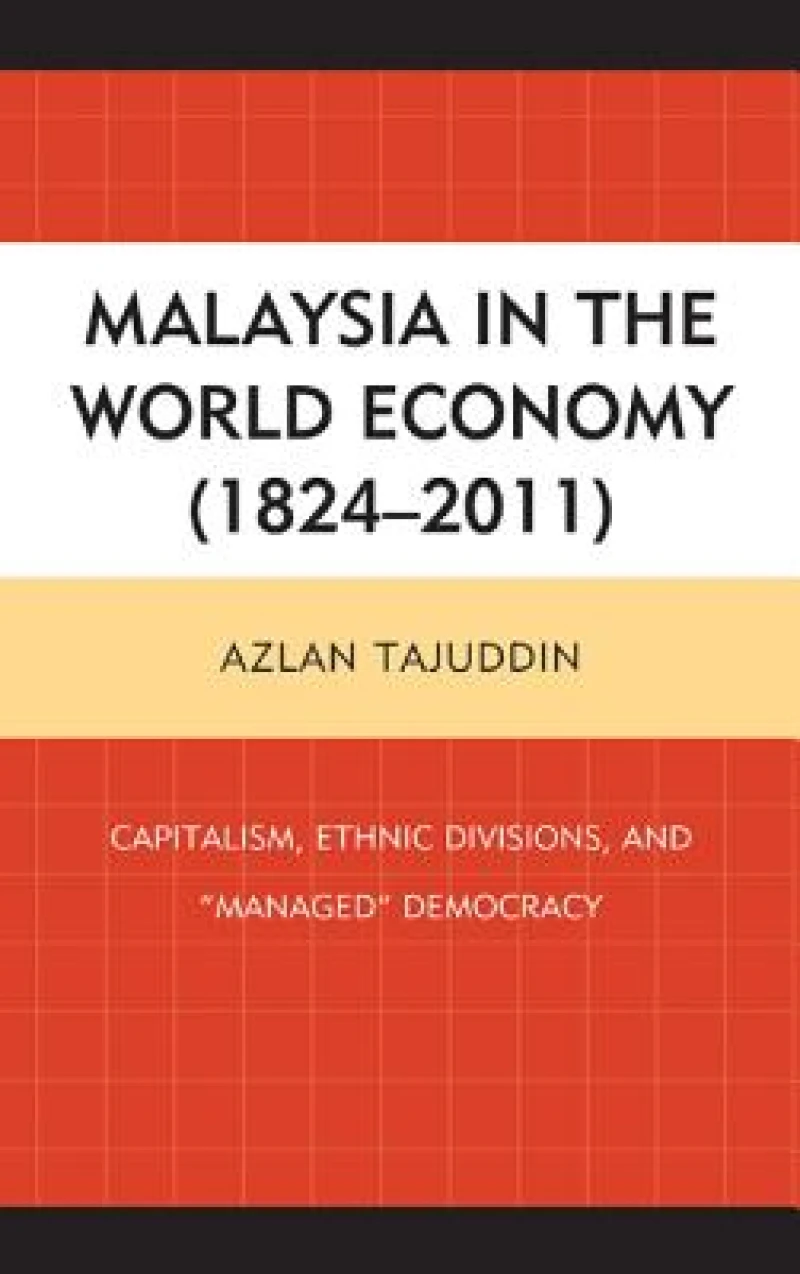
Malaysia in the World Economy (1824–2011) : Capitalism, Ethnic Divisions, and "Managed" Democracy
Book Details
Format
Paperback / Softback
ISBN-10
0739198017
ISBN-13
9780739198018
Publisher
Bloomsbury Publishing Plc
Imprint
Lexington Books
Country of Manufacture
GB
Country of Publication
GB
Publication Date
Jul 10th, 2014
Print length
294 Pages
Weight
422 grams
Dimensions
22.80 x 15.40 x 2.20 cms
Product Classification:
Asian historyEthnic studiesPolitical economy
Ksh 10,850.00
Manufactured on Demand
0 in stock
Delivery Location
Delivery fee: Select location
Secure
Quality
Fast
From colonialism to independent statehood, the extent of Malaysia’s capitalist development has been dramatically limited by its position in the world economy. This book combines macro- and micro-theoretical approaches in analyzing the relationship between capitalist development in Malaysia within a comparative-historical and world-systemic context.
Does the industrial development of a country entail the democratization of its political system? Malaysia in the World Economy examines this theme with regards to Malaysia in the period between 1824 and 2011. Capitalism was first introduced into Malaysia through colonialism specifically to supply Britain with much-needed raw materials for its industrial development. Aside from economic exploitation, colonial rule had also produced a highly unequal and socially distant multicultural society, whose multifaceted divisions kept the colonial rulers in supreme authority. After independence, Britain ensured that Malaysia became a staunch western ally by structuring in a capitalist system specifically helmed by western-educated elites through what appeared to be “formal” democratic institutions. In such a system, the Malaysian ruling elites have been able to “manage” the country’s democratic processes to its advantage as well as preempt or suppress serious internal challenges to its power, often in the name of national stability. As a result, an increasingly unpopular National Front political coalition has remained in power in the country since 1957. Meanwhile, Malaysia’s marginal position in the world economy, which has maintained its economic subordination to the developed countries of the west and Japan, has reproduced the internal social inequities inherited from colonial rule and channeled the largest returns of economic growths into the hands of the country’s foreign investors as well as local elites associated with the ruling machinery. Over the years however, the state has lost some of its political legitimacy in the face of widening social disparities, increased ethnic polarization, and prevalent corruption. This has been made possible by extensive exposures of these issues via new social media and communications technology. Hence, informational globalization may have begun to empower Malaysians in a new struggle for political reform, thereby reconfiguring the balance of power between the state and civil society. Unlike other past research, Malaysia in the World Economy combines both macro- and micro-theoretical approaches in critically analyzing the relationship between capitalist development and democratization in Malaysia within a comparative-historical and world-systemic context.
Get Malaysia in the World Economy (1824–2011) by at the best price and quality guaranteed only at Werezi Africa's largest book ecommerce store. The book was published by Bloomsbury Publishing Plc and it has pages.

