
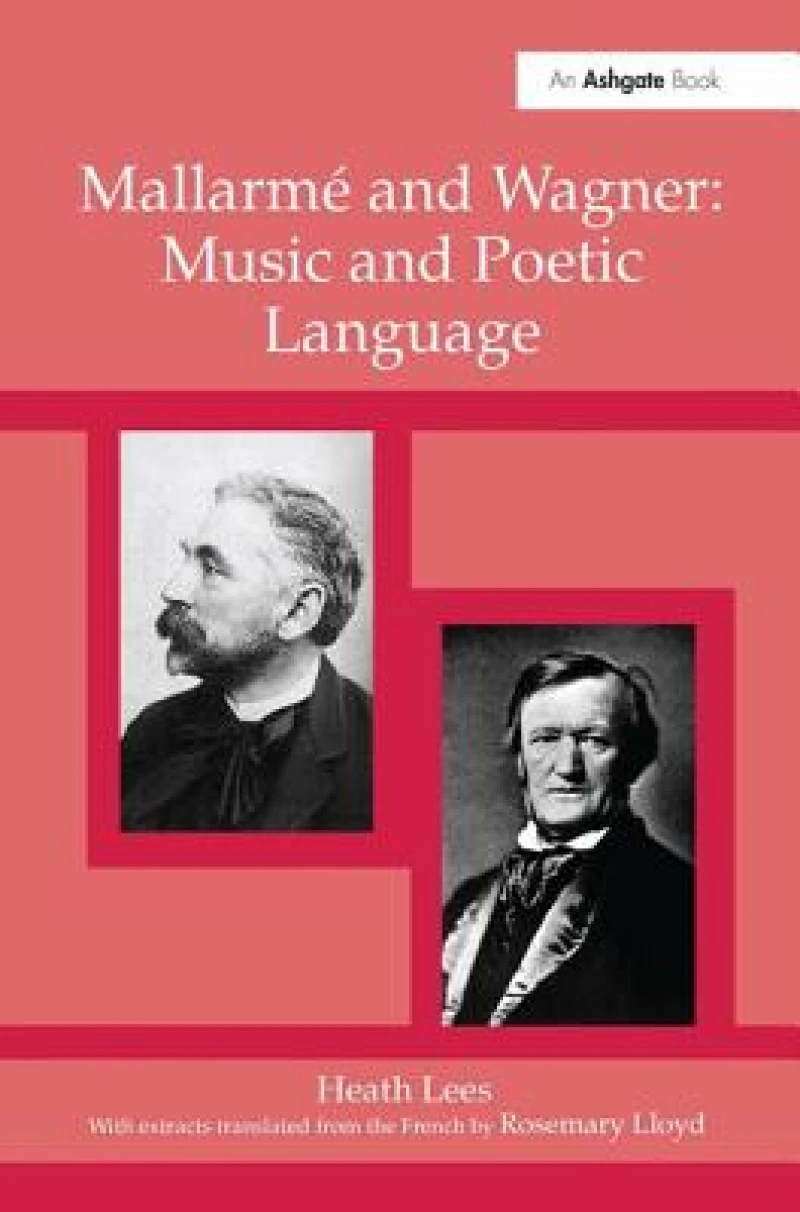
Mallarme and Wagner: Music and Poetic Language
by
Heath Lees
Book Details
Format
Hardback or Cased Book
ISBN-10
0754658090
ISBN-13
9780754658092
Publisher
Taylor & Francis Ltd
Imprint
Routledge
Country of Manufacture
GB
Country of Publication
GB
Publication Date
Jun 21st, 2007
Print length
272 Pages
Weight
544 grams
Product Classification:
Romantic music (c 1830 to c 1900)Literary studies: c 1800 to c 1900 Literary studies: poetry & poets
Ksh 28,800.00
Werezi Extended Catalogue
0 in stock
Delivery Location
Delivery fee: Select location
Secure
Quality
Fast
Surveys the success and failure that resulted from Mallarme's repeated attempts to draw out the musical gestures and resonances of words alone. In the process, this work throws light on many of Mallarme's best-known texts, hitherto judged 'difficult' by those who have failed to appreciate the extent of the poet's heroic descent.
This book challenges and replaces the existing view of Mallarmé''s mission to ''re-possess'' music on behalf of poetic language. Traditionally, this view focused on only the last fifteen years of the poet''s life, and sprang from a belief in Mallarmé''s ''sudden awakening'' to music during an all-Wagner concert in Paris, in 1885. Professor Heath Lees shows that Mallarmé''s early knowledge and experience of music was much greater than commentators have realized, and that the French poet actually began his writing career with the explicit aim of making music''s performance-language of ''effect'' the ground of his poetic expression. Integral to the argument is Mallarmé''s reaction to the work and ideas of Richard Wagner, whose impact on France came in two waves: the first broke during the tempestuous 1860s days of the Paris Tannhäuser, while the second arrived in the mid-1880s, and gave birth to the Revue Wagnérienne. In refuting the critical literature that focuses on only the second of these waves, Lees shows that Mallarmé exhibited a highly informed Wagnerian background during the first wave, and that his grasp of the composer''s gestural motives and flexible musical prose led him towards a new kind of self-expressive, gestural rhythm that aimed musically to reinvent poetic language. In support of this, the book examines closely what Wagner ''really'' said in the prose works that were becoming known in Paris by the 1860s, in particular, Wagner''s important French text, the Lettre sur la musique. It also re-examines Baudelaire''s classic Wagner-brochure, and reveals its author''s surprisingly firm grasp of Wagner''s musico-poetic fusion. In musically informed commentary, Professor Lees surveys the four decades of success and failure that resulted from Mallarmé''s repeated attempts to draw out the musical gestures and resonances of words alone. In the process, he throws new light on many of Mallarmé''s best-known texts, hitherto judged ''difficult'' by those who have failed to appreciate the extent of the poet''s heroic descent through the surface of words in search of ''la Musique''.
Get Mallarme and Wagner: Music and Poetic Language by at the best price and quality guaranteed only at Werezi Africa's largest book ecommerce store. The book was published by Taylor & Francis Ltd and it has pages.

