
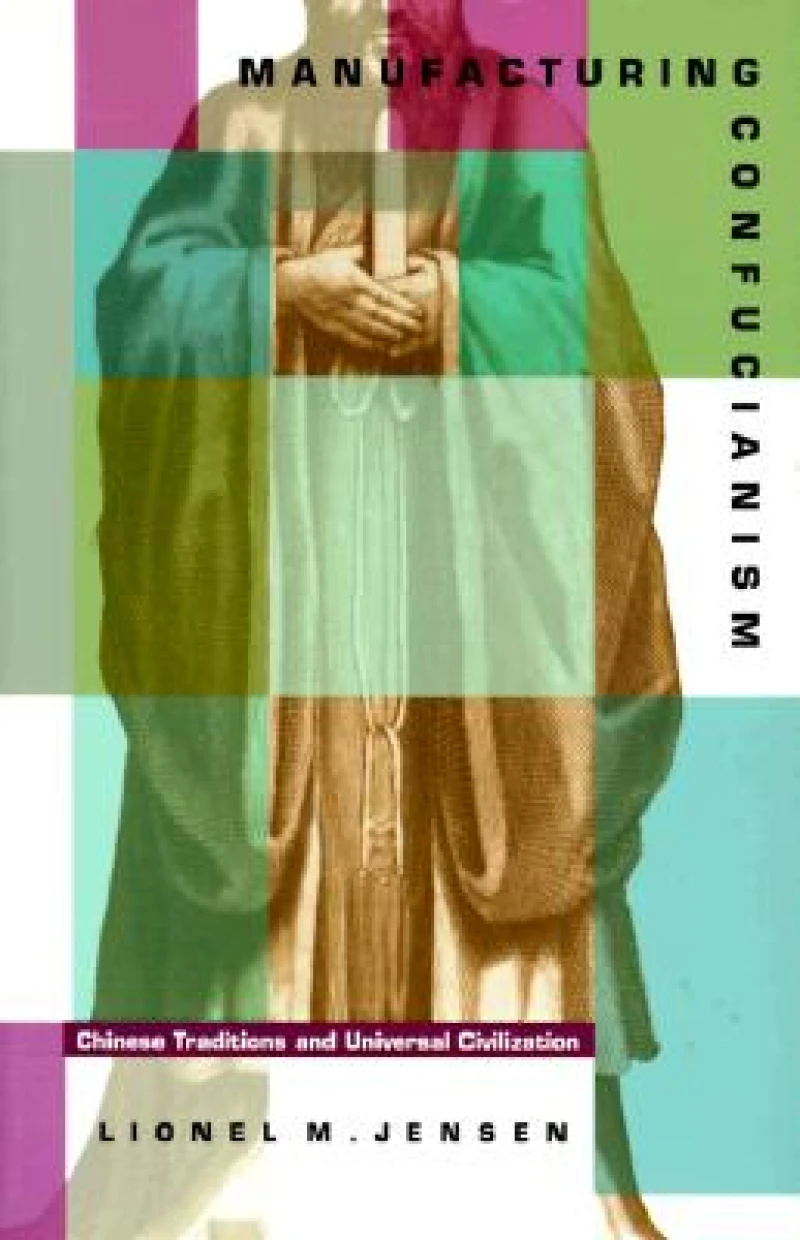
Manufacturing Confucianism : Chinese Traditions and Universal Civilization
Book Details
Format
Paperback / Softback
ISBN-10
0822320479
ISBN-13
9780822320470
Publisher
Duke University Press
Imprint
Duke University Press
Country of Manufacture
US
Country of Publication
GB
Publication Date
Feb 2nd, 1998
Print length
472 Pages
Weight
798 grams
Dimensions
23.30 x 15.70 x 3.40 cms
Product Classification:
ConfucianismCultural studiesCultural studiesConfucianism
Ksh 5,700.00
Werezi Extended Catalogue
0 in stock
Delivery Location
Delivery fee: Select location
Secure
Quality
Fast
Traces the history of the Jesuits' invention of Confucius and of themselves as native defenders of Confucius' teaching. This book demonstrates how sixteenth- and seventeenth-century Western missionaries used translations of the ancient ru tradition to invent the historical figure who has since been globally celebrated as philosopher, and prophet.
Could it be that the familiar and beloved figure of Confucius was invented by Jesuit priests? In Manufacturing Confucianism, Lionel M. Jensen reveals this very fact, demonstrating how sixteenth- and seventeenth-century Western missionaries used translations of the ancient ru tradition to invent the presumably historical figure who has since been globally celebrated as philosopher, prophet, statesman, wise man, and saint.
Tracing the history of the Jesuits’ invention of Confucius and of themselves as native defenders of Confucius’s teaching, Jensen reconstructs the cultural consequences of the encounter between the West and China. For the West, a principal outcome of this encounter was the reconciliation of empirical investigation and theology on the eve of the scientific revolution. Jensen also explains how Chinese intellectuals in the early twentieth century fashioned a new cosmopolitan Chinese culture through reliance on the Jesuits’ Confucius and Confucianism. Challenging both previous scholarship and widespread belief, Jensen uses European letters and memoirs, Christian histories and catechisms written in Chinese, translations and commentaries on the Sishu, and a Latin summary of Chinese culture known as the Confucius Sinarum Philosophus to argue that the national self-consciousness of Europe and China was bred from a cultural ecumenism wherein both were equal contributors.
Tracing the history of the Jesuits’ invention of Confucius and of themselves as native defenders of Confucius’s teaching, Jensen reconstructs the cultural consequences of the encounter between the West and China. For the West, a principal outcome of this encounter was the reconciliation of empirical investigation and theology on the eve of the scientific revolution. Jensen also explains how Chinese intellectuals in the early twentieth century fashioned a new cosmopolitan Chinese culture through reliance on the Jesuits’ Confucius and Confucianism. Challenging both previous scholarship and widespread belief, Jensen uses European letters and memoirs, Christian histories and catechisms written in Chinese, translations and commentaries on the Sishu, and a Latin summary of Chinese culture known as the Confucius Sinarum Philosophus to argue that the national self-consciousness of Europe and China was bred from a cultural ecumenism wherein both were equal contributors.
Get Manufacturing Confucianism by at the best price and quality guaranteed only at Werezi Africa's largest book ecommerce store. The book was published by Duke University Press and it has pages.

