
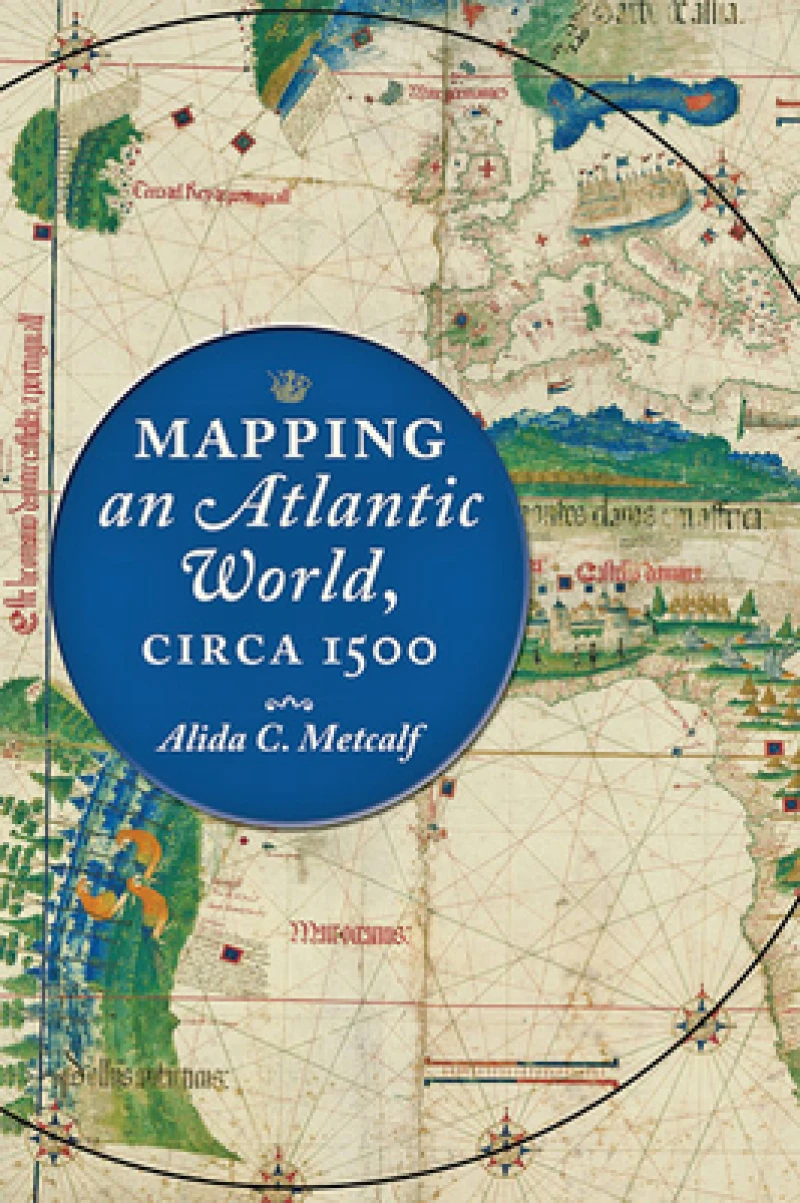
Mapping an Atlantic World, circa 1500
Book Details
Format
Hardback or Cased Book
ISBN-10
1421438526
ISBN-13
9781421438528
Publisher
Johns Hopkins University Press
Imprint
Johns Hopkins University Press
Country of Manufacture
US
Country of Publication
GB
Publication Date
Dec 8th, 2020
Print length
248 Pages
Weight
522 grams
Dimensions
16.40 x 24.10 x 2.60 cms
Ksh 8,000.00
Temporarily out of stock, due soon
0 in stock
Delivery Location
Delivery fee: Select location
Secure
Quality
Fast
How did intricately detailed sixteenth-century maps reveal the start of the Atlantic World?Beginning around 1500, in the decades following Columbus's voyages, the Atlantic Ocean moved from the periphery to the center on European world maps. This brief but highly significant moment in early modern European history marks not only a paradigm shift in how the world was mapped but also the opening of what historians call the Atlantic World. But how did sixteenth-century chartmakers and mapmakers begin to conceptualize—and present to the public—an interconnected Atlantic World that was open and navigable, in comparison to the mysterious ocean that had blocked off the Western hemisphere before Columbus's exploration?In Mapping an Atlantic World, circa 1500, Alida C. Metcalf argues that the earliest surviving maps from this era, which depict trade, colonization, evangelism, and the movement of peoples, reveal powerful and persuasive arguments about the possibility of an interconnected Atlantic World. Blending scholarship from two fields, historical cartography and Atlantic history, Metcalf explains why Renaissance cosmographers first incorporated sailing charts into their maps and began to reject classical models for mapping the world. Combined with the new placement of the Atlantic, the visual imagery on Atlantic maps—which featured decorative compass roses, animals, landscapes, and native peoples—communicated the accessibility of distant places with valuable commodities. Even though individual maps became outdated quickly, Metcalf reveals, new mapmakers copied their imagery, which then repeated on map after map. Individual maps might fall out of date, be lost, discarded, or forgotten, but their geographic and visual design promoted a new way of seeing the world, with an interconnected Atlantic World at its center. Describing the negotiation that took place between a small cadre of explorers and a wider class of cartographers, chartmakers, cosmographers, and artists, Metcalf shows how exploration informed mapmaking and vice versa. Recognizing early modern cartographers as significant agents in the intellectual history of the Atlantic, Mapping an Atlantic World, circa 1500 includes around 50 beautiful and illuminating historical maps.
In this erudite and deeply researched volume, Alida Metcalf probes how the Atlantic Ocean became central to the production of maps, forerunners of the integrated Atlantic world brought about by European expansion. By meticulously reconstructing circuits of knowledge and networks of individuals, this book makes a major contribution to multiple fields of historical inquiry.
—Roquinaldo Ferreira, University of Pennsylvania, author of Cross-Cultural Exchange in the Atlantic World: Angola and Brazil during the Era of the Slave Trade
—Roquinaldo Ferreira, University of Pennsylvania, author of Cross-Cultural Exchange in the Atlantic World: Angola and Brazil during the Era of the Slave Trade
Carefully following the craft of manuscript chart-makers and print-makers of maps, Metcalf brilliantly demonstrates that when European world maps were radically and suddenly decentered circa 1500, it was artisans, not emperors, missionaries, or conquistadors, who established the conventions of how to represent continents and new peoples for centuries to come.
—Jorge Cañizares-Esguerra, University of Texas at Austin, author of Nature, Empire, And Nation: Explorations of the History of Science in the Iberian World
—Jorge Cañizares-Esguerra, University of Texas at Austin, author of Nature, Empire, And Nation: Explorations of the History of Science in the Iberian World
An excellently written and painstakingly researched account of a handful of the earliest large-scale maps of the Americas, beginning with Juan de la Cosa and ending with Waldseemüller. Metcalf also pays a great deal of attention to the mechanical process of making these maps.
—Patricia Seed, University of California, Irvine, author of The Oxford Map Companion: One Hundred Sources in World History
—Patricia Seed, University of California, Irvine, author of The Oxford Map Companion: One Hundred Sources in World History
Metcalf references a remarkable array of manuscript and printed maps and charts to advance a provocative argument: by depicting the Atlantic Ocean as a place of opportunity and exploitation, these artifacts both explained Europeans'' rapid interest in the western Atlantic and created the Atlantic World. An original approach and interpretation, sure to interest readers in diverse fields.
—Alison Games, Georgetown University, author of Inventing the English Massacre: Amboyna in History and Memory
—Alison Games, Georgetown University, author of Inventing the English Massacre: Amboyna in History and Memory
Get Mapping an Atlantic World, circa 1500 by at the best price and quality guaranteed only at Werezi Africa's largest book ecommerce store. The book was published by Johns Hopkins University Press and it has pages.

