
Book Details
Format
Paperback / softback
ISBN-10
3034318340
ISBN-13
9783034318341
Edition
New
Publisher
Peter Lang AG, Internationaler Verlag der Wissenschaften
Imprint
Peter Lang AG, Internationaler Verlag der Wissensc
Country of Manufacture
CH
Country of Publication
GB
Publication Date
Aug 27th, 2015
Print length
224 Pages
Weight
356 grams
Dimensions
15.20 x 22.50 x 1.40 cms
KSh 9,750.00
Currently unavailable
0 in stock
Delivery Location
Delivery fee: Select location
Secure
Quality
Fast
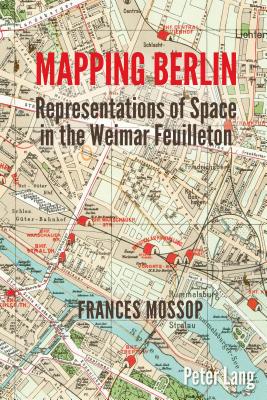
The Weimar period (1919–1933) generated an immense wealth of writings that recorded impressions of daily life in the German capital of Berlin. This book offers an original approach to literary journalism of the time by exploring how writers Joseph Roth, Gabriele Tergit and Kurt Tucholsky engaged with the space of Berlin on the page.
The Weimar period (1919-1933) generated an immense wealth of writings that recorded impressions of daily life in the German capital of Berlin. This book offers an original approach to literary journalism of the time by exploring how writers Joseph Roth, Gabriele Tergit and Kurt Tucholsky engaged with the space of Berlin on the page.
Get Mapping Berlin by Frances Mossop at the best price and quality guaranteed only at Werezi Africa's largest book ecommerce store. The book was published by Peter Lang AG, Internationaler Verlag der Wissenschaften and it has 224 pages.
Customers Who Bought This Also Bought

Dreams in a Time of War
KSh 3,050.00
Modern Classics Penguin Essays of George Orwell
KSh 2,700.00

On Writing
KSh 2,000.00

To the Lighthouse
KSh 1,450.00

On Morrison
KSh 4,500.00

Africa''s Tarnished Name
KSh 700.00
C. S. Lewis
KSh 1,800.00

Life in Letters
KSh 5,400.00

By Grand Central Station I
KSh 1,800.00
Wide Sargasso Sea
KSh 1,800.00

Mom and Me and Mom
KSh 2,000.00
Jorge Luis Borges
KSh 1,800.00
