
Book Details
Delivery Location
Delivery fee: Select location
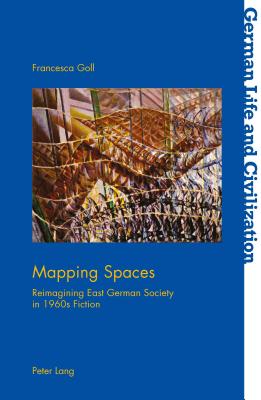
In the process of establishing the social and political reality of the German Democratic Republic, writers played a crucial role. The specific feature of GDR literary texts of the 1960s lies in their attempt at imagining and representing the emergence of a community that had previously not existed. A new sense of common belonging was being promoted. This study focuses on the ways in which Werner Bräunig and Erik Neutsch negotiated this tension in their novels by analysing the spatial and topographical dimensions of the texts. If literary texts map power structures by rewriting cartographies, then the analysis of the latter will shed light on the socio-political models that are being advocated. Neutsch’s Spur der Steine (1964) and Bräunig’s fragment Rummelplatz (2007) were both written in the 1960s but enjoyed a very different reception: while the former became a bestseller, the latter was censored and published posthumously in 2007. Yet they both speak to GDR society of the 1960s, highlighting the evocative power of literature within the East German context – and beyond.
Get Mapping Spaces by Francesca Goll at the best price and quality guaranteed only at Werezi Africa's largest book ecommerce store. The book was published by Peter Lang Ltd and it has 262 pages.
Customers Who Bought This Also Bought

Dreams in a Time of War
KSh 3,050.00

Modern Classics Penguin Essays of George Orwell
KSh 2,700.00

On Writing
KSh 2,000.00

To the Lighthouse
KSh 1,450.00

On Morrison
KSh 4,500.00

Africa''s Tarnished Name
KSh 700.00
C. S. Lewis
KSh 1,800.00

Life in Letters
KSh 5,400.00

By Grand Central Station I
KSh 1,800.00
Wide Sargasso Sea
KSh 1,800.00

Mom and Me and Mom
KSh 2,000.00
Jorge Luis Borges
KSh 1,800.00
