
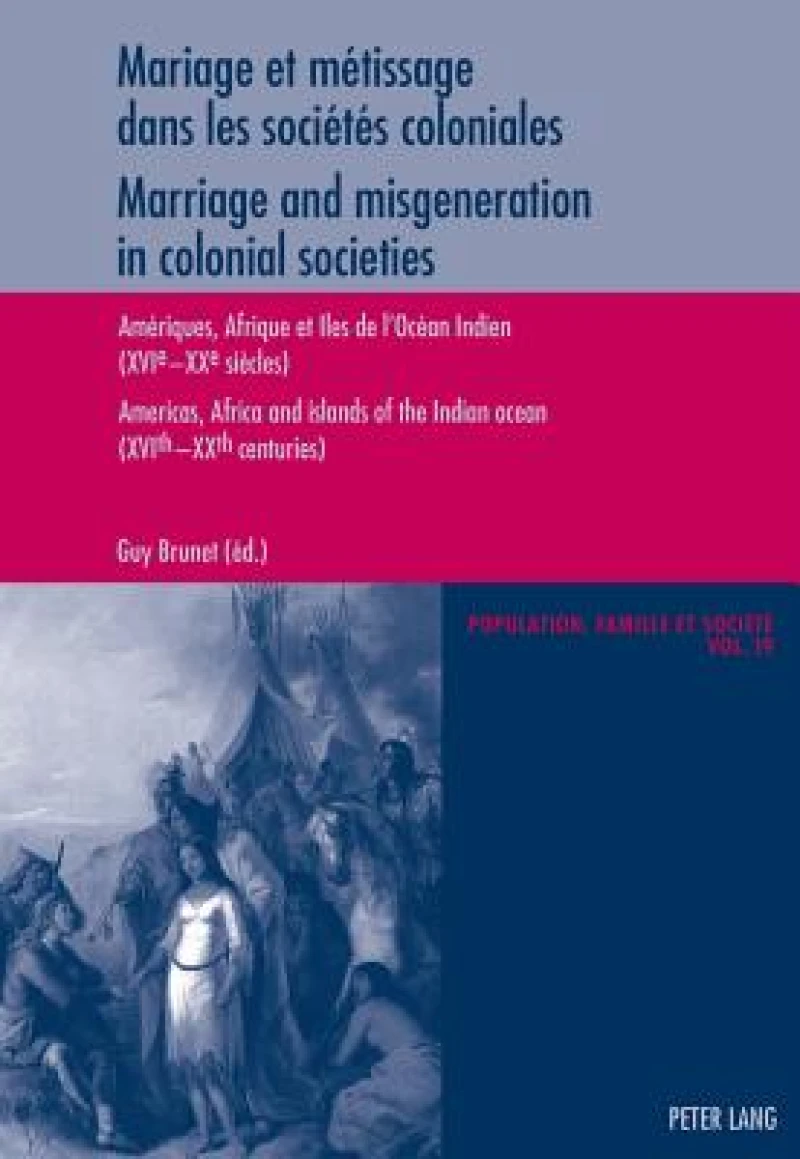
Mariage et métissage dans les sociétés coloniales - Marriage and misgeneration in colonial societies : Amaeriques, Afriques Et Iles De l'Ocaean Indien (XVIe-XXe Siaecles) = Marriage and Misgeneration in Colonial Societies : Americas, Africa and Islands of the Indian Ocean (XVIth-XXth Centuries)
Book Details
Format
Paperback / Softback
ISBN-10
3034316054
ISBN-13
9783034316057
Publisher
Peter Lang AG
Imprint
Peter Lang AG
Country of Manufacture
CH
Country of Publication
GB
Publication Date
Jan 16th, 2015
Print length
363 Pages
Ksh 12,850.00
Manufactured on Demand
0 in stock
Delivery Location
Delivery fee: Select location
Secure
Quality
Fast
La conquête de vastes empires coloniaux par les puissances européennes, suivie par des mouvements migratoires d’ampleur variable selon les territoires et les époques, a donné naissance à de nouvelles sociétés. Les principaux groupes humains, indigènes, sous différentes appellations, colons d’origine européenne et leurs descendants, et parfois esclaves arrachés au continent africain, se sont mélangés parfois rapidement et avec une forte intensité, parfois plus tardivement ou marginalement. Les unions, officialisées par des mariages ou restées consensuelles, provoqué l’apparition de nouvelles générations métisses et ainsi qu’un phénomène de créolisation. L’effectif de chacun de ces groupes humains, et l’existence éventuelle de barrières entre eux, ont produit des degrés de métissage très divers que les administrateurs des sociétés coloniales ont tenté de classifier. Les seize textes réunis dans cet ouvrage abordent la manière dont les populations se sont mélangées, ainsi que la position des métis dans les nouvelles sociétés. Ces questions sont abordées dans une perspective de long terme, du XVIe au XXe siècle, et à propos de nombreux territoires, du Canada à la Bolivie, des Antilles à Madagascar, de l’Algérie à l’Angola.
The conquest of large colonial empires by European powers, followed by migratory flows, more or less important depending on places and periods, gave birth to new societies. The most important human groups, indigenous, European born settlers and their descendants, and sometimes slaves snatched from the African continent, mixed, more or less early, more or less intensely. Unions, legally registered or not, and misgeneration lead to the appearance of mixed-blood generations and to a process of creolisation. The numerical strength of these human groups, and the existence of barriers between them, produced various degrees of misgeneration that the authorities of the colonial societies tried to identify and to classify. The sixteen texts gathered in this book study the way that these populations got mixed, and the place of mixed-blood people in the new societies. These issues are tackled in a long-term perspective, about various territories, from Canada to Bolivia, from the French West Indies to Madagascar, from Algeria to Angola.
The conquest of large colonial empires by European powers, followed by migratory flows, more or less important depending on places and periods, gave birth to new societies. The most important human groups, indigenous, European born settlers and their descendants, and sometimes slaves snatched from the African continent, mixed, more or less early, more or less intensely. Unions, legally registered or not, and misgeneration lead to the appearance of mixed-blood generations and to a process of creolisation. The numerical strength of these human groups, and the existence of barriers between them, produced various degrees of misgeneration that the authorities of the colonial societies tried to identify and to classify. The sixteen texts gathered in this book study the way that these populations got mixed, and the place of mixed-blood people in the new societies. These issues are tackled in a long-term perspective, about various territories, from Canada to Bolivia, from the French West Indies to Madagascar, from Algeria to Angola.
Get Mariage et métissage dans les sociétés coloniales - Marriage and misgeneration in colonial societies by at the best price and quality guaranteed only at Werezi Africa's largest book ecommerce store. The book was published by Peter Lang AG and it has pages.

