
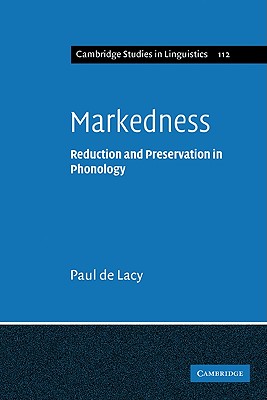
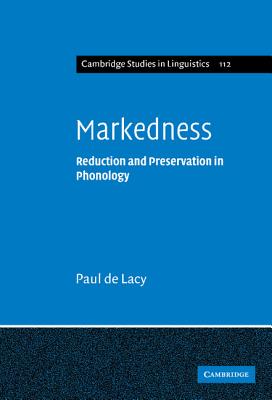
Markedness : Reduction and Preservation in Phonology
by
Paul de Lacy
Book Details
Format
Paperback / softback
Book Series
Cambridge Studies in Linguistics
ISBN-10
0521142237
ISBN-13
9780521142236
Publisher
Cambridge University Press
Imprint
Cambridge University Press
Country of Manufacture
GB
Country of Publication
GB
Publication Date
Apr 1st, 2010
Print length
468 Pages
Weight
68 grams
Dimensions
15.20 x 22.90 x 3.60 cms
Product Classification:
Phonetics, phonology
KSh 8,300.00
Currently unavailable
0 in stock
Delivery Location
Delivery fee: Select location
Secure
Quality
Fast
This book presents a groundbreaking theory of markedness in phonology, the tendency of languages to show a preference for particular structures or sounds. Drawing on examples from a wide range of phonological phenomena, de Lacy argues that markedness is part of our linguistic competence, determined by conflicting mechanisms in the brain.
'Markedness' refers to the tendency of languages to show a preference for particular structures or sounds. This bias towards 'marked' elements is consistent within and across languages, and tells us a great deal about what languages can and cannot do. This pioneering study presents a groundbreaking theory of markedness in phonology. De Lacy argues that markedness is part of our linguistic competence, and is determined by three conflicting mechanisms in the brain: (a) pressure to preserve marked sounds ('preservation'), (b) pressure to turn marked sounds into unmarked sounds ('reduction'), and (c) a mechanism allowing the distinction between marked and unmarked sounds to be collapsed ('conflation'). He shows that due to these mechanisms, markedness occurs only when preservation is irrelevant. Drawing on examples of phenomena such as epenthesis, neutralisation, assimilation, vowel reduction and sonority-driven stress, Markedness offers an important insight into this essential concept in the understanding of human language.
Get Markedness by Paul de Lacy at the best price and quality guaranteed only at Werezi Africa's largest book ecommerce store. The book was published by Cambridge University Press and it has 468 pages.
Customers Who Bought This Also Bought
Analyzing Sound Patterns
KSh 9,000.00

Irmgard Weithase – Grenzgaenge
KSh 7,550.00
SynchronEmotion
KSh 7,150.00

Prosodische Formen in Funktion
KSh 11,600.00

Sprechwissenschaftlich-phonetische Untersuchungen zur interkulturellen Kommunikation Russisch – Deutsch
KSh 12,300.00
The Oxford Guide to the Uralic Languages
KSh 38,800.00
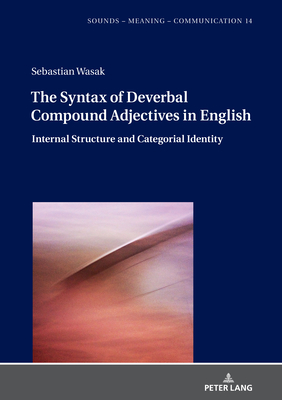
The Syntax of Deverbal Compound Adjectives in English
KSh 7,600.00
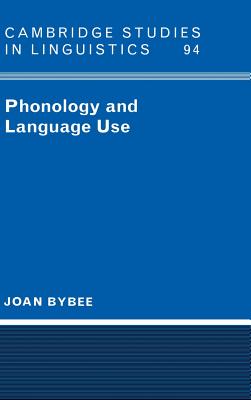
Phonology and Language Use
KSh 18,900.00
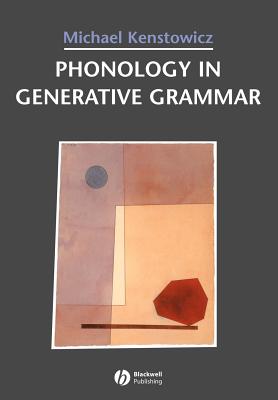
Phonology Generative Grammar
KSh 10,000.00

A Brief History of the Chinese Language I
KSh 8,800.00

Piros and Prehistory
KSh 10,100.00

Transkripte Und Tondokumente
KSh 29,250.00
More by Paul de Lacy
More in This Genre
Analyzing Sound Patterns
KSh 9,000.00
Irmgard Weithase – Grenzgaenge
KSh 7,550.00
SynchronEmotion
KSh 7,150.00
Prosodische Formen in Funktion
KSh 11,600.00
Sprechwissenschaftlich-phonetische Untersuchungen zur interkulturellen Kommunikation Russisch – Deutsch
KSh 12,300.00
The Oxford Guide to the Uralic Languages
KSh 38,800.00
