
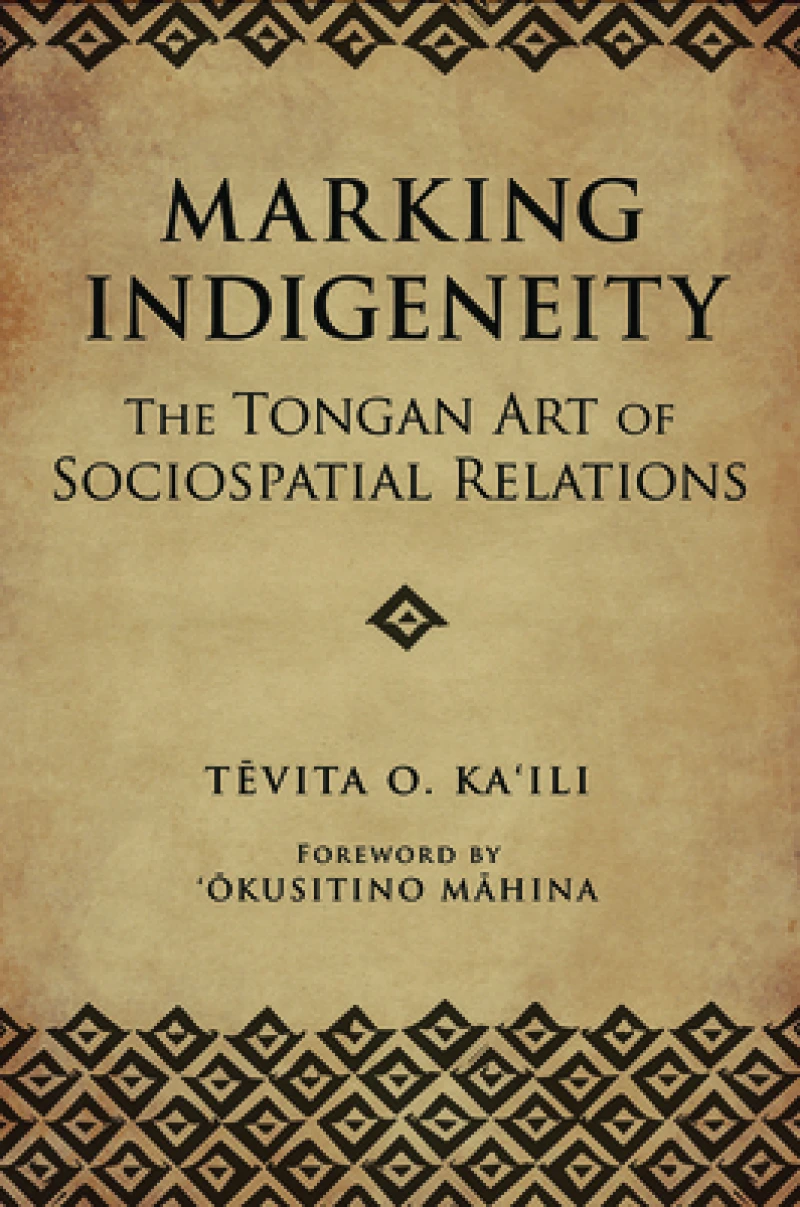
Marking Indigeneity : The Tongan Art of Sociospatial Relations
Book Details
Format
Paperback / Softback
ISBN-10
0816538670
ISBN-13
9780816538676
Publisher
University of Arizona Press
Imprint
University of Arizona Press
Country of Manufacture
US
Country of Publication
GB
Publication Date
Aug 7th, 2018
Print length
200 Pages
Weight
295 grams
Dimensions
22.60 x 15.20 x 1.20 cms
Product Classification:
Social & cultural anthropology, ethnographySocial and cultural anthropology
Ksh 4,150.00
Werezi Extended Catalogue
0 in stock
Delivery Location
Delivery fee: Select location
Secure
Quality
Fast
Examines the conflicts and reconciliation of indigenous time-space within the Tongan community in Maui, as well as within the time-space of capitalism. Using indigenous theory, the author provides an ethnography of the social relations of the highly mobile Tongans.
Tongans, the native people of the Kingdom of Tonga in the South Pacific, are a highly mobile indigenous group. Like their seafaring ancestors, they are constantly on the move across ta (time) and va (space). Carrying their traditions with them, Tongans living in Maui, Hawai‘i, actively mediate those dimensions by extending the time-space structure of certain activities and places in order to practice tauhi va—the marking of time to sustain harmonious relations and create beautiful sociospatial relations.
In Marking Indigeneity, Tevita O. Ka‘ili examines the conflicts and reconciliation of indigenous time-space within the Tongan community in Maui, as well as within the time-space of capitalism. Using indigenous theory, he provides an ethnography of the social relations of the highly mobile Tongans.
Focusing on tauhi va, Ka‘ili notes certain examples of this time marking: the faikava gatherings that last from sunset to sunrise, long eating gatherings, long conversations (talanoa), the all-night funeral wakes, and the early arrival to and late departure from meetings and celebrations. Ka‘ili also describes the performing art of tauhi va, which creates symmetry through the performance of social duties (fatongia). This gives rise to powerful feelings of warmth, elation, and honor among the performers. Marking Indigeneity offers an ethnography of the extension of time-space that is rooted in ancient Moana oral traditions, thoughtfully illustrating the continuation of these traditions.
In Marking Indigeneity, Tevita O. Ka‘ili examines the conflicts and reconciliation of indigenous time-space within the Tongan community in Maui, as well as within the time-space of capitalism. Using indigenous theory, he provides an ethnography of the social relations of the highly mobile Tongans.
Focusing on tauhi va, Ka‘ili notes certain examples of this time marking: the faikava gatherings that last from sunset to sunrise, long eating gatherings, long conversations (talanoa), the all-night funeral wakes, and the early arrival to and late departure from meetings and celebrations. Ka‘ili also describes the performing art of tauhi va, which creates symmetry through the performance of social duties (fatongia). This gives rise to powerful feelings of warmth, elation, and honor among the performers. Marking Indigeneity offers an ethnography of the extension of time-space that is rooted in ancient Moana oral traditions, thoughtfully illustrating the continuation of these traditions.
Get Marking Indigeneity by at the best price and quality guaranteed only at Werezi Africa's largest book ecommerce store. The book was published by University of Arizona Press and it has pages.

