
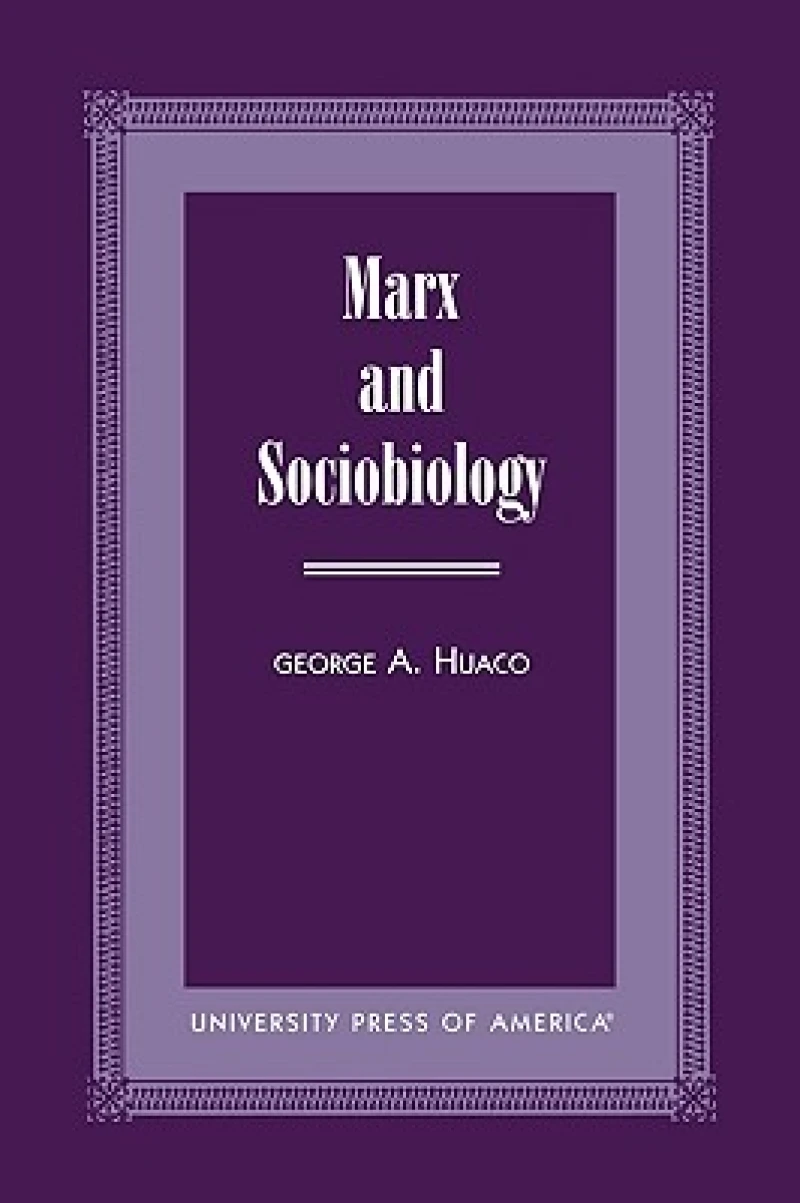
Marx and Sociobiology
Book Details
Format
Paperback / Softback
ISBN-10
076181535X
ISBN-13
9780761815358
Publisher
University Press of America
Imprint
University Press of America
Country of Manufacture
GB
Country of Publication
GB
Publication Date
Oct 27th, 1999
Print length
144 Pages
Weight
226 grams
Dimensions
15.10 x 22.90 x 1.20 cms
Ksh 10,600.00
Manufactured on Demand
0 in stock
Delivery Location
Delivery fee: Select location
Secure
Quality
Fast
Provocative in content, this book is the only one of its kind to evaluate Marx''s work in light of recent theories in sociobiology. Huaco identifies several dynamic aspects of Marx''s socio-cultural model and uses current research concerning the genetic basis of certain human behaviors to determine their validity. Specifically, he examines issues surrounding ownership relations, surplus transfer and economic exploitation, class struggle, and the development of high culture. In addition to arguing that innovation and competition are necessary to prevent a stagnant economy, Huaco contends that stopping surplus transfer will not eliminate poverty as Marx maintained. Instead of retaining surplus, society can develop ways to recover surplus that will put an end to poverty and the social problems that stem from it. Sociologists and other scholars interested in socio-economic theory will find this thought provoking work stimulating.
Get Marx and Sociobiology by at the best price and quality guaranteed only at Werezi Africa's largest book ecommerce store. The book was published by University Press of America and it has pages.

