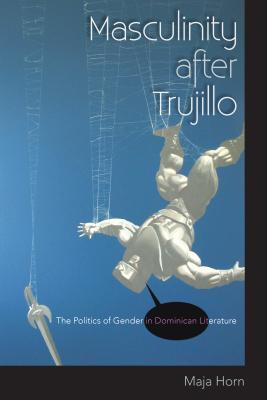
Masculinity after Trujillo : The Politics of Gender in Dominican Literature
by
Maja Horn
Book Details
Format
Paperback / softback
ISBN-10
0813054001
ISBN-13
9780813054001
Publisher
University Press of Florida
Imprint
University Press of Florida
Country of Manufacture
US
Country of Publication
GB
Publication Date
Jan 3rd, 2017
Print length
220 Pages
Weight
315 grams
Dimensions
22.90 x 15.10 x 1.20 cms
KSh 4,300.00
Werezi Extended Catalogue
Delivery in 12 days
1 copies in stock
Delivery Location
Delivery fee: Select location
Delivery in 12 days
Secure
Quality
Fast
Any observer of Dominican political and literary discourse will quickly notice how certain notions of hyper-masculinity permeate the culture. In this extraordinary work, Maja Horn argues that this common Dominican attitude became ingrained during the dictatorship (1930-61) of Rafael Leonidas Trujillo, as well as through the US military occupation that preceded it.
Any observer of Dominican political and literary discourse will quickly notice how certain notions of hyper-masculinity permeate the culture. Many critics will attribute this to an outgrowth of “traditional” Latin American patriarchal culture. Masculinity after Trujillo demonstrates why they are mistaken. In this extraordinary work, Maja Horn argues that this common Dominican attitude became ingrained during the dictatorship (1930–61) of Rafael Leonidas Trujillo, as well as through the U.S. military occupation that preceded it. Where previous studies have focused mainly on Spanish colonialism and the controversial sharing of the island with Haiti, Horn emphasizes the underexamined and lasting influence of U.S. imperialism and how it prepared the terrain for Trujillo’s hyperbolic language of masculinity. She also demonstrates how later attempts to emasculate the image of Trujillo often reproduced the same masculinist ideology popularized by his government. By using the lens of gender politics, Horn enables readers to reconsider the ongoing legacy of the Trujillato, including the relatively weak social movements formed around racial and ethnic identities, sexuality, and even labor. She offers exciting new interpretations of such writers as Hilma Contreras, Rita Indiana Hernández, and Junot Díaz, revealing the ways they successfully challenge dominant political and canonical literary discourses.
Get Masculinity after Trujillo by Maja Horn at the best price and quality guaranteed only at Werezi Africa's largest book ecommerce store. The book was published by University Press of Florida and it has 220 pages.
Customers Who Bought This Also Bought
Dreams in a Time of War
KSh 3,050.00
Modern Classics Penguin Essays of George Orwell
KSh 2,700.00

On Writing
KSh 2,000.00

To the Lighthouse
KSh 1,450.00
On Morrison
KSh 4,500.00

Africa''s Tarnished Name
KSh 700.00
C. S. Lewis
KSh 1,800.00

Life in Letters
KSh 5,400.00

By Grand Central Station I
KSh 1,800.00
Wide Sargasso Sea
KSh 1,800.00

Mom and Me and Mom
KSh 2,000.00
Jorge Luis Borges
KSh 1,800.00