
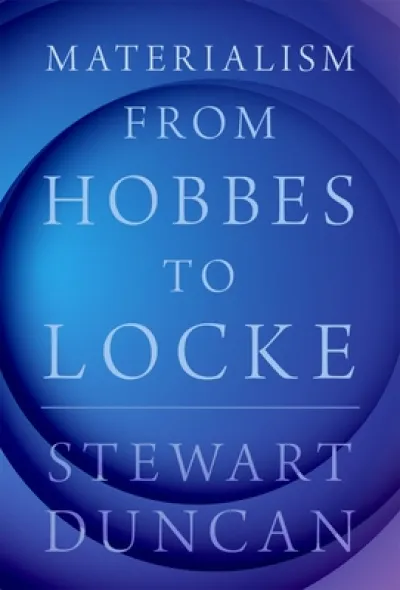
Materialism from Hobbes to Locke
Book Details
Format
Hardback or Cased Book
ISBN-10
0197613004
ISBN-13
9780197613009
Publisher
Oxford University Press Inc
Imprint
Oxford University Press Inc
Country of Manufacture
US
Country of Publication
GB
Publication Date
May 25th, 2022
Print length
248 Pages
Weight
382 grams
Dimensions
14.60 x 21.80 x 2.50 cms
Ksh 9,500.00
Werezi Extended Catalogue
0 in stock
Delivery Location
Delivery fee: Select location
Secure
Quality
Fast
This book explores a pivotal debate in seventeenth-century European philosophy about the nature of human beings--whether they are purely material things, or whether they have an immaterial soul that thinks and can survive the death of the body. It traces this debate from the work of the materialist philosopher Thomas Hobbes, through the responses of three of his critics--the Platonists Henry More and Ralph Cudworth, and the materialist Margaret Cavendish--to the discussion of materialism in John Locke''s Essay concerning Human Understanding. Stewart Duncan probes the thought and debates that originated in the seventeenth-century yet extended far beyond it, and it offers a distinctive, new understanding of Locke''s discussion of the human mind.
Are human beings purely material creatures, or is there something else to them, an immaterial part that does some (or all) of the thinking, and might even be able to outlive the death of the body? This book is about how a series of seventeenth-century philosophers tried to answer that question. It begins by looking at the views of Thomas Hobbes, who developed a thoroughly materialist account of the human mind, and later of God as well. This is in obvious contrast to the approach of his contemporary René Descartes. After examining Hobbes''s materialism, Stewart Duncan considers the views of three of his English critics: Henry More, Ralph Cudworth, and Margaret Cavendish. Both More and Cudworth thought Hobbes''s materialism radically inadequate to explain the workings of the world, while Cavendish developed a distinctive, anti-Hobbesian materialism of her own. The second half of the book focuses on the discussion of materialism in John Locke''s Essay concerning Human Understanding, arguing that we can better understand Locke''s discussion if we see how and where he is responding to this earlier debate. At crucial points Locke draws on More and Cudworth to argue against Hobbes and other materialists. Nevertheless, Locke did a good deal to reveal how materialism was a genuinely possible view, by showing how one could develop a detailed account of the human mind without presuming it was an immaterial substance.This work probes the thought and debates that originated in the seventeenth-century yet extended far beyond it. And it offers a distinctive, new understanding of Locke''s discussion of the human mind.
Get Materialism from Hobbes to Locke by at the best price and quality guaranteed only at Werezi Africa's largest book ecommerce store. The book was published by Oxford University Press Inc and it has pages.

