
Cart 0
Mathematical Competencies in the Digital Era
Click to zoom

Share this book

Mathematical Competencies in the Digital Era

2022 ed.

Book Details

Format Hardback or Cased Book
ISBN-10 3031101405
ISBN-13 9783031101403
Edition 2022 ed.
Publisher Springer International Publishing AG
Imprint Springer International Publishing AG
Country of Manufacture GB
Country of Publication GB
Publication Date Feb 21st, 2023
Print length 358 Pages
Ksh 23,400.00
Werezi Extended Catalogue Delivery in 28 days

Delivery Location

Delivery fee: Select location

Delivery in 28 days

Secure
Quality
Fast
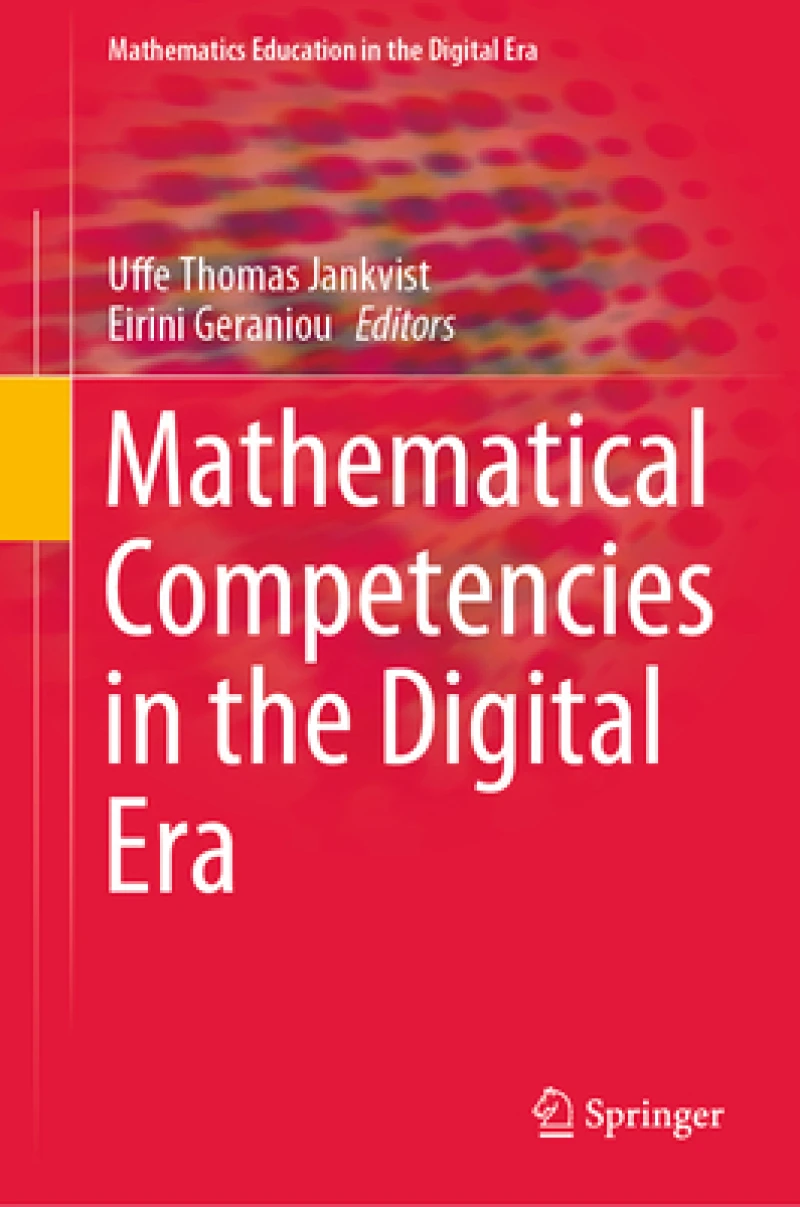
This book focuses on the potential interplay between two distinct, yet related paradigm shifts in mathematics education, drawing on the notion of “networking of theories” through illustrative case studies from the Danish educational system and beyond. The first paradigm shift is the massive introduction of digital technology in the teaching and learning of the subject; the second is a shift from the traditional focusing on mastering of skills and knowledge to being concerned with the possession and development of mathematical competencies. This book builds on the Danish KOM (Competencies and the Learning of Mathematics) project, which sources its description of mathematical mastery primarily on the notion of a “mathematical competency” rather than on lists of topics, concepts, and results. This allows for an overarching framework, which captures the perspectives of mathematics teaching and learning at whichever educational level. While the KOM framework does not in detail address the role of digital technologies in relation to its description of different types of mathematical competencies, etc., the chapters of this book set out to do exactly this, while in the process also drawing on a selection of other theoretical constructs and frameworks from mathematics education research. Starting with introductory chapters by key researchers in the area, the book brings forth chapters for each of the KOM framework’s eight mathematical competencies, authored by Nordic researchers in combination with international scholars. The KOM framework also operates with three types of overview and judgement, which are specifically addressed in relation to the role of digital technologies in the third part of the book. The fourth and final part of the book broadens the scene and provides chapters of a more perspective nature in relation to mathematical competencies in the digital era. The book’s preface is by Susanne Prediger.

This book focuses on the potential interplay between two distinct, yet related paradigm shifts in mathematics education, drawing on the notion of “networking of theories” through illustrative case studies from the Danish educational system and beyond. The first paradigm shift is the massive introduction of digital technology in the teaching and learning of the subject; the second is a shift from the traditional focusing on mastering of skills and knowledge to being concerned with the possession and development of mathematical competencies.

This book builds on the Danish KOM (Competencies and the Learning of Mathematics) project, which sources its description of mathematical mastery primarily on the notion of a “mathematical competency” rather than on lists of topics, concepts, and results. This allows for an overarching framework, which captures the perspectives of mathematics teaching and learning at whichever educational level. While the KOM framework does not in detail address the role of digital technologies in relation to its description of different types of mathematical competencies, etc., the chapters of this book set out to do exactly this, while in the process also drawing on a selection of other theoretical constructs and frameworks from mathematics education research.

Starting with introductory chapters by key researchers in the area, the book brings forth chapters for each of the KOM framework’s eight mathematical competencies, authored by Nordic researchers in combination with international scholars. The KOM framework also operates with three types of overview and judgement, which are specifically addressed in relation to the role of digital technologies in the third part of the book. The fourth and final part of the book broadens the scene and provides chapters of a more perspective nature in relation to mathematical competencies in the digital era. The book’s preface is by Susanne Prediger.


Get Mathematical Competencies in the Digital Era by at the best price and quality guaranteed only at Werezi Africa's largest book ecommerce store. The book was published by Springer International Publishing AG and it has pages.


Mind, Body, & Spirit

Price

Ksh 23,400.00

Shopping Cart

Africa largest book store

Sub Total:
Ebooks

Digital Library
Coming Soon

Our digital collection is currently being curated to ensure the best possible reading experience on Werezi. We'll be launching our Ebooks platform shortly.