
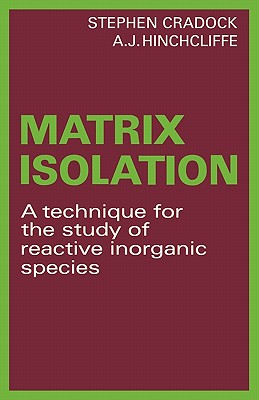
Matrix Isolation : A Technique for the Study of Reactive Inorganic Species
Book Details
Format
Paperback / softback
ISBN-10
0521275458
ISBN-13
9780521275453
Publisher
Cambridge University Press
Imprint
Cambridge University Press
Country of Manufacture
GB
Country of Publication
GB
Publication Date
Sep 22nd, 2011
Print length
154 Pages
Weight
200 grams
Dimensions
21.60 x 14.00 x 0.90 cms
Product Classification:
Inorganic chemistry
KSh 7,550.00
Currently unavailable
0 in stock
Delivery Location
Delivery fee: Select location
Secure
Quality
Fast
In simple terms matrix isolation involves trapping a reactive species in a frozen cage, or matrix, of an inert medium such as a rare gas. This 1975 book shows how and why the technique developed and describes the necessary apparatus, showing how each of the technological problems may be overcome.
Many chemical species are too reactive under normal conditions to allow normal spectroscopic investigation. The technique of matrix isolation was developed to exploit the stabilisation that arises when the reactive species is physically trapped, restricting its freedom of movement and access to possible reaction partners. The use of cryogenic conditions to achieve the physical trapping brought valuable consequences in reducing the energy available to the species, meaning they can be studies using a variety of spectroscopic techniques. In simple terms the technique involves trapping a reactive species in a frozen cage, or matrix, of an inert medium such as a rare gas or in other situations nitrogen or carbon monoxide. This 1975 book shows how and why the technique developed and describes the necessary apparatus in some detail, showing how each of the technological problems may be overcome.
Get Matrix Isolation by A. J. Hinchcliffe, Stephen Cradock at the best price and quality guaranteed only at Werezi Africa's largest book ecommerce store. The book was published by Cambridge University Press and it has 154 pages.
Customers Who Bought This Also Bought

Boron
KSh 4,500.00
Fluorine In Pharmaceutical And Medicinal Chemistry: From Biophysical Aspects To Clinical Applications
KSh 32,400.00
Magnetic Ceramics
KSh 26,450.00
Ultra-High Temperature Materials III
KSh 45,000.00
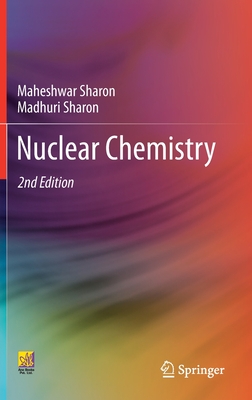
Nuclear Chemistry
KSh 12,600.00
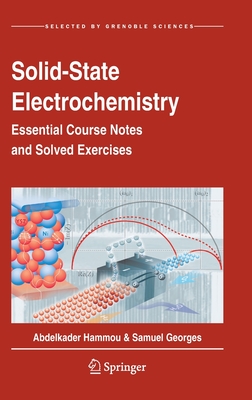
Solid-State Electrochemistry
KSh 13,500.00
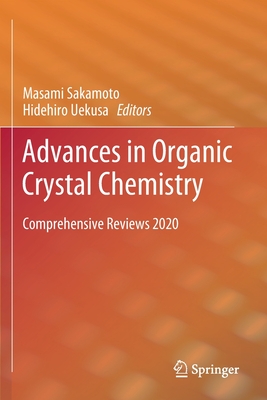
Advances in Organic Crystal Chemistry
KSh 23,400.00
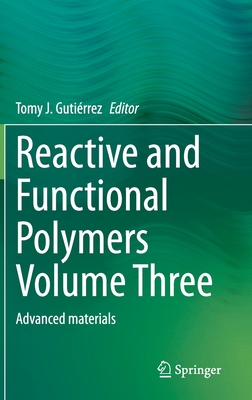
Reactive and Functional Polymers Volume Three
KSh 32,400.00
Handbook of Fibers and Polymers
KSh 23,750.00

Bone-Grafting Biomaterials
KSh 17,650.00
Templates in Chemistry I
KSh 32,400.00
Supramolecular Assembly via Hydrogen Bonds I
KSh 32,400.00
