
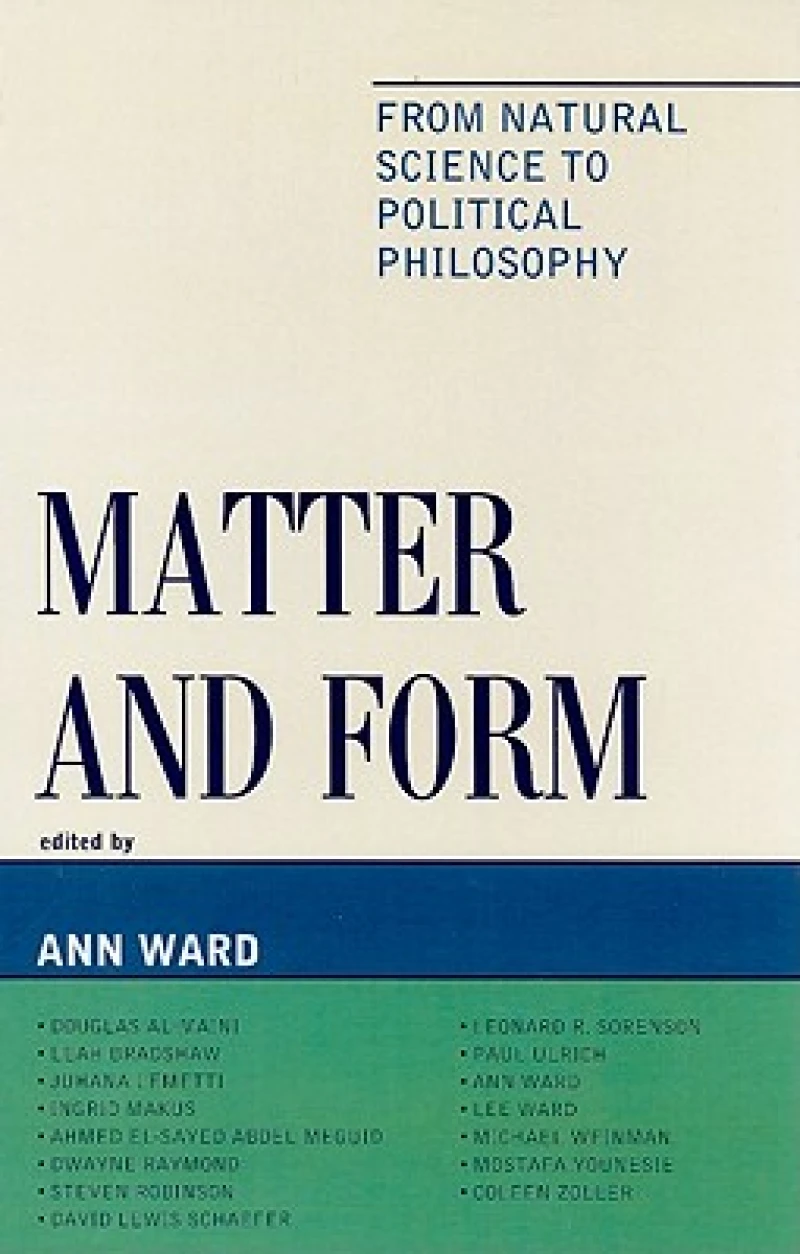
Matter and Form : From Natural Science to Political Philosophy
Book Details
Format
Hardback or Cased Book
ISBN-10
0739135686
ISBN-13
9780739135686
Publisher
Bloomsbury Publishing Plc
Imprint
Lexington Books
Country of Manufacture
GB
Country of Publication
GB
Publication Date
Oct 29th, 2009
Print length
256 Pages
Weight
558 grams
Dimensions
23.90 x 16.20 x 2.20 cms
Product Classification:
PhilosophySocial & political philosophyPolitical science & theory
Ksh 21,300.00
Manufactured on Demand
0 in stock
Delivery Location
Delivery fee: Select location
Secure
Quality
Fast
Matter and Form explores the relationship that has long existed between natural science and political philosophy. Plato's Socrates articulates the Ideas or Forms as an account of the ultimate source of causality in the cosmos. Aristotle's natural philosophy had a significant impact on his political philosophy: he argues that humans are by nature political animals, having their natural end in the city whose regime is hierarchically structured based on differences in moral and intellectual capacity. Medieval theorists attempt to synthesize classical natural and political philosophy with the revealed truths of scripture; they argue that divine reason structures an ordered universe, the awareness of which allows for psychic and political harmony among human beings. Enlightenment thinkers challenge the natural philosophy of classical and medieval philosophers, ushering in a more liberal political order. For example, for Hobbes, there is no rest in nature as there are no Aristotelian forms or natural places that govern matter. Hobbes applies his mechanistic understanding of material nature to his understanding of human nature: individuals are by nature locked in an endless pursuit of power until death. However, from this mechanistic understanding of humanity's natural condition, Hobbes develops a social contract theory in which civil and political society is constituted from consent. Later thinkers, such as Locke and Rousseau, modify this Hobbesian premise in their pursuit of the protection of rights and a free society. Nevertheless, materialist conceptions of the cosmos have not always given rise to liberal democratic philosophies. Historicist influence on scientific inquiry in the nineteenth century is connected to Darwin's theory of evolution; Darwin reasoned that over time the process of natural selection produces ever newer and more highly adapted species. Reflecting a form of social Darwinism, Nietzsche envisions an aristocratic order that draws its inspiration from art rather than the rationalism
Matter and Form explores the relationship that has long existed between natural science and political philosophy. Plato''s Socrates articulates the Ideas or Forms as an account of the ultimate source of causality in the cosmos. Aristotle''s natural philosophy had a significant impact on his political philosophy: he argues that humans are by nature political animals, having their natural end in the city whose regime is hierarchically structured based on differences in moral and intellectual capacity. Medieval theorists attempt to synthesize classical natural and political philosophy with the revealed truths of scripture; they argue that divine reason structures an ordered universe, the awareness of which allows for psychic and political harmony among human beings. Enlightenment thinkers challenge the natural philosophy of classical and medieval philosophers, ushering in a more liberal political order. For example, for Hobbes, there is no rest in nature as there are no Aristotelian forms or natural places that govern matter. Hobbes applies his mechanistic understanding of material nature to his understanding of human nature: individuals are by nature locked in an endless pursuit of power until death. However, from this mechanistic understanding of humanity''s natural condition, Hobbes develops a social contract theory in which civil and political society is constituted from consent. Later thinkers, such as Locke and Rousseau, modify this Hobbesian premise in their pursuit of the protection of rights and a free society. Nevertheless, materialist conceptions of the cosmos have not always given rise to liberal democratic philosophies. Historicist influence on scientific inquiry in the nineteenth century is connected to Darwin''s theory of evolution; Darwin reasoned that over time the process of natural selection produces ever newer and more highly adapted species. Reflecting a form of social Darwinism, Nietzsche envisions an aristocratic order that draws its inspiration from art rather than the rationalism
Get Matter and Form by at the best price and quality guaranteed only at Werezi Africa's largest book ecommerce store. The book was published by Bloomsbury Publishing Plc and it has pages.

