
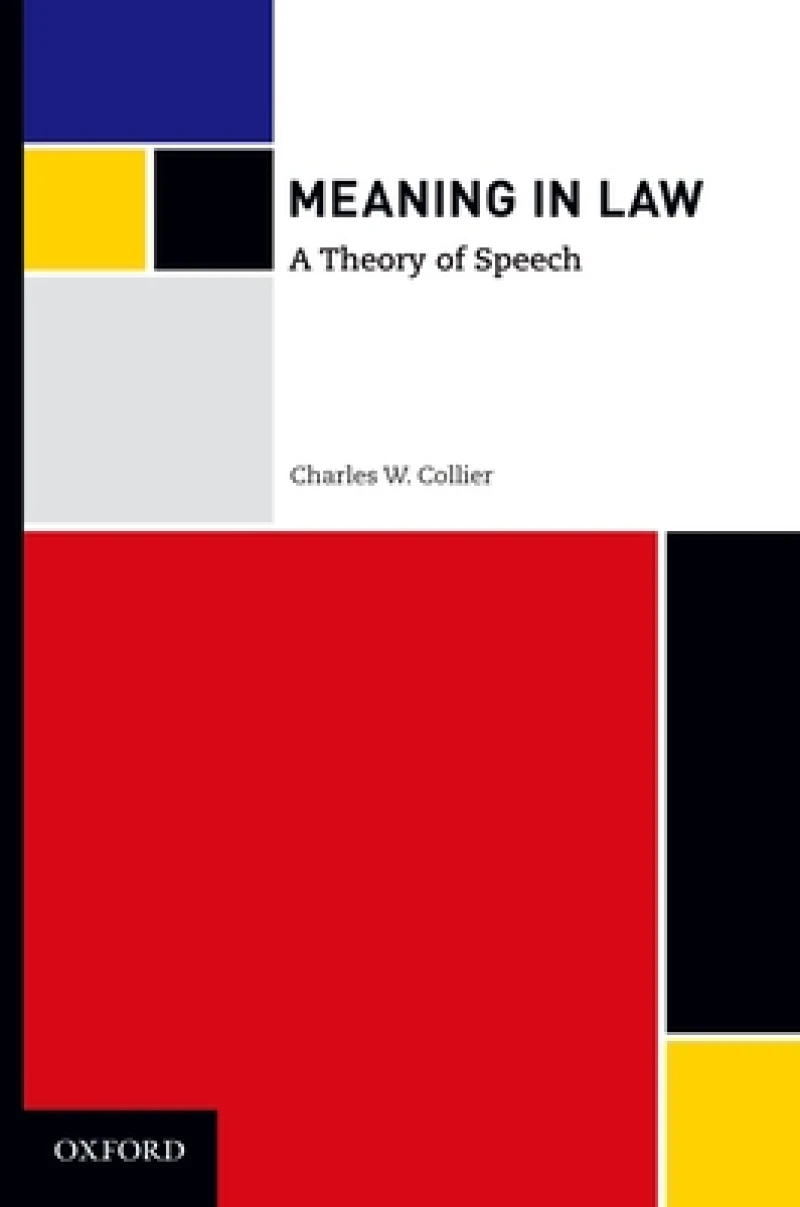
Meaning in Law : A Theory of Speech
Book Details
Format
Hardback or Cased Book
ISBN-10
0195388976
ISBN-13
9780195388978
Publisher
Oxford University Press Inc
Imprint
Oxford University Press Inc
Country of Manufacture
GB
Country of Publication
GB
Publication Date
Aug 13th, 2009
Print length
208 Pages
Weight
463 grams
Dimensions
15.60 x 23.40 x 1.30 cms
Product Classification:
Philosophy of languageJurisprudence & philosophy of law
Ksh 16,850.00
Manufactured on Demand
0 in stock
Delivery Location
Delivery fee: Select location
Secure
Quality
Fast
Existing theories of the First Amendment's protection of speech proceed on the basis of legal doctrine and judicial decision making, social and political philosophy, or legal and intellectual history. Meaning in Law: A Theory of Speech adopts a new approach and develops a general legal theory of speech on the basis of linguistic theory and the philosophy of language. Meaning in Law: A Theory of Speech retraces the main conceptual stages in the expression of meaning, from natural notions of meaningfulness, through symbolism, to signification. The book focuses on three failed attempts to demarcate the boundaries of "speech" in the constitutional sense (prior restraints, obscenity, and defamation) and then introduces the theory of symbolic speech as the key to developing a general legal theory of speech. Providing an overview of his theory, including such concepts as "Signaling of Intent" and "Establishing a Convention," author Charles Collier applies these insights to the case law of symbolic speech and resolves some basic confusion in the legal literature. The analysis relies on an original distinction between actual conduct and the "ideal conduct" described in a statute. The former may be described as both communicative and noncommunicative, while the latter has already been conceptualized as either communicative or noncommunicative. The author argues this distinction clears up a major legal quandary: how conduct that can be described as communication may nevertheless be regulated or prohibited, without running afoul of the First Amendment's protection of speech.
Existing theories of the First Amendment''s protection of speech proceed on the basis of legal doctrine and judicial decision making, social and political philosophy, or legal and intellectual history. Meaning in Law: A Theory of Speech adopts a new approach and develops a general legal theory of speech on the basis of linguistic theory and the philosophy of language. Meaning in Law: A Theory of Speech retraces the main conceptual stages in the expression of meaning, from natural notions of meaningfulness, through symbolism, to signification. The book focuses on three failed attempts to demarcate the boundaries of "speech" in the constitutional sense (prior restraints, obscenity, and defamation) and then introduces the theory of symbolic speech as the key to developing a general legal theory of speech. Providing an overview of his theory, including such concepts as "Signaling of Intent" and "Establishing a Convention," author Charles Collier applies these insights to the case law of symbolic speech and resolves some basic confusion in the legal literature. The analysis relies on an original distinction between actual conduct and the "ideal conduct" described in a statute. The former may be described as both communicative and noncommunicative, while the latter has already been conceptualized as either communicative or noncommunicative. The author argues this distinction clears up a major legal quandary: how conduct that can be described as communication may nevertheless be regulated or prohibited, without running afoul of the First Amendment''s protection of speech.
Get Meaning in Law by at the best price and quality guaranteed only at Werezi Africa's largest book ecommerce store. The book was published by Oxford University Press Inc and it has pages.

