
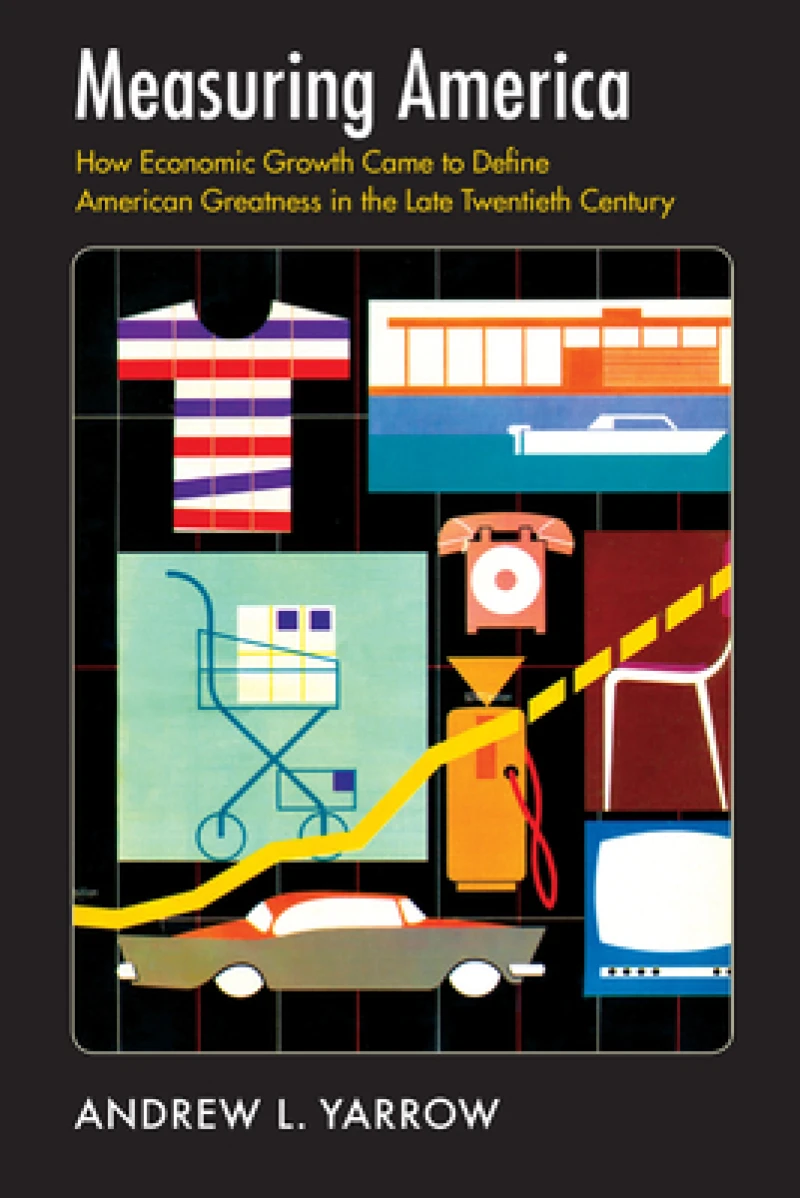
Measuring America : How Economic Growth Came to Define American Greatness in the Late Twentieth Century
Book Details
Format
Paperback / Softback
ISBN-10
1558498354
ISBN-13
9781558498358
Publisher
University of Massachusetts Press
Imprint
University of Massachusetts Press
Country of Manufacture
US
Country of Publication
GB
Publication Date
Oct 25th, 2010
Print length
272 Pages
Weight
385 grams
Dimensions
22.80 x 15.40 x 1.70 cms
Product Classification:
History of the AmericasHistory of the Americas
Ksh 5,050.00
Publisher Out of Stock
0 in stock
Delivery Location
Delivery fee: Select location
Secure
Quality
Fast
Explores two parallel, interlocking stories--of how economic ideas came to have vastly greater influence on American culture after World War II, and how those ideas dovetailed with a growing belief that the meaning and value of the U.S. resided in its mate
The United States has always fancied itself a nation apart--""exceptional"" in its values, traditions, and way of life. For most of the country''s history, ideas about what made America distinctive generally were framed in terms of a liberal idealism rooted in the thought of John Locke and articulated by Jefferson, Madison, and other Founders. While some commentators also observed that the United States was a land of plenty, it wasn''t until the mid-twentieth century that material abundance emerged as the principal standard of American ""greatness,"" as measured by a host of new economic indicators. Beginning in earnest in the wake of World War II, opinion-shapers in politics, business, academia, the media, the schools, and public diplomacy gloried in the nation''s booming economy. Where ""plenty"" had once been a largely abstract concept, it was now quantifiable, thanks to new national income accounting and other economic data collection and analysis techniques. One could tally up production and consumption of an ever-expanding cornucopia of goods and services that made up the gross national product (GNP), the king of postwar statistics. American preeminence and American identity were increasingly linked with this measurable prosperity, presented in the language of a newly influential economics profession. In Measuring America, Andrew L. Yarrow explores this history, telling two parallel, interlocking stories--of how economic ideas came to have vastly greater influence on American culture after World War II, and how those ideas dovetailed with a growing belief that the meaning and value of the United States resided in its material output. How and why this new way of ""measuring America"" developed, how it was expressed, and what it has meant and means for Americans today are the subject of this well-researched and insightful book.
Get Measuring America by at the best price and quality guaranteed only at Werezi Africa's largest book ecommerce store. The book was published by University of Massachusetts Press and it has pages.

