
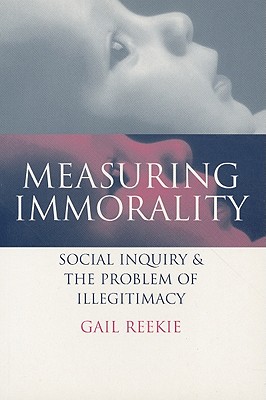
Measuring Immorality : Social Inquiry and the Problem of Illegitimacy
by
Gail Reekie
Book Details
Format
Paperback / softback
ISBN-10
0521629748
ISBN-13
9780521629744
Publisher
Cambridge University Press
Imprint
Cambridge University Press
Country of Manufacture
AU
Country of Publication
GB
Publication Date
Oct 13th, 1998
Print length
224 Pages
Weight
415 grams
Dimensions
22.80 x 15.20 x 2.00 cms
Product Classification:
Social & cultural historySocial groups
KSh 5,900.00
Not available
0 in stock
Delivery Location
Delivery fee: Select location
Secure
Quality
Fast
This book examines how illegitimacy has been constructed as a social problem since Malthus. It explores the ways in which social science transforms a biological event - a birth - into a social problem.International in approach, the book covers issues such as expense, racial inferiority, social disorder and selfishness.
Why do conservative politicians and scholars in Britain, Australia and the United States continue to view rising rates of out-of-wedlock births and teenage pregnancies as a threat to civilised society? This book examines the process by which social science transforms a biological event - a birth - into a social and moral problem. Drawing on Foucault''s ''archaeology of knowledge'', Reekie stresses the role of statistics and other social-scientific discourses in the emergence of the illegitimacy ''problem'' in the early nineteenth century and its continuing cultural significance. The book illustrates the continuity in concerns about illegitimacy, including pressure on the welfare system, fears of racial and intellectual denigration, the detrimental nature of fatherless families, and the association of rising illegitimacy with the supposed selfishness of excessively independent women.
Get Measuring Immorality by Gail Reekie at the best price and quality guaranteed only at Werezi Africa's largest book ecommerce store. The book was published by Cambridge University Press and it has 224 pages.
Customers Who Bought This Also Bought

The Finest Hotel in Kabul
KSh 2,150.00

Black Wave
KSh 2,700.00

Migrations
KSh 5,450.00

Art of War / The Book of Lord Shang
KSh 1,100.00

Nexus
KSh 2,350.00

World According to Colour
KSh 2,700.00

Crusade for Justice – The Autobiography of Ida B. Wells, Second Edition
KSh 4,050.00

Modern Classics Road To Wigan Pier
KSh 1,800.00

The Origins of Totalitarianism
KSh 2,700.00
In the Wake
KSh 3,600.00
Question of Palestine
KSh 2,700.00

Palestine
KSh 2,400.00

