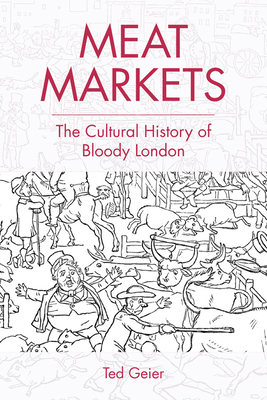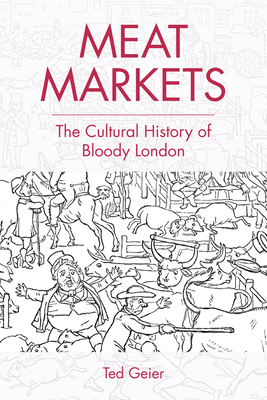
Meat Markets : The Cultural History of Bloody London
by
Ted Geier
Book Details
Format
Paperback / softback
ISBN-10
1474455174
ISBN-13
9781474455176
Publisher
Edinburgh University Press
Imprint
Edinburgh University Press
Country of Manufacture
GB
Country of Publication
GB
Publication Date
Nov 27th, 2019
Print length
200 Pages
Weight
316 grams
Dimensions
15.50 x 23.40 x 1.00 cms
KSh 4,700.00
Currently unavailable
0 in stock
Delivery Location
Delivery fee: Select location
Secure
Quality
Fast
Meat Markets articulates the emergent ‘nonhuman thought’ developed across literatures of the long nineteenth century and inflecting recent critical theories of abject life and animality.
Abjective ecologies of British humans, animals, and other nonhumans in cultural forms of nineteenth-century literature, from Dracula to BovrilMeat Markets articulates the emergent ‘nonhuman thought’ developed across literatures of the long nineteenth century and inflecting recent critical theories of abject life and animality. It presents important connections between meat and popular serial press industries, the intersections of criminals and public readership, and the long history of bloody spectacle at London’s Smithfield Market including public executions, criminal escapades, death and horror tales, and the fungible ‘penny press’ forms of mass consumption. Through analysis of subjection, address, and narration in canonical and penny literatures, this book reveals the mutual forces of concern and consumption that afflict objects of a weird cultural history of bloody London across the long nineteenth century. Players include butchers, Smithfield, Parliament, Dickens, Romantics, Sweeney Todd, cattle, and a strange, impossible London. Key FeaturesArticulates the emergent ‘nonhuman thought’ developed across literatures of the long nineteenth century and inflecting recent critical theories of abject life and animalityShows the productive contradictions in social and animal concern as it produces anonymous, ‘biopolitical’ objects in literature, food culture, and London societyPresents important connections between meat and popular serial press industries, the intersections of criminals and public readership, and the long history of bloody spectacle at London’s Smithfield Market including public executions, criminal escapades, death and horror tales, and the fungible ‘penny press’ forms of mass consumption
Get Meat Markets by Ted Geier at the best price and quality guaranteed only at Werezi Africa's largest book ecommerce store. The book was published by Edinburgh University Press and it has 200 pages.
Customers Who Bought This Also Bought

The Picture of Dorian Gray
KSh 1,250.00

Pride and Prejudice
KSh 1,150.00

Moby-Dick
KSh 1,750.00

Emma
KSh 1,350.00
The Karamazov Brothers
KSh 2,100.00

Persuasion
KSh 1,100.00

Bleak House
KSh 2,150.00

What Matters in Jane Austen?
KSh 2,700.00

A Tale of Two Cities
KSh 1,200.00

Little Women
KSh 1,550.00

David Copperfield
KSh 2,100.00

Mansfield Park
KSh 1,250.00