

Book Details
Format
Hardback
ISBN-10
882330095Y
ISBN-13
9798823300957
Edition
Second Edition
Publisher
Cognella, Inc
Imprint
Cognella, Inc
Country of Manufacture
GB
Country of Publication
GB
Publication Date
Feb 28th, 2023
Print length
910 Pages
Product Classification:
Mechanical engineering
KSh 26,450.00
Currently unavailable
0 in stock
Delivery Location
Delivery fee: Select location
Secure
Quality
Fast
Explore the principles of engineering vibrations through a structured blend of mathematical modeling, dynamics, and analytical problem-solving. The description spans free and forced vibrations in single, two, and multi-degree systems, detailing methods for deriving differential equations and examining continuous system behavior.
Mechanical Vibrations: Theory and Applications presents the basic principles of engineering vibrations and introduces students to a strategic framework to advance their knowledge and skill in engineering problem-solving.
The opening chapter reviews key topics, including mathematical modeling, dimensional analysis, dynamics, and more. Chapter 2 focuses on the elements that comprise mechanical systems and the methods of mathematical modeling of mechanical systems. Two methods for the derivation of differential equations for a linear system are presented: the free-body diagram method and the energy method.
Chapters 3 through 5 focus on single degree-of-freedom (SDOF) systems. Chapter 3 concentrates on free vibration of SDOF systems. Forced vibration of SDOF systems is covered in Chapter 4 (harmonic excitation) and Chapter 5 (general transient excitation).
Chapter 6 is focused on free and forced vibration of two degree-of-freedom systems. Chapters 7 through 9 cover general multiple degree-of-freedom (MDOF) systems. Chapter 7 concentrates on the derivation of differential equations governing MDOF systems. Chapter 8 concentrates on free vibration, whereas Chapter 9 covers forced vibration. The final chapter provides a brief overview of vibrations of continuous systems.
Mechanical Vibrations: Theory and Applications is designed to serve as a primary textbook for advanced undergraduate courses on vibrations. Chapters 7 through 10 are appropriate for use as a standalone resource for graduate-level courses.
The opening chapter reviews key topics, including mathematical modeling, dimensional analysis, dynamics, and more. Chapter 2 focuses on the elements that comprise mechanical systems and the methods of mathematical modeling of mechanical systems. Two methods for the derivation of differential equations for a linear system are presented: the free-body diagram method and the energy method.
Chapters 3 through 5 focus on single degree-of-freedom (SDOF) systems. Chapter 3 concentrates on free vibration of SDOF systems. Forced vibration of SDOF systems is covered in Chapter 4 (harmonic excitation) and Chapter 5 (general transient excitation).
Chapter 6 is focused on free and forced vibration of two degree-of-freedom systems. Chapters 7 through 9 cover general multiple degree-of-freedom (MDOF) systems. Chapter 7 concentrates on the derivation of differential equations governing MDOF systems. Chapter 8 concentrates on free vibration, whereas Chapter 9 covers forced vibration. The final chapter provides a brief overview of vibrations of continuous systems.
Mechanical Vibrations: Theory and Applications is designed to serve as a primary textbook for advanced undergraduate courses on vibrations. Chapters 7 through 10 are appropriate for use as a standalone resource for graduate-level courses.
Get Mechanical Vibrations by S. Graham Kelly at the best price and quality guaranteed only at Werezi Africa's largest book ecommerce store. The book was published by Cognella, Inc and it has 910 pages.
Customers Who Bought This Also Bought

Construction Mathematics
KSh 7,500.00
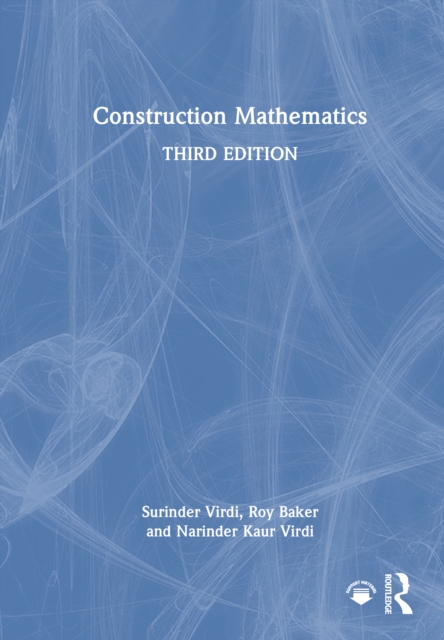
Construction Mathematics
KSh 26,300.00

Solid-Shell Finite Element Modeling of Functionally Graded Structures
KSh 26,300.00

Buhnentechnik
KSh 16,450.00

Polymer and Supramolecular Gels
KSh 37,600.00

Model Validation and Uncertainty Quantification, 2026
KSh 18,900.00

Biomimetic, Bioinspired, and Bioactive Biomaterials for Oral Care
KSh 32,200.00

Multifunctional Epidermal Patches
KSh 39,400.00

Special Topics & Experimental Techniques in Structural Dynamics, 2026
KSh 19,800.00

Digitalization of Mechanical Systems
KSh 33,850.00

Dynamic Substructuring & Transfer Path Analysis, 2026
KSh 19,800.00

Dynamic Environments and Durability Testing, 2026
KSh 18,900.00


More in This Genre
Construction Mathematics
KSh 7,500.00
Construction Mathematics
KSh 26,300.00
Solid-Shell Finite Element Modeling of Functionally Graded Structures
KSh 26,300.00
Buhnentechnik
KSh 16,450.00
Polymer and Supramolecular Gels
KSh 37,600.00
Model Validation and Uncertainty Quantification, 2026
KSh 18,900.00
