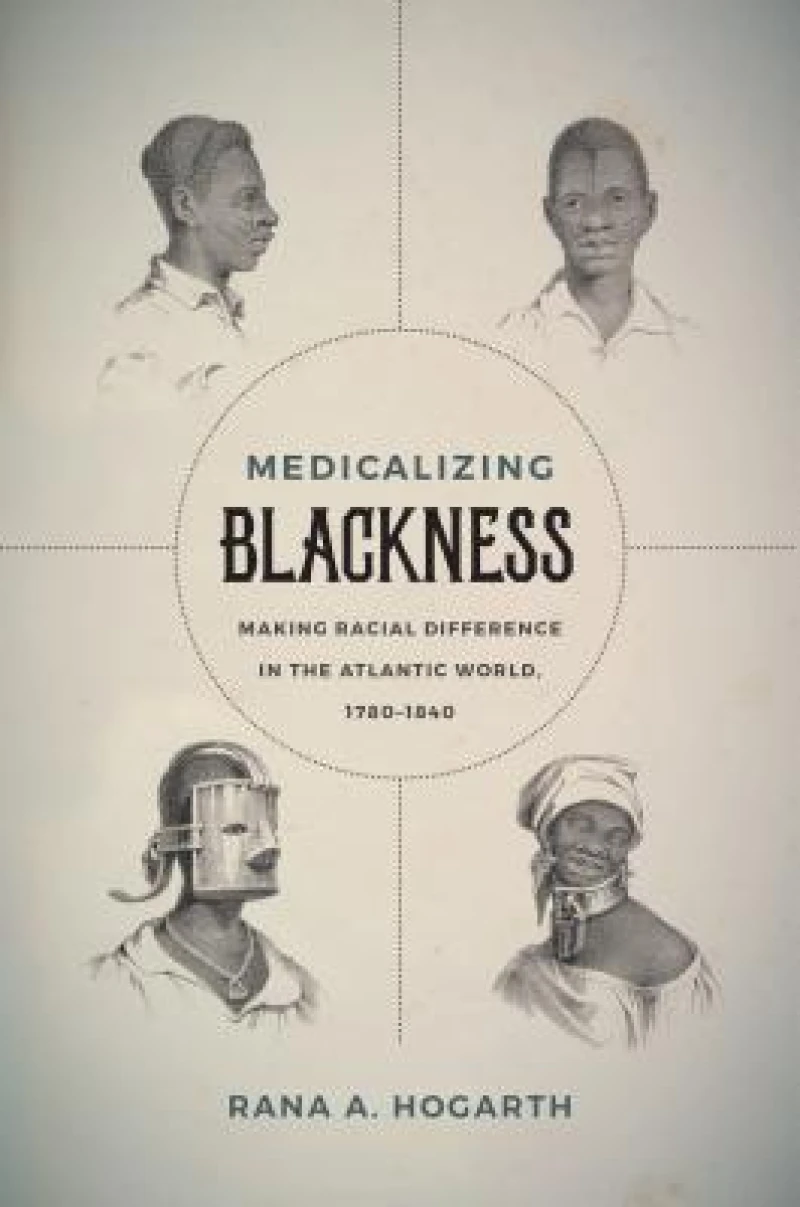
Medicalizing Blackness : Making Racial Difference in the Atlantic World, 1780-1840
Book Details
Format
Paperback / Softback
ISBN-10
146963287X
ISBN-13
9781469632872
Publisher
The University of North Carolina Press
Imprint
The University of North Carolina Press
Country of Manufacture
US
Country of Publication
GB
Publication Date
Oct 9th, 2017
Print length
288 Pages
Weight
430 grams
Dimensions
15.80 x 23.50 x 1.90 cms
Ksh 4,500.00
Werezi Extended Catalogue
0 in stock
Delivery Location
Delivery fee: Select location
Secure
Quality
Fast
Examines the creation and circulation of medical ideas about blackness in the Atlantic World during the late eighteenth and early nineteenth centuries. Rana A. Hogarth shows how white physicians deployed blackness as a medically significant marker of difference and used medical knowledge to enhance control over black bodies during the era of slavery.
In 1748, as yellow fever raged in Charleston, South Carolina, doctor John Lining remarked, ""There is something very singular in the constitution of the Negroes, which renders them not liable to this fever."" Lining''s comments presaged ideas about blackness that would endure in medical discourses and beyond. In this fascinating medical history, Rana A. Hogarth examines the creation and circulation of medical ideas about blackness in the Atlantic World during the late eighteenth and early nineteenth centuries. She shows how white physicians deployed blackness as a medically significant marker of difference and used medical knowledge about black bodies to improve plantation labor efficiency, safeguard colonial and civic interests, and enhance control over black bodies during the era of slavery.
Hogarth refigures Atlantic slave societies as medical frontiers of knowledge production on the topic of racial difference. Rather than looking to their counterparts in Europe who collected and dissected bodies to gain knowledge about race, white physicians in Atlantic slaveholding regions created and tested ideas about race based on the contexts in which they lived and practiced. What emerges in sharp relief is the ways in which blackness was reified in medical discourses and used to perpetuate notions of white supremacy.
Hogarth refigures Atlantic slave societies as medical frontiers of knowledge production on the topic of racial difference. Rather than looking to their counterparts in Europe who collected and dissected bodies to gain knowledge about race, white physicians in Atlantic slaveholding regions created and tested ideas about race based on the contexts in which they lived and practiced. What emerges in sharp relief is the ways in which blackness was reified in medical discourses and used to perpetuate notions of white supremacy.
Get Medicalizing Blackness by at the best price and quality guaranteed only at Werezi Africa's largest book ecommerce store. The book was published by The University of North Carolina Press and it has pages.