
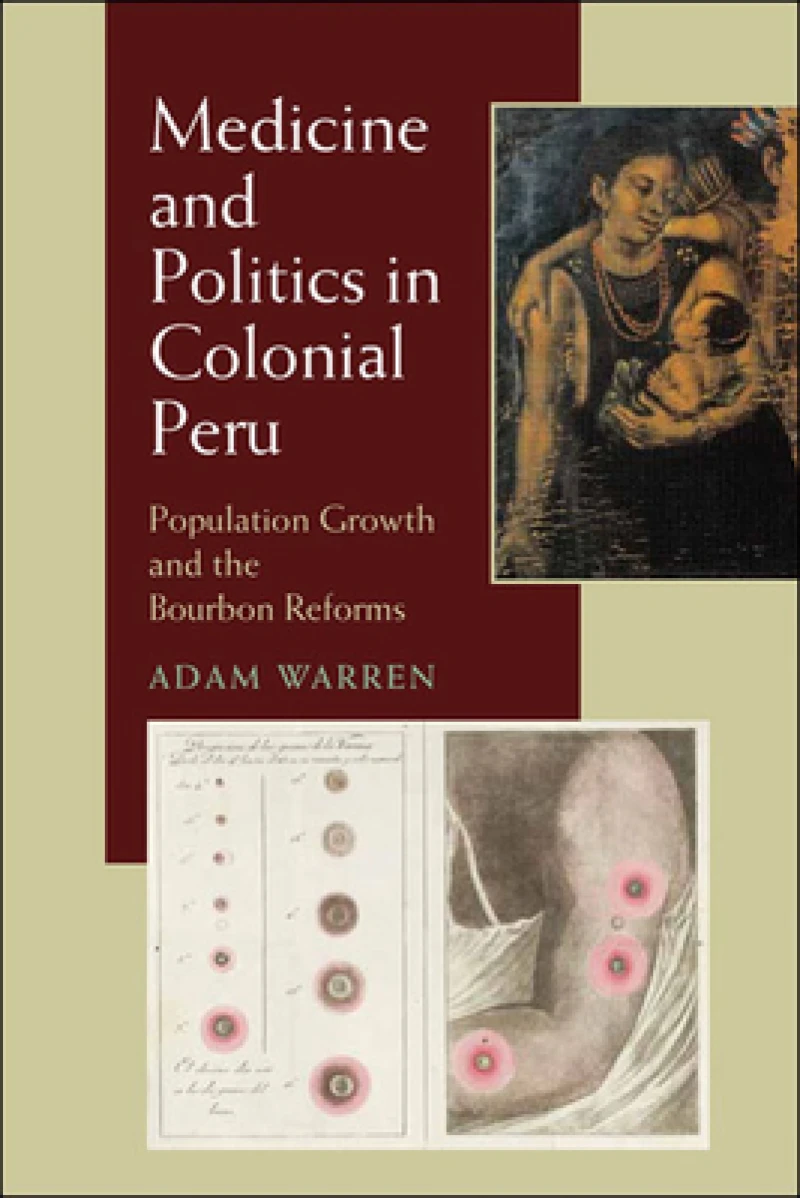
Medicine and Politics in Colonial Peru : Population Growth and the Bourbon Reforms
by
Adam Warren
Book Details
Format
Paperback / Softback
Book Series
Pitt Latin American Series
ISBN-10
0822961113
ISBN-13
9780822961116
Publisher
University of Pittsburgh Press
Imprint
University of Pittsburgh Press
Country of Manufacture
US
Country of Publication
GB
Publication Date
Oct 24th, 2010
Print length
304 Pages
Product Classification:
General & world historyGeneral and world history
Ksh 8,800.00
Temporarily out of stock, due soon
0 in stock
Delivery Location
Delivery fee: Select location
Secure
Quality
Fast
An original study examining the primacy placed on physicians and medical care to generate population growth and increase the workforce during the late eigteenth century in colonial Peru.
By the end of the eighteenth century, Peru had witnessed the decline of its once-thriving silver industry and had barely begun to recover from massive population losses due to smallpox and other diseases. At the time, it was widely believed that economic salvation was contingent upon increasing the labor force and maintaining as many healthy workers as possible. In Medicine and Politics in Colonial Peru, Adam Warren presents a groundbreaking study of the primacy placed on medical care to generate population growth during this era. The Bourbon reforms of the eighteenth century shaped many of the political, economic, and social interests of Spain and its colonies. In Peru, local elites saw the reforms as an opportunity to positively transform society and its conceptions of medicine and medical institutions in the name of the Crown. Creole physicians, in particular, took advantage of Bourbon reforms to wrest control of medical treatment away from the Catholic Church, establish their own medical expertise, and create a new, secular medical culture. They asserted their new influence by treating smallpox and leprosy, by reforming medical education, and by introducing hygienic routines into local funeral rites, among other practices. Later, during the early years of independence, government officials began to usurp the power of physicians and shifted control of medical care back to the church. Creole doctors, without the support of the empire, lost much of their influence, and medical reforms ground to a halt. As Warren’s study reveals, despite falling in and out of political favor, Bourbon reforms and creole physicians were instrumental to the founding of modern medicine in Peru, and their influence can still be felt today.
Get Medicine and Politics in Colonial Peru by at the best price and quality guaranteed only at Werezi Africa's largest book ecommerce store. The book was published by University of Pittsburgh Press and it has pages.

