
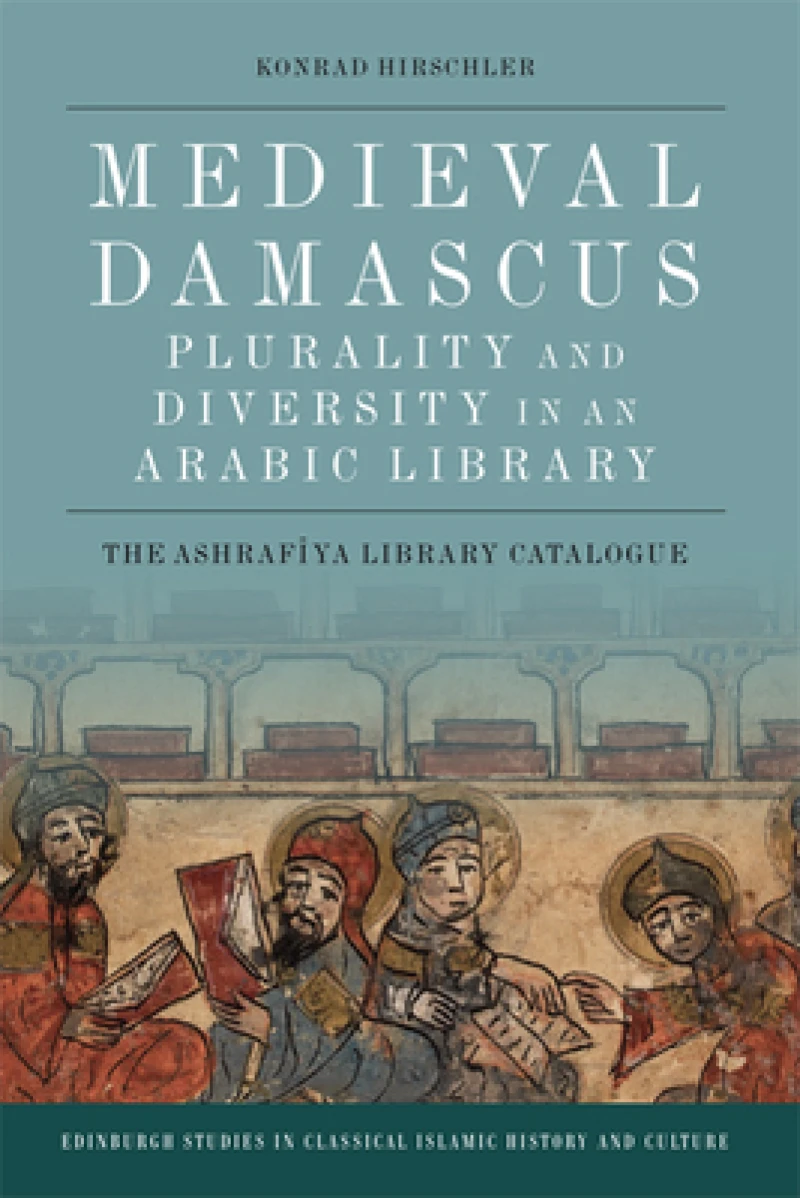
Medieval Damascus: Plurality and Diversity in an Arabic Library : The Ashrafiya Library Catalogue
Book Details
Format
Paperback / Softback
ISBN-10
1474426395
ISBN-13
9781474426398
Publisher
Edinburgh University Press
Imprint
Edinburgh University Press
Country of Manufacture
GB
Country of Publication
GB
Publication Date
Aug 1st, 2017
Print length
512 Pages
Weight
922 grams
Dimensions
15.60 x 23.30 x 3.90 cms
Product Classification:
Literary studies: classical, early & medievalReference worksMiddle Eastern history
Ksh 6,500.00
Temporarily out of stock, due soon
0 in stock
Delivery Location
Delivery fee: Select location
Secure
Quality
Fast
This book discusses the largest and earliest medieval library of the Middle East for which we have documentation – the Ashrafiya library in the very centre of Damascus – and edits its catalogue.
Winner of the 2017 MEM Best Book Prize
The written text was a pervasive feature of cultural practices in the medieval Middle East. At the heart of book circulation stood libraries that experienced a rapid expansion from the twelfth century onwards. While the existence of these libraries is well known our knowledge of their content and structure has been very limited as hardly any medieval Arabic catalogues have been preserved. This book discusses the largest and earliest medieval library of the Middle East for which we have documentation - the Ashrafiya library in the very centre of Damascus - and edits its catalogue. This catalogue shows that even book collections attached to Sunni religious institutions could hold rather unexpected titles, such as stories from the 1001 Nights, manuals for traders, medical handbooks, Shiite prayers, love poetry and texts extolling wine consumption. At the same time this library catalogue decisively expands our knowledge of how the books were spatially organised on the bookshelves of such a large medieval library. With over 2,000 entries this catalogue is essential reading for anybody interested in the cultural and intellectual history of Arabic societies. Setting the Ashrafiya catalogue into a comparative perspective with contemporaneous libraries on the British Isles this book opens new perspectives for the study of medieval libraries.
The written text was a pervasive feature of cultural practices in the medieval Middle East. At the heart of book circulation stood libraries that experienced a rapid expansion from the twelfth century onwards. While the existence of these libraries is well known our knowledge of their content and structure has been very limited as hardly any medieval Arabic catalogues have been preserved. This book discusses the largest and earliest medieval library of the Middle East for which we have documentation - the Ashrafiya library in the very centre of Damascus - and edits its catalogue. This catalogue shows that even book collections attached to Sunni religious institutions could hold rather unexpected titles, such as stories from the 1001 Nights, manuals for traders, medical handbooks, Shiite prayers, love poetry and texts extolling wine consumption. At the same time this library catalogue decisively expands our knowledge of how the books were spatially organised on the bookshelves of such a large medieval library. With over 2,000 entries this catalogue is essential reading for anybody interested in the cultural and intellectual history of Arabic societies. Setting the Ashrafiya catalogue into a comparative perspective with contemporaneous libraries on the British Isles this book opens new perspectives for the study of medieval libraries.
Get Medieval Damascus: Plurality and Diversity in an Arabic Library by at the best price and quality guaranteed only at Werezi Africa's largest book ecommerce store. The book was published by Edinburgh University Press and it has pages.

