
Cart 0
Medieval Indian Armies (2)
Click to zoom

Share this book

Medieval Indian Armies (2) : Indo-Islamic Forces, 7th–Early 16th Centuries

Book Details

Format Paperback / Softback
Book Series Men-at-Arms
ISBN-10 1472853342
ISBN-13 9781472853349
Publisher Bloomsbury Publishing PLC
Imprint Osprey Publishing
Country of Manufacture IN
Country of Publication GB
Publication Date Nov 23rd, 2023
Print length 48 Pages
Weight 166 grams
Dimensions 18.30 x 24.80 x 0.70 cms
Ksh 2,350.00
Werezi Extended Catalogue Delivery in 14 days

Delivery Location

Delivery fee: Select location

Delivery in 14 days

Secure
Quality
Fast
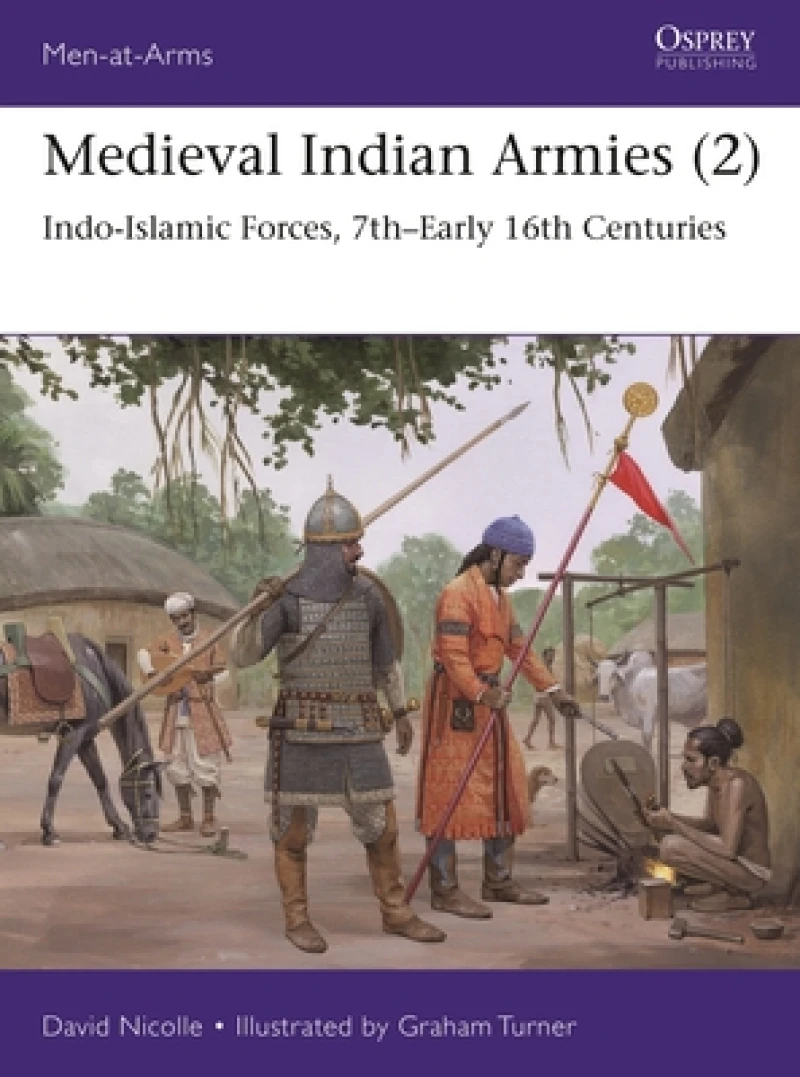
This illustrated study investigates the Indo-Islamic fighting men of South Asia from the 7th century AD to the Mughal conquest of the 16th century. From 1206, much of what is now India as well as parts of Pakistan, Bangladesh and Nepal were ruled by a succession of Islamic dynasties that had their origins in the Ghurid forces that conquered parts of northern India in the 12th century. Although it was never complete, the Islamic domination of this huge region also had a profound impact upon Islamic civilization as a whole, not least in military terms, being felt as far west as Africa. Within South Asia, the war-torn medieval centuries laid the foundations for the subsequent even more brilliant Mughal Empire. Featuring eight plates of superb artwork alongside carefully chosen photographs and illustrations, this study complements the same author's Medieval Indian Armies (1): Hindu, Buddhist and Jain. It describes and illustrates the Indo-Islamic forces operating in South Asia, from the Umayyad Caliphate’s frontier in north-western India and Afghanistan in the late 7th century through to the Delhi Sultanate, the Sultanate of Bengal and the Bahmani Sultanate in the 15th and 16th centuries. David Nicolle explains how, with respect to arms, armour, fortification and transport both on land and at sea, the widely successful Muslim armies learned a great deal from their more numerous Hindu, Jain and Buddhist opponents. This was especially evident in developments such as the use of war-elephants and the adoption of lighter, often textile-based forms of protection such as ‘soft armour’ made of cotton. On the other side, there would be widespread adoption of more potent weapons such as the composite bow, and considerably more sophisticated systems of cavalry warfare, among the non-Islamic forces of the Indian sub-continent. Fully illustrated, this absorbing account casts light on many centuries of warfare in South Asia.

This illustrated study investigates the Indo-Islamic fighting men of South Asia from the 7th century AD to the Mughal conquest of the 16th century.

From 1206, much of what is now India as well as parts of Pakistan, Bangladesh and Nepal were ruled by a succession of Islamic dynasties that had their origins in the Ghurid forces that conquered parts of northern India in the 12th century. Although it was never complete, the Islamic domination of this huge region also had a profound impact upon Islamic civilization as a whole, not least in military terms, being felt as far west as Africa. Within South Asia, the war-torn medieval centuries laid the foundations for the subsequent even more brilliant Mughal Empire.

Featuring eight plates of superb artwork alongside carefully chosen photographs and illustrations, this study complements the same author''s Medieval Indian Armies (1): Hindu, Buddhist and Jain. It describes and illustrates the Indo-Islamic forces operating in South Asia, from the Umayyad Caliphate’s frontier in north-western India and Afghanistan in the late 7th century through to the Delhi Sultanate, the Sultanate of Bengal and the Bahmani Sultanate in the 15th and 16th centuries.

David Nicolle explains how, with respect to arms, armour, fortification and transport both on land and at sea, the widely successful Muslim armies learned a great deal from their more numerous Hindu, Jain and Buddhist opponents. This was especially evident in developments such as the use of war-elephants and the adoption of lighter, often textile-based forms of protection such as ‘soft armour’ made of cotton. On the other side, there would be widespread adoption of more potent weapons such as the composite bow, and considerably more sophisticated systems of cavalry warfare, among the non-Islamic forces of the Indian sub-continent. Fully illustrated, this absorbing account casts light on many centuries of warfare in South Asia.


Get Medieval Indian Armies (2) by at the best price and quality guaranteed only at Werezi Africa's largest book ecommerce store. The book was published by Bloomsbury Publishing PLC and it has pages.


Mind, Body, & Spirit

Price

Ksh 2,350.00

Shopping Cart

Africa largest book store

Sub Total:
Ebooks

Digital Library
Coming Soon

Our digital collection is currently being curated to ensure the best possible reading experience on Werezi. We'll be launching our Ebooks platform shortly.