
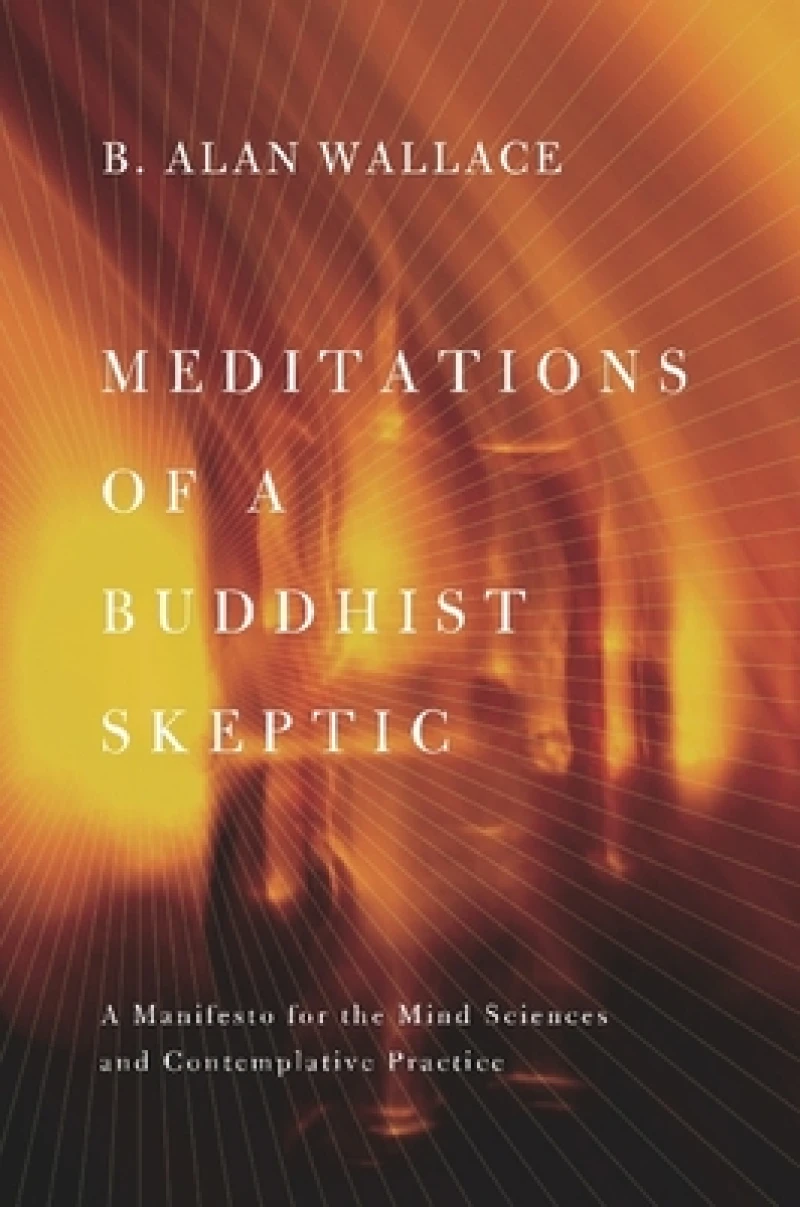
Meditations of a Buddhist Skeptic : A Manifesto for the Mind Sciences and Contemplative Practice
Book Details
Format
Paperback / Softback
ISBN-10
0231158351
ISBN-13
9780231158350
Publisher
Columbia University Press
Imprint
Columbia University Press
Country of Manufacture
US
Country of Publication
GB
Publication Date
Dec 31st, 2013
Print length
304 Pages
Weight
402 grams
Dimensions
22.30 x 14.90 x 1.90 cms
Product Classification:
Philosophy of mindBuddhismNeurosciences
Ksh 2,900.00
Werezi Extended Catalogue
0 in stock
Delivery Location
Delivery fee: Select location
Secure
Quality
Fast
A radical approach to studying the mind. Renowned Buddhist philosopher B. Alan Wallace reasserts the power of shamatha and vipashyana, traditional Buddhist meditations, to clarify the mind's role in the natural world. Raising profound questions about human nature, free will, and experience versus dogma, Wallace challenges the claim that consciousness is nothing more than an emergent property of the brain with little relation to universal events. Rather, he maintains that the observer is essential to measuring quantum systems and that mental phenomena (however conceived) influence brain function and behavior. Wallace embarks on a two-part mission: to restore human nature and to transcend it. He begins by explaining the value of skepticism in Buddhism and science and the difficulty of merging their experiential methods of inquiry. Yet Wallace also proves that Buddhist views on human nature and the possibility of free will liberate us from the metaphysical constraints of scientific materialism. He then explores the radical empiricism inspired by William James and applies it to Indian Buddhist philosophy's four schools and the Great Perfection school of Tibetan Buddhism. Since Buddhism begins with the assertion that ignorance lies at the root of all suffering and that the path to freedom is reached through knowledge, Buddhist practice can be viewed as a progression from agnosticism (not knowing) to gnosticism (knowing), acquired through the maintenance of exceptional mental health, mindfulness, and introspection. Wallace discusses these topics in detail, identifying similarities and differences between scientific and Buddhist understanding, and he concludes with an explanation of shamatha and vipashyana and their potential for realizing the full nature, origins, and potential of consciousness.
Get Meditations of a Buddhist Skeptic by at the best price and quality guaranteed only at Werezi Africa's largest book ecommerce store. The book was published by Columbia University Press and it has pages.

