

Mental Logic
Book Details
Format
Hardback
ISBN-10
0805823883
ISBN-13
9780805823882
Publisher
Taylor & Francis Inc
Imprint
Psychology Press
Country of Manufacture
US
Country of Publication
GB
Publication Date
Apr 1st, 1998
Print length
490 Pages
Weight
958 grams
KSh 30,950.00
Re-Printing
0 in stock
Delivery Location
Delivery fee: Select location
Secure
Quality
Fast
This volume, which includes some previously published work and the most recent writings of the late Martin Braine and his colleagues, will be of interest to cognitive scientists, philosophers of mind and logicians, developmentalists, and psycholinguists.
Over the past decade, the question of whether there is a mental logic has become subject to considerable debate. There have been attacks by critics who believe that all reasoning uses mental models and return attacks on mental-models theory. This controversy has invaded various journals and has created issues between mental logic and the biases-and-heuristics approach to reasoning, and the content-dependent theorists. However, despite its pertinence to current issues in cognition, few cognitive scientists really know what the mental-logic theory is, and misapprehensions are prevalent. This volume is a comprehensive presentation of the theory of mental logic and its implications for cognition and development, including the acquisition of language.
The theory offered here has three parts. Part I is the mental logic per se that contains a set of inference schemas. Part II is a reasoning program that applies the schemas in lines of reasoning, including a direct-reasoning routine and more sophisticated indirect-reasoning strategies. Part III of the theory is pragmatic, proposing that the basic meaning of each logic particle is in the inferences that are sanctioned by its inference schemas.
The theory offered here has three parts. Part I is the mental logic per se that contains a set of inference schemas. Part II is a reasoning program that applies the schemas in lines of reasoning, including a direct-reasoning routine and more sophisticated indirect-reasoning strategies. Part III of the theory is pragmatic, proposing that the basic meaning of each logic particle is in the inferences that are sanctioned by its inference schemas.
Get Mental Logic by David P. O'Brien at the best price and quality guaranteed only at Werezi Africa's largest book ecommerce store. The book was published by Taylor & Francis Inc and it has 490 pages.
Customers Who Bought This Also Bought

Recognising the Stranger
KSh 1,800.00
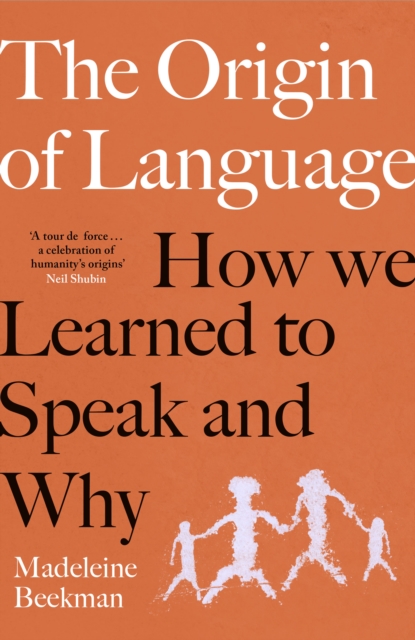
The Origin of Language
KSh 4,500.00
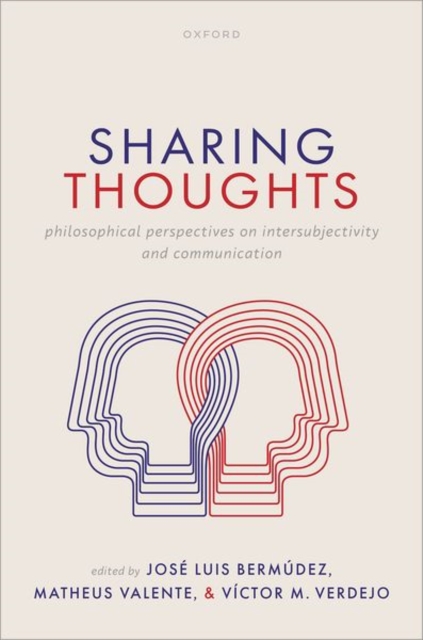
Sharing Thoughts
KSh 17,000.00
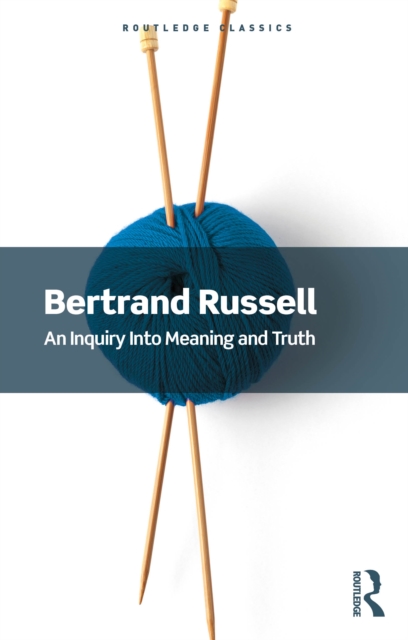
An Inquiry Into Meaning and Truth
KSh 3,750.00
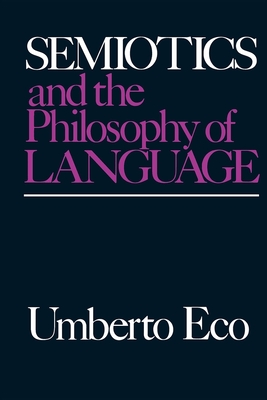
Semiotics and the Philosophy of Language
KSh 3,400.00
An Introduction to Logic
KSh 6,650.00

Walker Percy''s Search for Community
KSh 5,950.00
Film Figures
KSh 16,450.00

The Tacit Dimensions of Language and Logic
KSh 15,800.00

Metaphors in Action
KSh 21,600.00
Frontiers in Semiotics
KSh 3,000.00

A Theory of Death
KSh 11,900.00
