
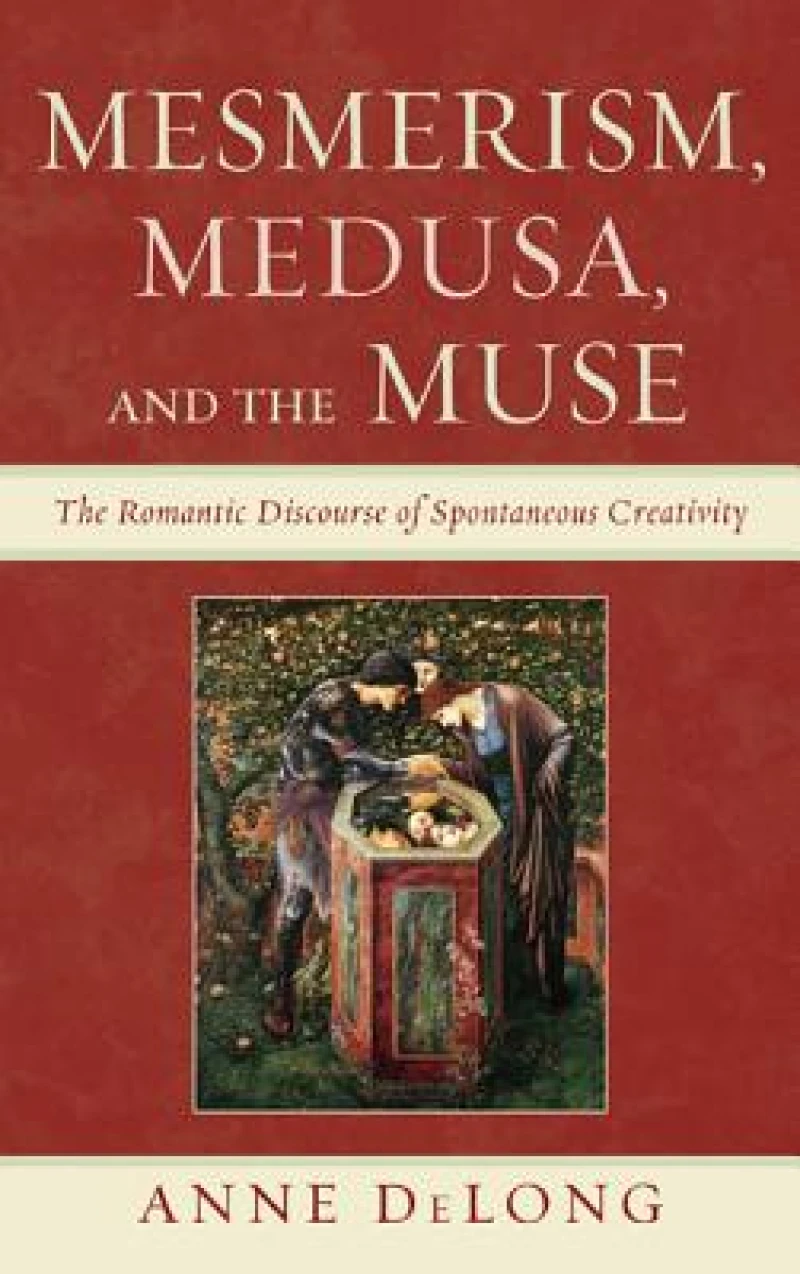
Mesmerism, Medusa, and the Muse : The Romantic Discourse of Spontaneous Creativity
by
Anne DeLong
Book Details
Format
Hardback or Cased Book
ISBN-10
0739170430
ISBN-13
9780739170434
Publisher
Bloomsbury Publishing Plc
Imprint
Lexington Books
Country of Manufacture
GB
Country of Publication
GB
Publication Date
Apr 26th, 2012
Print length
182 Pages
Weight
417 grams
Dimensions
23.30 x 16.00 x 1.80 cms
Product Classification:
Literary studies: c 1800 to c 1900 Literary studies: poetry & poets
Ksh 18,300.00
Manufactured on Demand
Delivery in 29 days
Delivery Location
Delivery fee: Select location
Delivery in 29 days
Secure
Quality
Fast
Mesmerism, Medusa, and the Muse: The Romantic Discourse of Spontaneous Creativity explores the connections among the Romantic discourse of spontaneous literary creativity, the nineteenth-century cultural practice of mesmerism, and the mythical Medusa as an icon of the gendered gaze. An analysis of Medusan mesmerism in the poetry of Mary Robinson, Samuel Taylor Coleridge, Percy Bysshe Shelley and Letitia Elizabeth Landon (L.E.L.) and the prose of Mary Shelley reveals that these Romantic-era writers equate the enraptured state that produces spontaneous literary creation with the mesmeric trance. These writers employ Medusan imagery to portray both the mesmerist and the mesmerized subject, a conflation of subject/object positions that complicates issues of agency, subjectivity, and gender. Images of Medusan mesmerism ultimately work to deconstruct Romantic ideological dichotomies of self/other, female/male, muse/artist, and sublime/beautiful. In contrast to a traditional, masculinized Romantic discourse that emphasizes self-possession, this study uncovers a feminized, improvisational, Romantic discourse, characterized “Other-possession,” an assumption of the mesmerized subject position that enhances subjective fluidity.This study interrogates the Romantic discourse of spontaneous literary creativity through an examination of Romantic poetry, prose, and theory that utilizes mesmeric and Medusan metaphors to suggest creative inspiration. Building on recent scholarship about improvisational poetics, the subversive potential of mesmerism, and Medusa as a feminist icon, this work suggests that the mesmeric Medusan muse not only enables creativity for women writers but also provides a mirror in which they view (and through which they give voice to) their own societal oppression. The mesmeric Medusan muse in Romantic-era literature—from the Ancient Mariner and the Frankenstein monster to the tragic, abandoned Sapphic poetess—often represents the face of oppression, an unwelcome and monstrous truth in nineteenth-century British society. For women writers in particular, braving the stare of the Medusan muse enhances empathy, and therefore inspiration and literary productivity.
Mesmerism, Medusa, and the Muse: The Romantic Discourse of Spontaneous Creativity explores the connections among the Romantic discourse of spontaneous literary creativity, the nineteenth-century cultural practice of mesmerism, and the mythical Medusa as an icon of the gendered gaze. An analysis of Medusan mesmerism in the poetry of Mary Robinson, Samuel Taylor Coleridge, Percy Bysshe Shelley and Letitia Elizabeth Landon (L.E.L.) and the prose of Mary Shelley reveals that these Romantic-era writers equate the enraptured state that produces spontaneous literary creation with the mesmeric trance. These writers employ Medusan imagery to portray both the mesmerist and the mesmerized subject, a conflation of subject/object positions that complicates issues of agency, subjectivity, and gender. Images of Medusan mesmerism ultimately work to deconstruct Romantic ideological dichotomies of self/other, female/male, muse/artist, and sublime/beautiful. In contrast to a traditional, masculinized Romantic discourse that emphasizes self-possession, this study uncovers a feminized, improvisational, Romantic discourse, characterized “Other-possession,” an assumption of the mesmerized subject position that enhances subjective fluidity. This study interrogates the Romantic discourse of spontaneous literary creativity through an examination of Romantic poetry, prose, and theory that utilizes mesmeric and Medusan metaphors to suggest creative inspiration. Building on recent scholarship about improvisational poetics, the subversive potential of mesmerism, and Medusa as a feminist icon, this work suggests that the mesmeric Medusan muse not only enables creativity for women writers but also provides a mirror in which they view (and through which they give voice to) their own societal oppression. The mesmeric Medusan muse in Romantic-era literature—from the Ancient Mariner and the Frankenstein monster to the tragic, abandoned Sapphic poetess—often represents the face of oppression, an unwelcome and monstrous truth in nineteenth-century British society. For women writers in particular, braving the stare of the Medusan muse enhances empathy, and therefore inspiration and literary productivity.
Get Mesmerism, Medusa, and the Muse by at the best price and quality guaranteed only at Werezi Africa's largest book ecommerce store. The book was published by Bloomsbury Publishing Plc and it has pages.

