
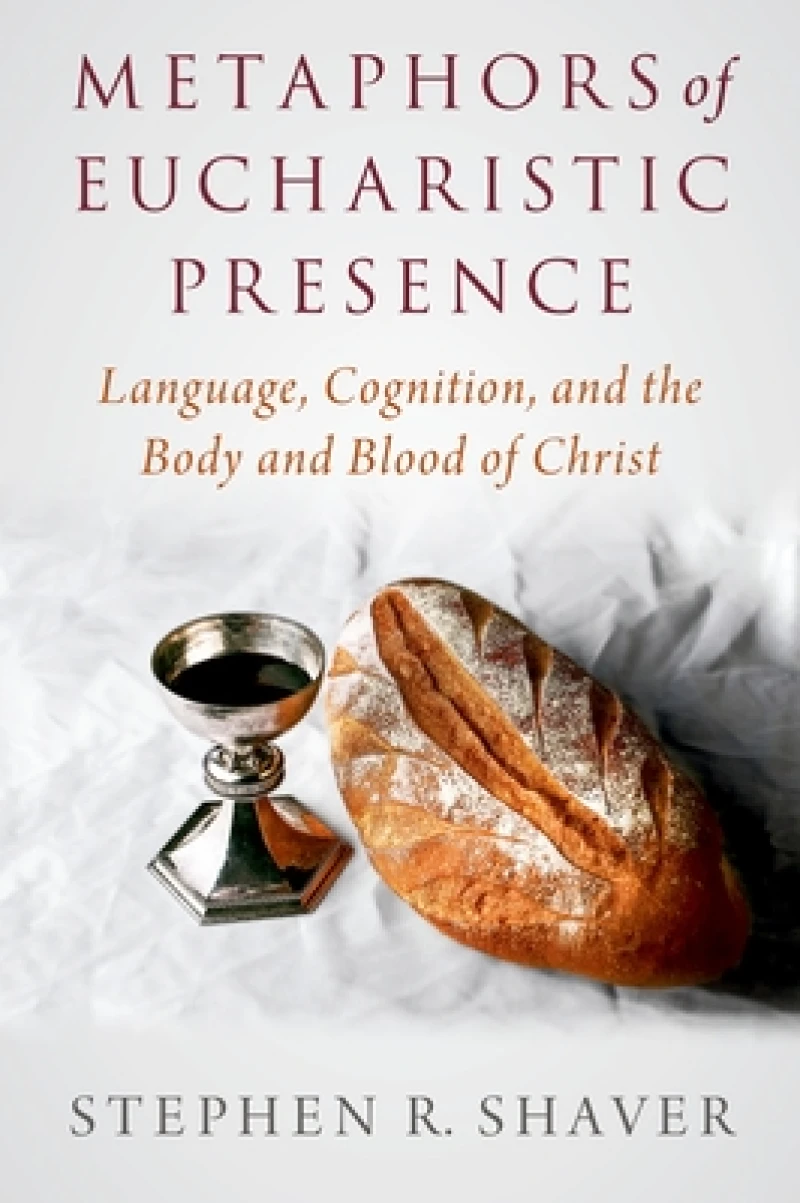
Metaphors of Eucharistic Presence : Language, Cognition, and the Body and Blood of Christ
Book Details
Format
Hardback or Cased Book
ISBN-10
0197580807
ISBN-13
9780197580806
Publisher
Oxford University Press Inc
Imprint
Oxford University Press Inc
Country of Manufacture
US
Country of Publication
GB
Publication Date
Mar 31st, 2022
Print length
306 Pages
Weight
567 grams
Dimensions
16.30 x 24.90 x 3.30 cms
Ksh 19,900.00
Werezi Extended Catalogue
0 in stock
Delivery Location
Delivery fee: Select location
Secure
Quality
Fast
In Metaphors of Eucharistic Presence: Language, Cognition, and the Body and Blood of Christ, Stephen R. Shaver brings together the fields of cognitive linguistics and liturgical theology to propose a new approach to the ecumenically controversial issue of eucharistic presence. Drawing from the work of cognitive linguists such as George Lakoff, Gilles Fauconnier, and Mark Turner, and theologians such as Robert Masson and John Sanders, Shaver argues that there is no clear division between literal and figurative language: rather, human cognition is grounded in sensorimotor experience, and phenomena such as metaphor and conceptual blending are basic building blocks of thought. Complex realities are ordinarily understood by means of more than one metaphor. Inherited models of eucharistic presence, then, are not necessarily mutually exclusive but can serve as complementary members of a shared ecumenical repertoire.The central element of this repertoire is the motif of identity--the eucharistic bread and wine are the body and blood of Christ--grounded in the Synoptic and Pauline institution narratives. From a cognitive standpoint, this metaphor can be understood both as figurative and as true in the proper sense, resolving a dichotomy that has divided the churches since the Reformation. The identity motif is complemented by four major non-scriptural motifs: representation, change, containment, and conduit. Inaugurating a new interdisciplinary conversation, this book contributes to ongoing ecumenical reconciliation not only by addressing eucharistic presence but also by demonstrating an approach which may hold promise in other historically controverted areas. Meanwhile for cognitive linguists it offers an intriguing case study in the application of that discipline to theological questions.
Get Metaphors of Eucharistic Presence by at the best price and quality guaranteed only at Werezi Africa's largest book ecommerce store. The book was published by Oxford University Press Inc and it has pages.

