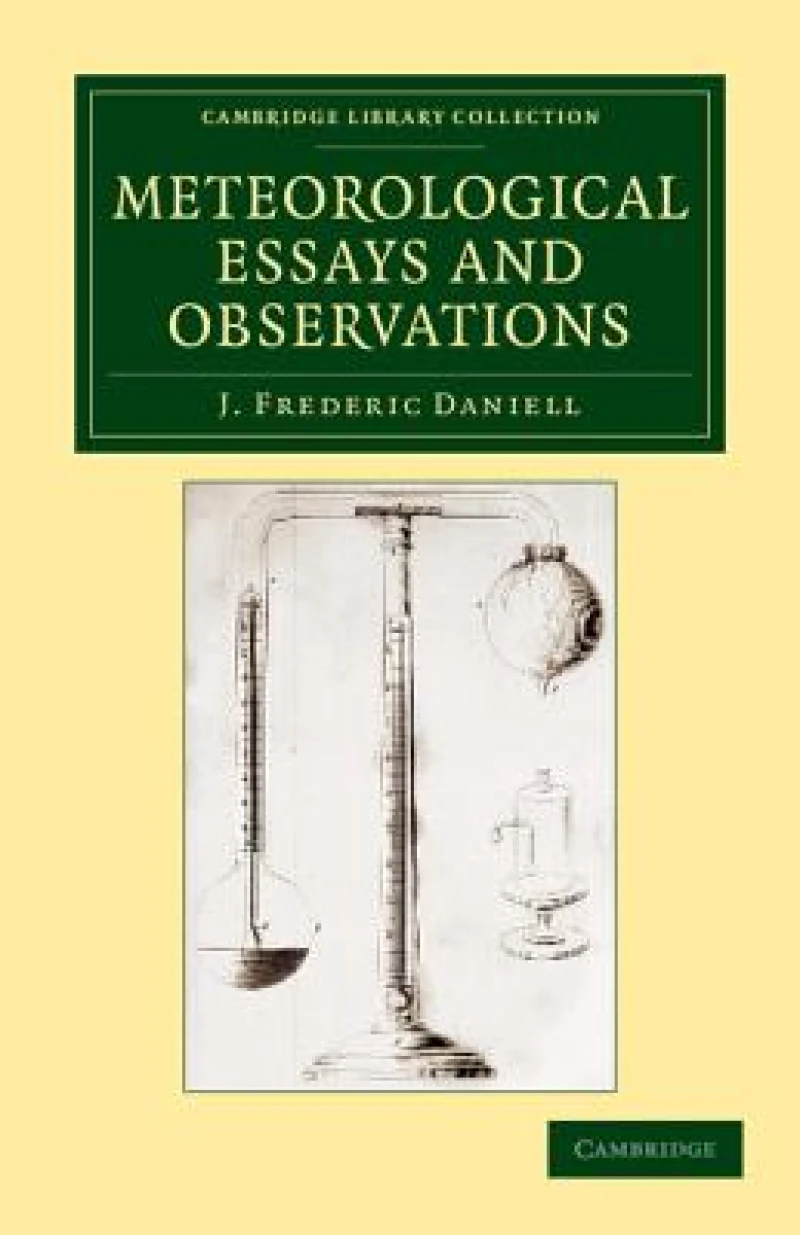
Meteorological Essays and Observations
Book Details
Format
Paperback / Softback
Book Series
Cambridge Library Collection - Physical Sciences
ISBN-10
1108056571
ISBN-13
9781108056571
Publisher
Cambridge University Press
Imprint
Cambridge University Press
Country of Manufacture
GB
Country of Publication
GB
Publication Date
Feb 21st, 2013
Print length
674 Pages
Weight
872 grams
Dimensions
21.60 x 14.00 x 4.30 cms
Product Classification:
Meteorology & climatologyMeteorology and climatology
Ksh 9,900.00
Manufactured on Demand
0 in stock
Delivery Location
Delivery fee: Select location
Secure
Quality
Fast
Why does mercury move in a barometer? Why do plants require light? And did Pliny the Elder understand the theory behind atmospheric humidity better than the scientists of the early nineteenth century? This popular collection of essays, revised and published in 1827, tackles all these questions and more.
By the early nineteenth century, meteorologists were equipped with plenty of useful devices: barometers, thermometers, hygrometers, and any number of variations thereon. But the nature of these instruments was not wholly understood. While it was possible to take accurate measurements with a barometer, what physical process made the mercury move? What exactly is atmospheric pressure? And how can one measure sunlight? Ranging from wild theories of gravity-resistant air particles to the latest experiments in altitude, chemist and physicist John Frederic Daniell (1790–1845) presents his answers in this collection of essays. First published in 1823, this enlarged second edition of 1827 includes his work on the climate of London, the effect of atmospheric conditions on human health, and suggested improvements for the design of a new hygrometer. Daniell later became the first professor of chemistry at King's College, London, and foreign secretary of the Royal Society.
Get Meteorological Essays and Observations by at the best price and quality guaranteed only at Werezi Africa's largest book ecommerce store. The book was published by Cambridge University Press and it has pages.