
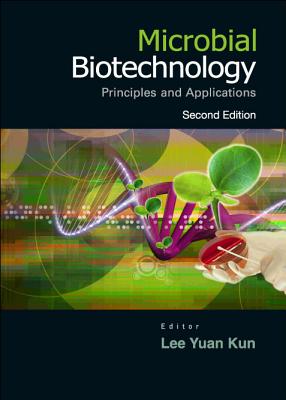
Microbial Biotechnology: Principles And Applications (Second Edition)
Second Edition
Book Details
Format
Hardback
ISBN-10
9812566767
ISBN-13
9789812566768
Edition
Second Edition
Publisher
World Scientific Publishing Co Pte Ltd
Imprint
World Scientific Publishing Co Pte Ltd
Country of Manufacture
SG
Country of Publication
GB
Publication Date
Aug 24th, 2006
Print length
808 Pages
Weight
1,344 grams
Dimensions
23.30 x 16.30 x 3.90 cms
Product Classification:
Biotechnology
KSh 29,900.00
Currently unavailable
0 in stock
Delivery Location
Delivery fee: Select location
Secure
Quality
Fast
Focuses on the various applications of microbial-biotechnological principles. This textbook also contains a chapter on real time polymerase chain reaction and a chapter on fungal solid state cultivation. It also includes real life examples of how the application of microbial-biotechnological principles has achieved breakthroughs.
In the second edition of this bestselling textbook, new materials have been added, including a new chapter on real time polymerase chain reaction (RTPCR) and a chapter on fungal solid state cultivation. There already exist a number of excellent general textbooks on microbiology and biotechnology that deal with the basic principles of microbial biotechnology. To complement them, this book focuses on the various applications of microbial-biotechnological principles. A teaching-based format is adopted, whereby working problems, as well as answers to frequently asked questions, supplement the main text. The book also includes real life examples of how the application of microbial-biotechnological principles has achieved breakthroughs in both research and industrial production.Although written for polytechnic students and undergraduates, the book contains sufficient information to be used as a reference for postgraduate students and lecturers. It may also serve as a resource book for corporate planners, managers and applied research personnel.
Get Microbial Biotechnology: Principles And Applications (Second Edition) by Yuan Kun Lee at the best price and quality guaranteed only at Werezi Africa's largest book ecommerce store. The book was published by World Scientific Publishing Co Pte Ltd and it has 808 pages.
Customers Who Bought This Also Bought

Bad Blood
KSh 2,350.00

Alzheimer''s Disease Drug Development
KSh 20,000.00

Artificial Intelligence in Biotechnology
KSh 16,400.00

Insect Livestock
KSh 10,250.00

Biomimetic, Bioinspired, and Bioactive Biomaterials for Oral Care
KSh 32,200.00

Electronic Wastes
KSh 24,550.00

Multifunctional Epidermal Patches
KSh 39,400.00

Biofabrication in Regenerative Medicine
KSh 32,400.00

Nanotechnology in Functional Foods and Nutraceuticals
KSh 1,600.00

Electronic Wastes
KSh 24,550.00

Nanotechnology in Functional Foods and Nutraceuticals
KSh 1,600.00

Bioprinting
KSh 31,150.00