
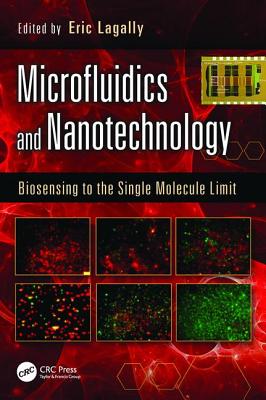
Microfluidics and Nanotechnology : Biosensing to the Single Molecule Limit
Book Details
Delivery Location
Delivery fee: Select location
While similar books concentrate only on microfluidics or nanotechnology, this book describes integrated approaches for the detection of single cells and molecules. Focusing exclusively on biological and chemical targets, it explores state-of-the-art physical, chemical, contact, and noncontact detection methods, explaining the theory behind the different techniques. By highlighting a variety of technologies, the text allows for a comparison of the fundamental advantages and challenges of each, as well as an appreciation of the power of leveraging scalability and integration to achieve sensitivity at low cost.
Get Microfluidics and Nanotechnology by Eric Lagally at the best price and quality guaranteed only at Werezi Africa's largest book ecommerce store. The book was published by Taylor & Francis Ltd and it has 290 pages.
Customers Who Bought This Also Bought

Artificial Intelligence in Biotechnology
KSh 16,400.00

AI in Modern Ophthalmology
KSh 18,700.00

Multifunctional Epidermal Patches
KSh 39,400.00

Biofabrication in Regenerative Medicine
KSh 32,400.00

AI in Modern Ophthalmology
KSh 9,900.00

Structural Health Monitoring, Metamaterials, Metastructures and Additive Manufacturing and Dynamics of Biomedical and Bioinspired Systems, 2026
KSh 19,800.00

The Physics of Medical Imaging
KSh 37,800.00
Engineering Biomaterials for Regenerative Medicine
KSh 23,400.00
Bio-Materials and Prototyping Applications in Medicine
KSh 19,800.00

Air-Puff Tonometers
KSh 17,800.00

Intelligent Patient Management
KSh 32,400.00

Kenzan Method for Scaffold-Free Biofabrication
KSh 19,800.00
More in This Genre
Artificial Intelligence in Biotechnology
KSh 16,400.00
AI in Modern Ophthalmology
KSh 18,700.00
Multifunctional Epidermal Patches
KSh 39,400.00
Biofabrication in Regenerative Medicine
KSh 32,400.00
AI in Modern Ophthalmology
KSh 9,900.00
Structural Health Monitoring, Metamaterials, Metastructures and Additive Manufacturing and Dynamics of Biomedical and Bioinspired Systems, 2026
KSh 19,800.00
