
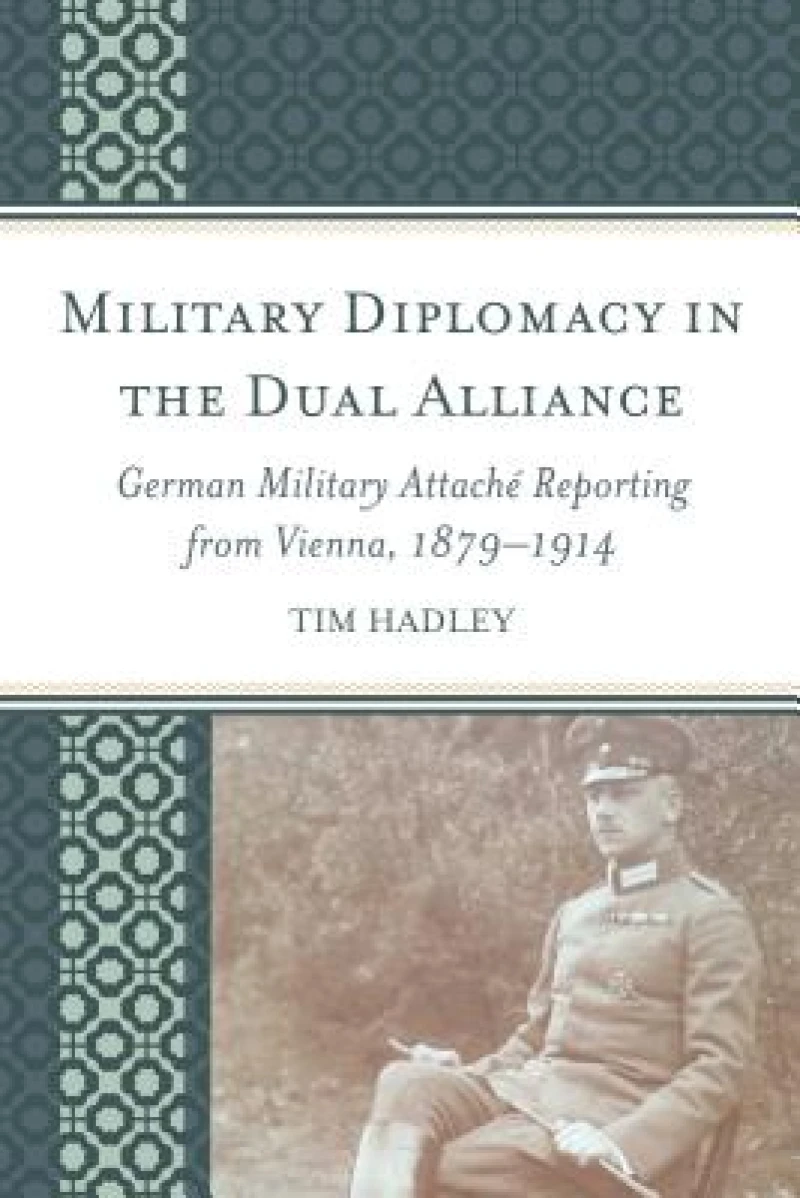
Military Diplomacy in the Dual Alliance : German Military Attache Reporting from Vienna, 1879–1914
by
Tim Hadley
Book Details
Format
Hardback or Cased Book
ISBN-10
149852897X
ISBN-13
9781498528979
Publisher
Bloomsbury Publishing Plc
Imprint
Lexington Books
Country of Manufacture
GB
Country of Publication
GB
Publication Date
Dec 24th, 2015
Print length
264 Pages
Weight
538 grams
Dimensions
23.80 x 15.90 x 2.80 cms
Product Classification:
HistoryFirst World War
Ksh 21,250.00
Manufactured on Demand
0 in stock
Delivery Location
Delivery fee: Select location
Secure
Quality
Fast
This book challenges current thinking about the outbreak of World War I and the course of German foreign policy since Bismarck’s chancellorship. In 1914, Germany''s opening offensives against France were to be accompanied by a simultaneous offensive by her ally, Austria-Hungary, against Russia. The Austrian offensive was intended to hold the Russians until Germany defeated the French—six weeks, no more. Then, the German army would turn east to support the Austrians. The Austrian offensive was a catastrophic failure. After only days of fighting Russia, Germany was obliged to send troops to support Austria lest she capitulate while most of the German army was still in France. The Austrian army’s severe deficiencies were a constant drain on the German effort throughout the war. After the war, German memoirists and historians claimed that the German leadership had been unaware of these deficiencies before the war broke out. These claims have been accepted by historians down to today. The book presents recently re-discovered documentary evidence that the German general staff and Germany’s political leadership had known of the Austrian army’s weaknesses for decades before the war.The book also reveals a new perspective of Bismarck’s diplomacy beginning shortly after he engineered the Dual Alliance between the two countries in 1879. It demonstrates that as early as 1882 Bismarck became aware that the Austrian army was far weaker than assumed when he concluded the alliance. It was primarily his concern about Austria’s weakness that spurred Bismarck’s energetic diplomacy, seeking alliances and understandings with other countries in the region, and which became the main consideration that guided his foreign policy from then on. For if Austria suffered a defeat, Germany would find itself alone between two dangerous powers: France and Russia. The consequences of his policies resulted in peace down to his departure in 1890. His successors, for a variety of reasons addressed in the book, were not as careful, ignored Austria’s weaknesses despite the warnings of the military attachés, and permitted Austria to become involved in a war. The result was tragically foreseeable.
This book challenges current thinking about the outbreak of World War I and the course of German foreign policy since Bismarck’s chancellorship. In 1914, Germany's opening offensives against France were to be accompanied by a simultaneous offensive by her ally, Austria-Hungary, against Russia. The Austrian offensive was intended to hold the Russians until Germany defeated the French—six weeks, no more. Then, the German army would turn east to support the Austrians. The Austrian offensive was a catastrophic failure. After only days of fighting Russia, Germany was obliged to send troops to support Austria lest she capitulate while most of the German army was still in France. The Austrian army’s severe deficiencies were a constant drain on the German effort throughout the war. After the war, German memoirists and historians claimed that the German leadership had been unaware of these deficiencies before the war broke out. These claims have been accepted by historians down to today. The book presents recently re-discovered documentary evidence that the German general staff and Germany’s political leadership had known of the Austrian army’s weaknesses for decades before the war. The book also reveals a new perspective of Bismarck’s diplomacy beginning shortly after he engineered the Dual Alliance between the two countries in 1879. It demonstrates that as early as 1882 Bismarck became aware that the Austrian army was far weaker than assumed when he concluded the alliance. It was primarily his concern about Austria’s weakness that spurred Bismarck’s energetic diplomacy, seeking alliances and understandings with other countries in the region, and which became the main consideration that guided his foreign policy from then on. For if Austria suffered a defeat, Germany would find itself alone between two dangerous powers: France and Russia. The consequences of his policies resulted in peace down to his departure in 1890. His successors, for a variety of reasons addressed in the book, were not as careful, ignored Austria’s weaknesses despite the warnings of the military attachés, and permitted Austria to become involved in a war. The result was tragically foreseeable.
Get Military Diplomacy in the Dual Alliance by at the best price and quality guaranteed only at Werezi Africa's largest book ecommerce store. The book was published by Bloomsbury Publishing Plc and it has pages.

