
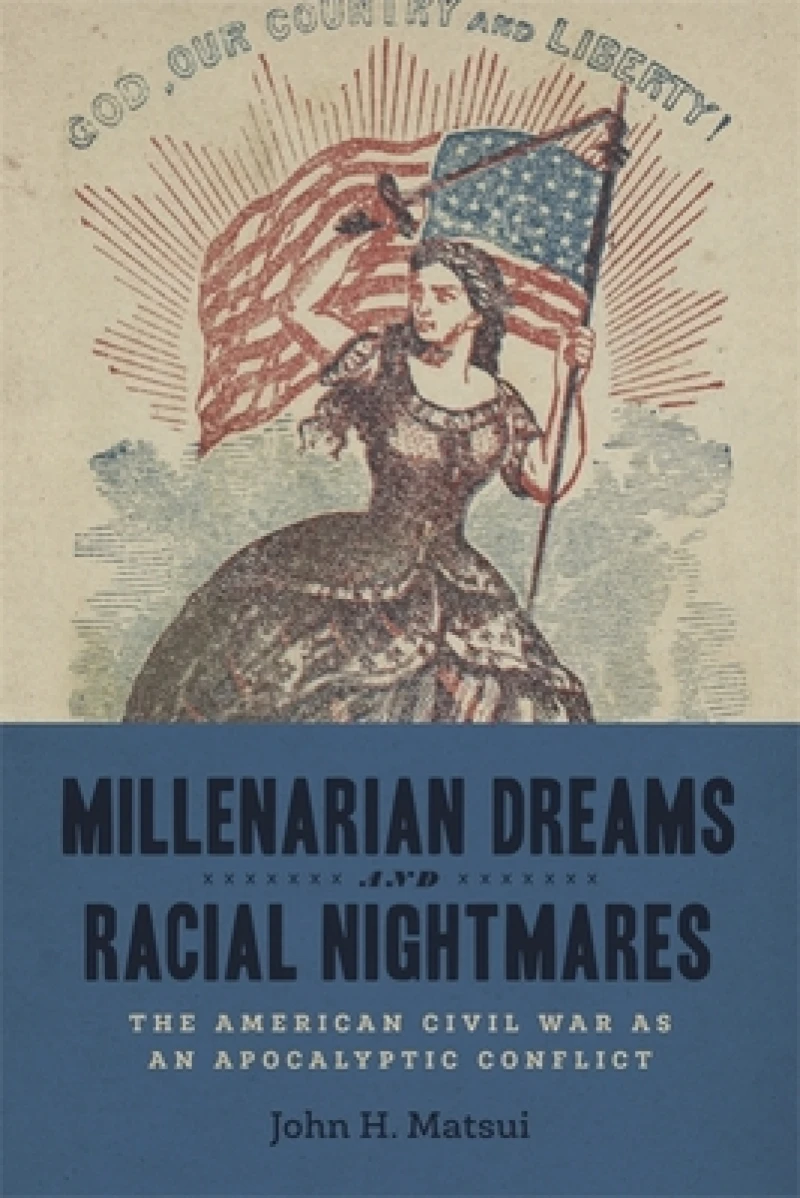
Millenarian Dreams and Racial Nightmares : The American Civil War As an Apocalyptic Conflict
Book Details
Format
Hardback or Cased Book
ISBN-10
0807174823
ISBN-13
9780807174821
Publisher
Louisiana State University Press
Imprint
Louisiana State University Press
Country of Manufacture
US
Country of Publication
GB
Publication Date
May 19th, 2021
Print length
304 Pages
Weight
585 grams
Dimensions
22.80 x 15.20 x 2.00 cms
Ksh 7,200.00
Werezi Extended Catalogue
0 in stock
Delivery Location
Delivery fee: Select location
Secure
Quality
Fast
Argues that the political ideology and racial views of American Protestants during the Civil War mirrored their religious optimism or pessimism regarding human nature, perfectibility, and the millennium.
In Millenarian Dreams and Racial Nightmares, John H. Matsui argues that the political ideology and racial views of American Protestants during the Civil War mirrored their religious optimism or pessimism regarding human nature, perfectibility, and the millennium. While previous historians have commented on the role of antebellum eschatology in political alignment, none have delved deeply into how religious views complicate the standard narrative of the North versus the South.
Moving beyond the traditional optimism/pessimism dichotomy, Matsui divides American Protestants of the Civil War era into ""premillenarian"" and ""postmillenarian"" camps. Both postmillenarian and premillenarian Christians held that the return of Christ would inaugurate the arrival of heaven on earth, but they disagreed over its timing. This disagreement was key to their disparate political stances. Postmillenarians argued that God expected good Christians to actively perfect the world via moral reform-of self and society-and free-labor ideology, whereas premillenarians defended hierarchy or racial mastery (or both). Northern Democrats were generally comfortable with antebellum racial norms and were cynical regarding human nature; they therefore opposed Republicans' utopian plans to reform the South. Southern Democrats, who held premillenarian views like their northern counterparts, pressed for or at least acquiesced in the secession of slaveholding states to preserve white supremacy. Most crucially, enslaved African American Protestants sought freedom, a postmillenarian societal change requiring nothing less than a major revolution and the reconstruction of southern society.
Millenarian Dreams and Racial Nightmares adds a new dimension to our understanding of the Civil War as it reveals the wartime marriage of political and racial ideology to religious speculation. As Matsui argues, the postmillenarian ideology came to dominate the northern states during the war years and the nation as a whole following the Union victory in 1865.
Moving beyond the traditional optimism/pessimism dichotomy, Matsui divides American Protestants of the Civil War era into ""premillenarian"" and ""postmillenarian"" camps. Both postmillenarian and premillenarian Christians held that the return of Christ would inaugurate the arrival of heaven on earth, but they disagreed over its timing. This disagreement was key to their disparate political stances. Postmillenarians argued that God expected good Christians to actively perfect the world via moral reform-of self and society-and free-labor ideology, whereas premillenarians defended hierarchy or racial mastery (or both). Northern Democrats were generally comfortable with antebellum racial norms and were cynical regarding human nature; they therefore opposed Republicans' utopian plans to reform the South. Southern Democrats, who held premillenarian views like their northern counterparts, pressed for or at least acquiesced in the secession of slaveholding states to preserve white supremacy. Most crucially, enslaved African American Protestants sought freedom, a postmillenarian societal change requiring nothing less than a major revolution and the reconstruction of southern society.
Millenarian Dreams and Racial Nightmares adds a new dimension to our understanding of the Civil War as it reveals the wartime marriage of political and racial ideology to religious speculation. As Matsui argues, the postmillenarian ideology came to dominate the northern states during the war years and the nation as a whole following the Union victory in 1865.
Get Millenarian Dreams and Racial Nightmares by at the best price and quality guaranteed only at Werezi Africa's largest book ecommerce store. The book was published by Louisiana State University Press and it has pages.

