
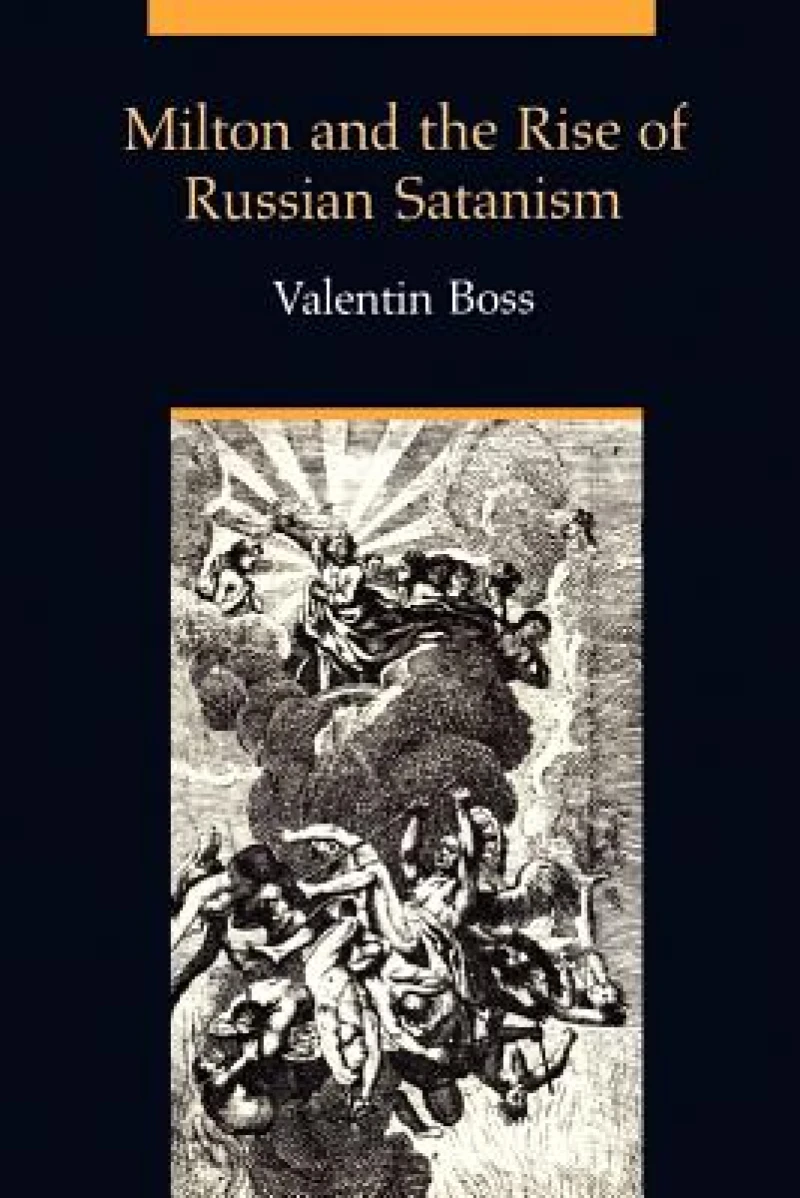
Milton and the Rise of Russian Satanism
Book Details
Delivery Location
Delivery fee: Select location
No European Devil can claim so long or so political a connection with Russian culture as Milton''s Satan. Russian poets came to know him before they heard of Dante, Marlowe, Tasso, or of the devils of the Baroque era. This may explain why Milton''s influence was so intensely felt by the Russians, especially during the Romantic age. In this, the first study in any language of Milton''s reception in Russia, that influence is traced to an early translation of Paradise Lost uncovered by Valentin Boss in the Moscow archives.
British radicals who professed to believe that Milton himself was of the Devil''s party were, with the notable exception of Byron and Tom Moore, hardly known by Pushkin and his contemporaries. Russian literary Satanism, although derived from Milton, thus developed its own characteristics which tsarist censors considered morally subversive.
A brilliant pleiade of poets from Zhukovsky to Lermontov gave Milton''s outcast from Heaven some of his many modern masks. Towards the end of the nineteenth century these inspired the alarming paintings and sculptures of Mikhail Vrubel who, like Lermentov, was obsessed by the demonic.
In cultural influence Goethe''s Devil had by then eclipsed Milton''s, but Goethe''s did not survive 1917 with the same political authority. Boss concludes with a description of what happened to Milton''s Satan after October 1917, when his connection with the English Revolution gave him an edge his German rival lacked.
Lunacharsky, Lenin''s Commissar for Education, who admired Milton''s Arch-rebel, steered him past Left-wing Communists who continued to regard Paradise Lost and Paradise Regained as Christian propaganda. Despite such attacks, Milton''s Satan resurfaced under Brezhnev to bask in Soviet pedagogic approval as an Anti-Imperialist and ''the embodiment of love of freedom.''
Russian notions of good and evil changed before the Revolution and will change again under glasnost'' and perestroika. But no literary character has reflected such changes more dramatically than Milton''s Satan, who managed to be both a hero to Romantic poets and Marxist critics.
Get Milton and the Rise of Russian Satanism by at the best price and quality guaranteed only at Werezi Africa's largest book ecommerce store. The book was published by University of Toronto Press and it has pages.

