
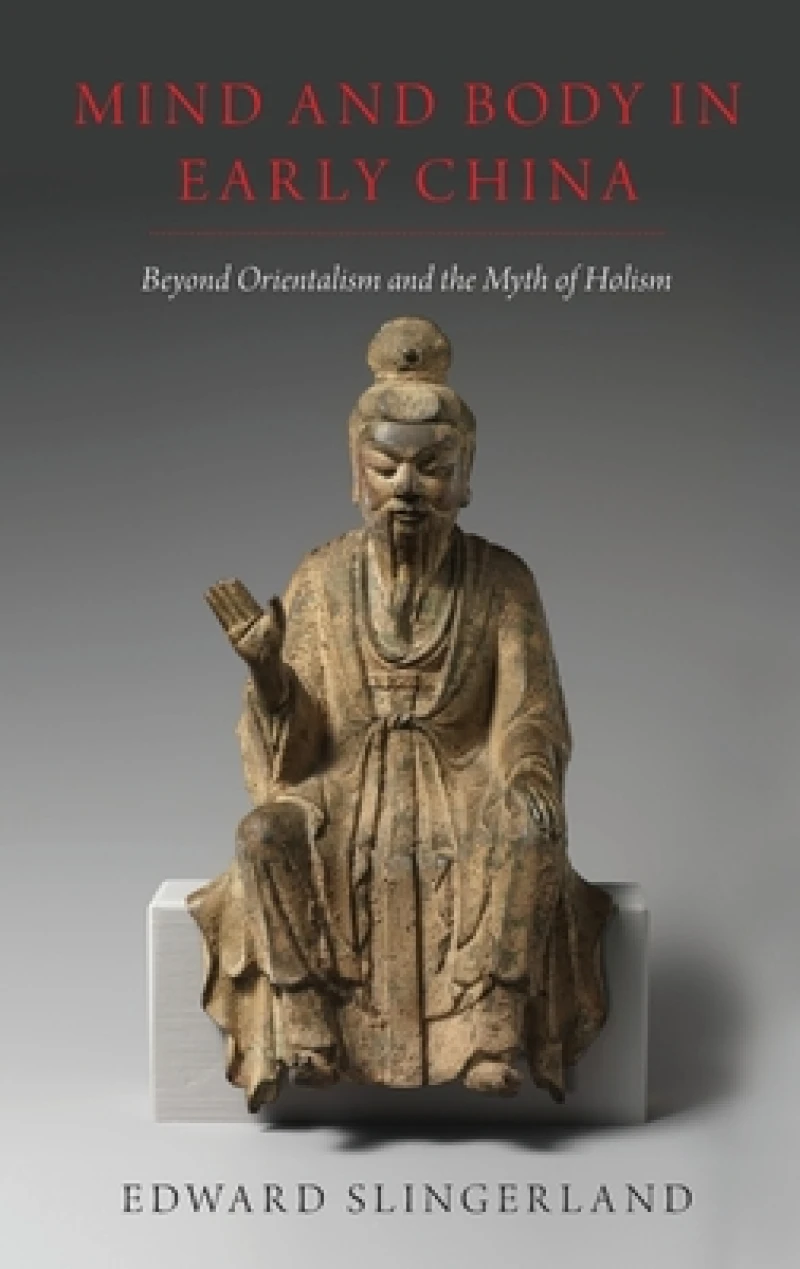
Mind and Body in Early China : Beyond Orientalism and the Myth of Holism
Book Details
Format
Hardback or Cased Book
ISBN-10
019084230X
ISBN-13
9780190842307
Publisher
Oxford University Press Inc
Imprint
Oxford University Press Inc
Country of Manufacture
US
Country of Publication
GB
Publication Date
Feb 28th, 2019
Print length
400 Pages
Weight
674 grams
Dimensions
17.00 x 24.30 x 3.20 cms
Product Classification:
PhilosophyPhilosophy of religionComparative religionOriental religionsTheology
Ksh 7,050.00
Manufactured on Demand
0 in stock
Delivery Location
Delivery fee: Select location
Secure
Quality
Fast
Mind and Body in Early China critiques Orientalist accounts of early China as a radical "holistic" other, which saw no qualitative difference between mind and body. Drawing on knowledge and techniques from the sciences and digital humanities, Edward Slingerland demonstrates that seeing a difference between mind and body is a psychological universal, and that human sociality would be fundamentally impossible without it. This book has implications for anyone interested in comparative religion, early China, cultural studies, digital humanities, or science-humanities integration.
Mind and Body in Early China critiques Orientalist accounts of early China as the radical, "holistic" other. The idea that the early Chinese held the "strong" holist view, seeing no qualitative difference between mind and body, has long been contradicted by traditional archeological and qualitative textual evidence. New digital humanities methods, along with basic knowledge about human cognition, now make this position untenable. A large body of empirical evidence suggests that "weak" mind-body dualism is a psychological universal, and that human sociality would be fundamentally impossible without it.Edward Slingerland argues that the humanities need to move beyond social constructivist views of culture, and embrace instead a view of human cognition and culture that integrates the sciences and the humanities. Our interpretation of texts and artifacts from the past and from other cultures should be constrained by what we know about the species-specific, embodied commonalities shared by all humans. This book also attempts to broaden the scope of humanistic methodologies by employing team-based qualitative coding and computer-aided "distant reading" of texts, while also drawing upon our current best understanding of human cognition to transform our basic starting point. It has implications for anyone interested in comparative religion, early China, cultural studies, digital humanities, or science-humanities integration.
Get Mind and Body in Early China by at the best price and quality guaranteed only at Werezi Africa's largest book ecommerce store. The book was published by Oxford University Press Inc and it has pages.

