
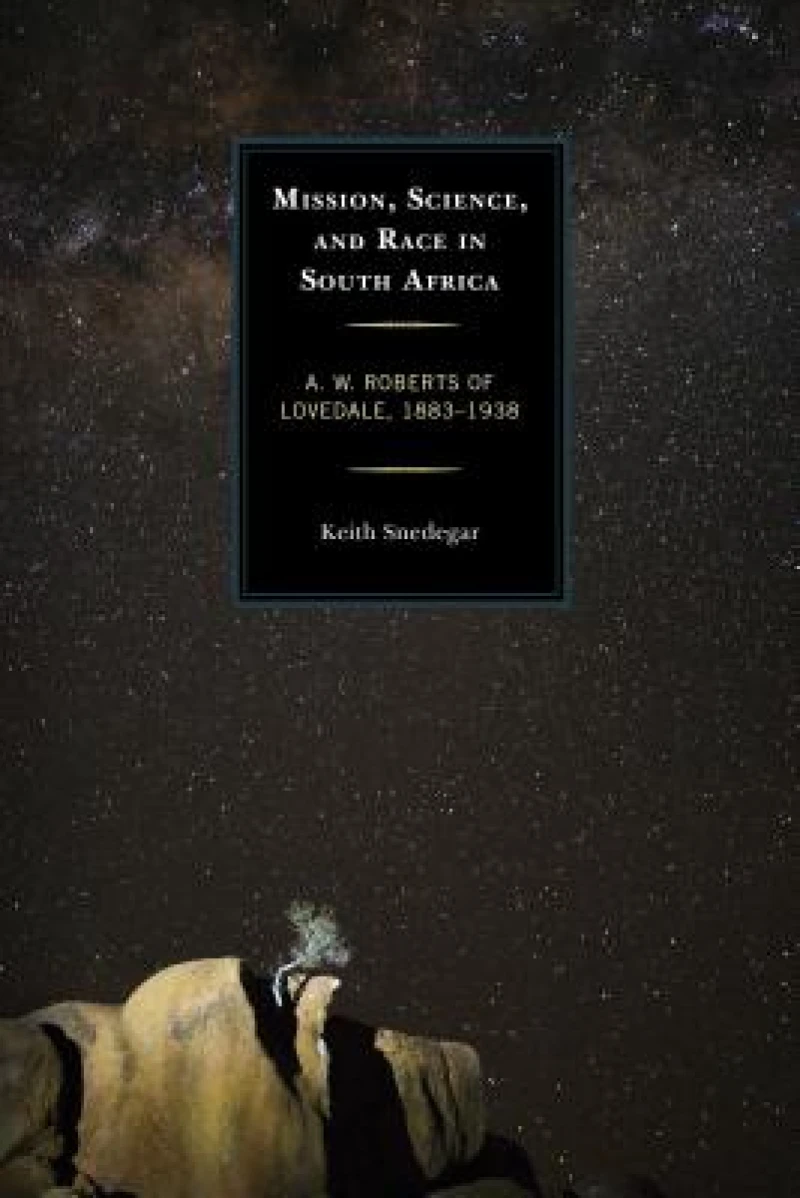
Mission, Science, and Race in South Africa : A. W. Roberts of Lovedale, 1883–1938
Book Details
Format
Hardback or Cased Book
ISBN-10
0739196243
ISBN-13
9780739196243
Publisher
Bloomsbury Publishing Plc
Imprint
Lexington Books
Country of Manufacture
GB
Country of Publication
GB
Publication Date
Sep 17th, 2015
Print length
206 Pages
Weight
458 grams
Dimensions
16.40 x 30.50 x 2.70 cms
Ksh 17,450.00
Manufactured on Demand
Delivery in 29 days
Delivery Location
Delivery fee: Select location
Delivery in 29 days
Secure
Quality
Fast
This is a biographical study of Alexander William Roberts, a Free Church of Scotland missionary educator who in 1883 was posted to the Lovedale Institution at Alice, South Africa. Inspired by the night sky of the southern hemisphere, Roberts became a leading observer of variable stars and an early contributor to the theory of close interacting binary stars. He actively promoted the development of colonial scientific culture and was elected president of the South African Association for the Advancement of Science in 1913. His teaching career at Lovedale fostered a commitment to the interests of his African students and their communities. In 1920 Roberts was appointed to the South African senate to represent “native” Africans; he also served as senior member of the Native Affairs Commission. Despite his liberal instincts he acquiesced to the movement toward racial segregation as advanced in the Natives (Urban Areas) and Native Administration Acts. Roberts nonetheless militated against the erosion of the Cape non-racial franchise rights; he resigned from the Native Affairs Commission just as the all-white parliament was poised to remove Africans from the common voters’ roll. His engagement with the politics of race interfered with Roberts’s astronomical research. Although he published nearly one hundred papers in scientific journals most of his observational data remained unknown until the Boyden Observatory’s Roberts archive was digitized in 2006. His influence as a mission educator also has been little known, although among his pupils were journalist and academic D.D.T. Jabavu, the physician James Moroka, and Swazi king Sobhuza I.
Get Mission, Science, and Race in South Africa by at the best price and quality guaranteed only at Werezi Africa's largest book ecommerce store. The book was published by Bloomsbury Publishing Plc and it has pages.

