
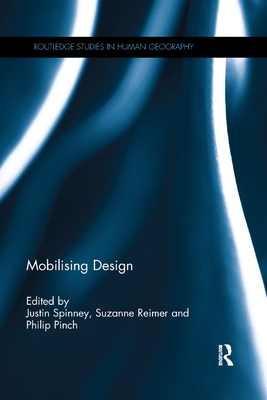
Mobilising Design
Book Details
Delivery Location
Delivery fee: Select location
This book brings together research working at the boundary between design knowledges and mobilities, offering a novel collection for both theorists and practitioners. Drawing upon detailed case studies, it demonstrates the diverse roles of design in shaping mobility at different spaces and scales: across cities; within different types of buildings and infrastructures; and through commuting, work and leisure activities.
A range of international scholars illustrate the designed mobilities of car parks, traffic lights, street benches, pedestrian wayfinding systems and accessible design in the urban environment; they examine spaces within hospitals, airports and train stations and investigate design practices for bicycles, future urban vehicles and MotoGP motorcycle racing. Other contributions explore overlooked mobile artefacts such as television and video game remote controls, 3D printing and the types of packaging which enable objects themselves to move around. This book demonstrates how the tools, assumptions and processes of design shape spaces of mobility, and also illuminates how shifts in the fluidity and circulation of people, practices and materials in turn reconfigure practices of design.
Mobilising Design develops multi-disciplinary understandings of design, drawing upon diverse literatures including design history, product design, architecture and cultural geography. By highlighting often invisible artefacts and associated knowledges and controversies, the book foregrounds the taken-for-granted ways in which everyday mobility is designed. It will be of interest to scholars in geography, sociology, economic history, architecture, design and urban theory.
Get Mobilising Design by Justin Spinney at the best price and quality guaranteed only at Werezi Africa's largest book ecommerce store. The book was published by Taylor & Francis Ltd and it has 235 pages.
Customers Who Bought This Also Bought

Architecture
KSh 7,550.00

Literary Landscap
KSh 3,950.00

Lest We Forget
KSh 2,000.00

Civil Sights
KSh 5,750.00
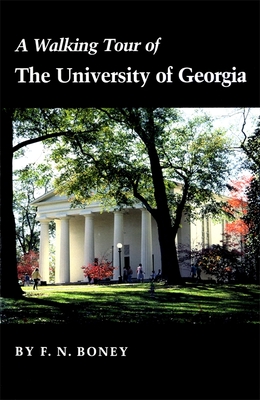
A Walking Tour of the University of Georgia
KSh 4,400.00

The East Tennessee Veterans Memorial
KSh 7,000.00

Historic Alabama Courthouses
KSh 5,200.00
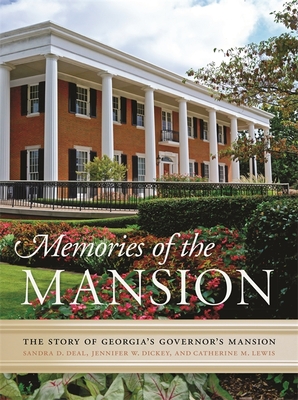
Memories of the Mansion
KSh 10,000.00

Courthouses of Georgia
KSh 9,050.00
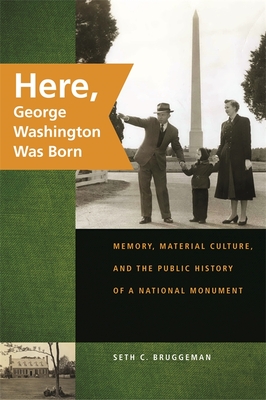
Here, George Washington Was Born
KSh 6,200.00
Confederate Statues and Memorialization
KSh 22,600.00

Through the Arch
KSh 6,600.00
