Cart 0
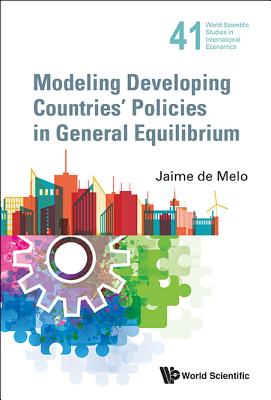
Modeling Developing Countries' Policies In General Equilibrium
Click to zoom

Share this book

Modeling Developing Countries' Policies In General Equilibrium

Book Details

Format Hardback or Cased Book
ISBN-10 9814494801
ISBN-13 9789814494809
Publisher World Scientific Publishing Co Pte Ltd
Imprint World Scientific Publishing Co Pte Ltd
Country of Manufacture GB
Country of Publication GB
Publication Date Apr 27th, 2015
Print length 556 Pages
Weight 936 grams
Dimensions 23.60 x 16.30 x 3.30 cms
Product Classification: MacroeconomicsInternational trade
Ksh 31,500.00
Werezi Extended Catalogue Delivery in 28 days

Delivery Location

Delivery fee: Select location

Delivery in 28 days

Secure
Quality
Fast
Policies affecting resource allocation across tradable sectors and those affecting the incentives to produce tradable activities are key determinants of macroeconomic balance and growth. Computable general equilibrium models have made significant contributions to both types of policies. With advancements in computing power and software, these models have become easy to implement and are now widespread. The question then is when and how to formulate them to avoid the ‘black box’ syndrome.This book seeks to address these issues through carefully selected essays that analyse how to model general equilibrium linkages in a single economy, across developing and developed economies, and across both micro and macro policies. Micro policies examined include tariffs quotas and VERs, the choice of taxes to maximize government revenue, migration and remittances, and the political economy of tariff setting. Applications on macro policies cover capital inflows, real exchange rate determination, and the modeling of the effects of adjustment policies on income distribution.The book provides insights on the development of a family of models for diverse policy choices, focusing on the ways to model the following: links between tradable and non-tradable activities, labor markets, and portfolio choices given limited capital mobility. Selected essays are all inspired by specific policy problems, including the adaptation to external shocks (i.e. oil), consequences of capital inflows, determinants of migration and associated remittances, the productivity of foreign aid, and rent-seeking activities under trade regimes with non-price trade restrictions. Examples in this book lay out the theoretical foundations, alongside a variety of applications, to help formulate coherent and transparent models for policy analysis. Archetype economies are extensively used to show how differences in economic structure influence the effects of policies. Graduate students and policy analysts interested in modeling will find this a useful compendium of studies.
Policies affecting resource allocation across tradable sectors and those affecting the incentives to produce tradable activities are key determinants of macroeconomic balance and growth. Computable general equilibrium models have made significant contributions to both types of policies. With advancements in computing power and software, these models have become easy to implement and are now widespread. The question then is when and how to formulate them to avoid the 'black box' syndrome.This book seeks to address these issues through carefully selected essays that analyse how to model general equilibrium linkages in a single economy, across developing and developed economies, and across both micro and macro policies. Micro policies examined include tariffs quotas and VERs, the choice of taxes to maximize government revenue, migration and remittances, and the political economy of tariff setting. Applications on macro policies cover capital inflows, real exchange rate determination, and the modeling of the effects of adjustment policies on income distribution.The book provides insights on the development of a family of models for diverse policy choices, focusing on the ways to model the following: links between tradable and non-tradable activities, labor markets, and portfolio choices given limited capital mobility. Selected essays are all inspired by specific policy problems, including the adaptation to external shocks (i.e. oil), consequences of capital inflows, determinants of migration and associated remittances, the productivity of foreign aid, and rent-seeking activities under trade regimes with non-price trade restrictions. Examples in this book lay out the theoretical foundations, alongside a variety of applications, to help formulate coherent and transparent models for policy analysis. Archetype economies are extensively used to show how differences in economic structure influence the effects of policies. Graduate students and policy analysts interested in modeling will find this a useful compendium of studies.

Policies affecting resource allocation across tradable sectors and those affecting the incentives to produce tradable activities are key determinants of macroeconomic balance and growth. Computable general equilibrium models have made significant contributions to both types of policies. With advancements in computing power and software, these models have become easy to implement and are now widespread. The question then is when and how to formulate them to avoid the ‘black box’ syndrome.

This book seeks to address these issues through carefully selected essays that analyse how to model general equilibrium linkages in a single economy, across developing and developed economies, and across both micro and macro policies. Micro policies examined include tariffs quotas and VERs, the choice of taxes to maximize government revenue, migration and remittances, and the political economy of tariff setting. Applications on macro policies cover capital inflows, real exchange rate determination, and the modeling of the effects of adjustment policies on income distribution.

The book provides insights on the development of a family of models for diverse policy choices, focusing on the ways to model the following: links between tradable and non-tradable activities, labor markets, and portfolio choices given limited capital mobility. Selected essays are all inspired by specific policy problems, including the adaptation to external shocks (i.e. oil), consequences of capital inflows, determinants of migration and associated remittances, the productivity of foreign aid, and rent-seeking activities under trade regimes with non-price trade restrictions. Examples in this book lay out the theoretical foundations, alongside a variety of applications, to help formulate coherent and transparent models for policy analysis. Archetype economies are extensively used to show how differences in economic structure influence the effects of policies. Graduate students and policy analysts interested in modeling will find this a useful compendium of studies.


Get Modeling Developing Countries' Policies In General Equilibrium by at the best price and quality guaranteed only at Werezi Africa's largest book ecommerce store. The book was published by World Scientific Publishing Co Pte Ltd and it has pages.

Mind, Body, & Spirit

Price

Ksh 31,500.00

Shopping Cart

Africa largest book store

Sub Total:
Ebooks

Digital Library
Coming Soon

Our digital collection is currently being curated to ensure the best possible reading experience on Werezi. We'll be launching our Ebooks platform shortly.